Key Points
- History: A cornerstone heritage selection by J.M. Riley, isolated in 1974 from professional seedlots sourced from Corwin Davis.
- Niche: One of the sweetest known varieties of the late 20th century, favored by home growers for fresh eating and processing.
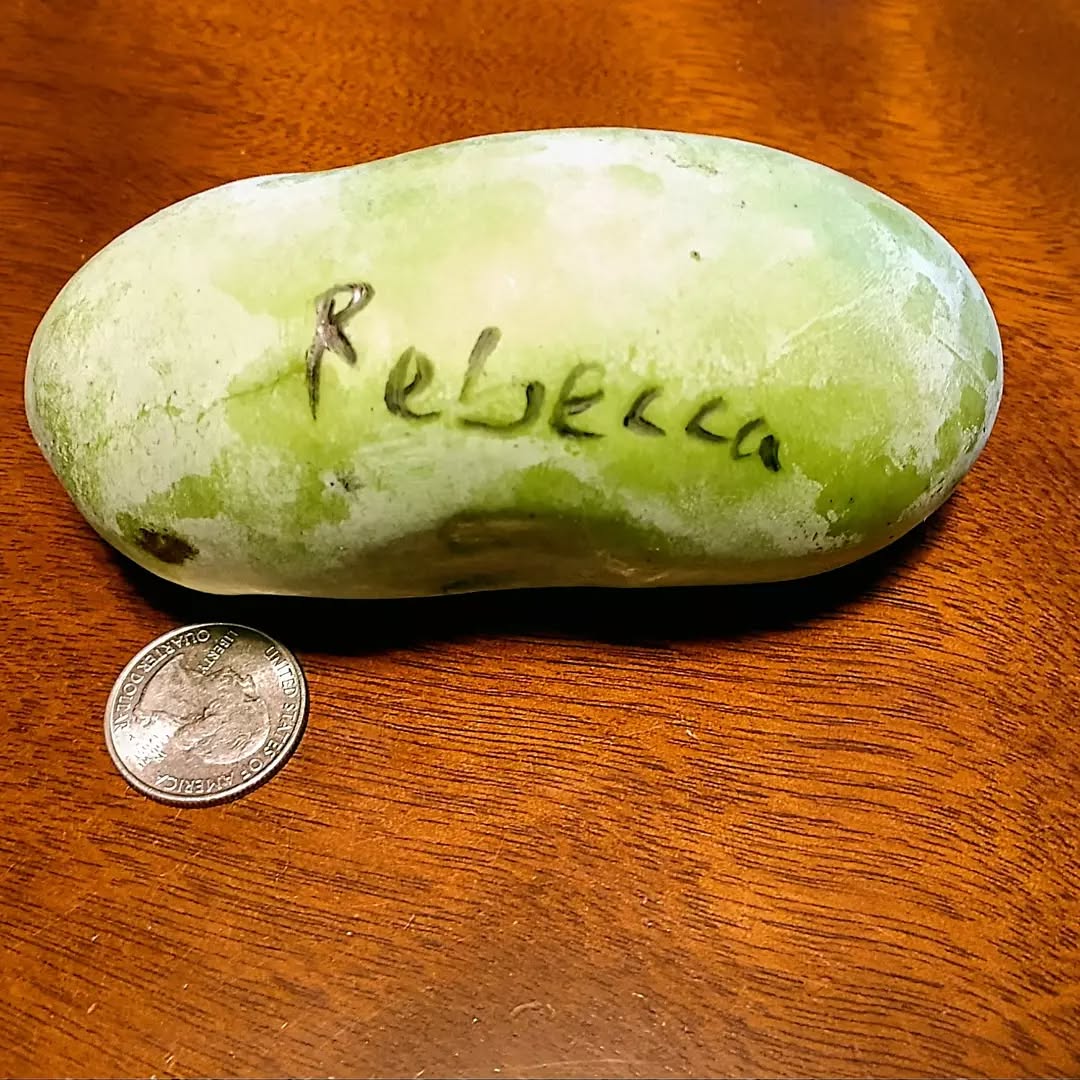
- Fruit Class: Produces medium-to-large fruits (108–226 g); trophy specimens in optimized orchards can exceed 450 g.
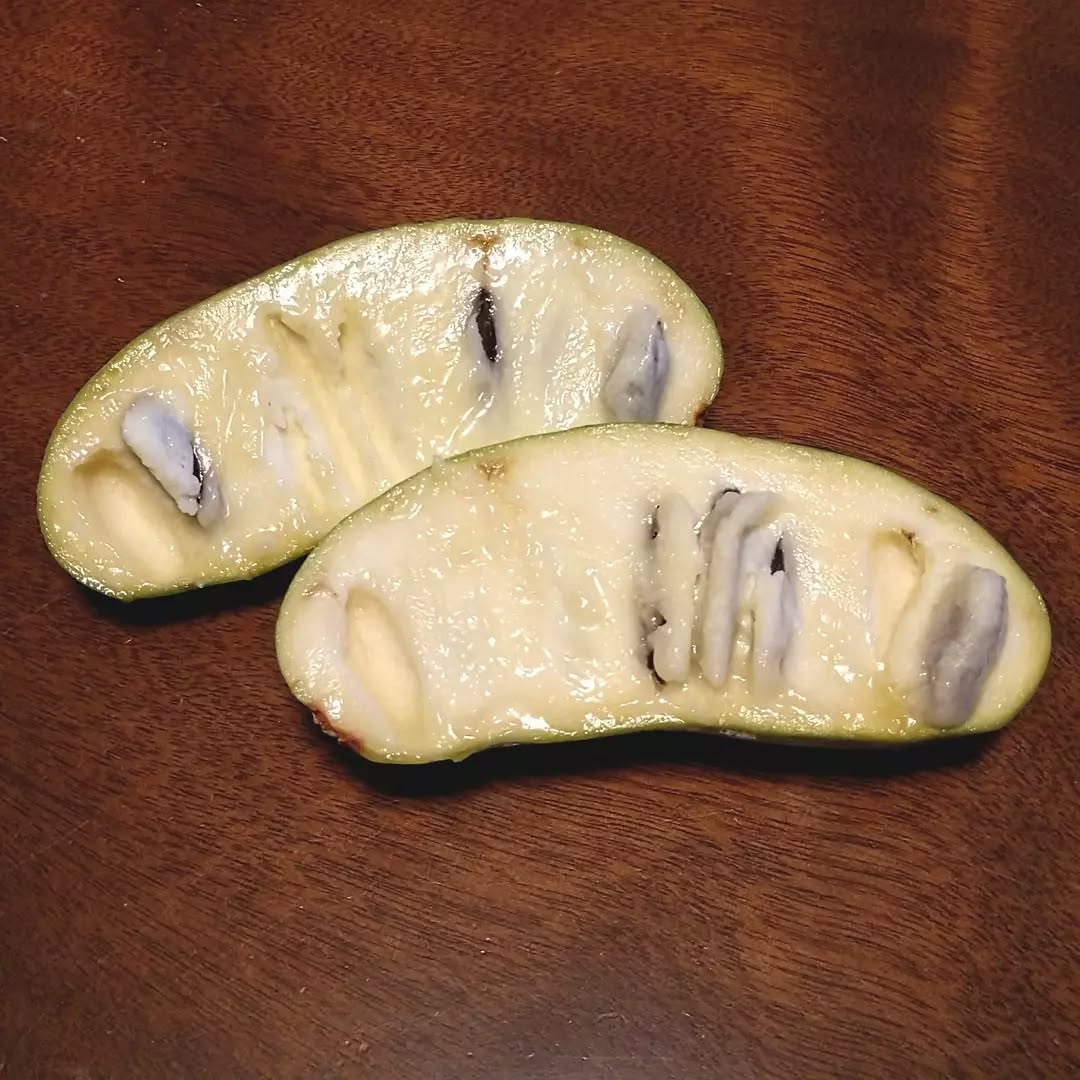
- Flesh Dynamics: Characterized by vibrant yellow pulp that is exceptionally soft—often described as "soupy" or highly juicy when fully ripe.
- Seasonality: A late-season ripener (Mid-September through October); requires a site with reliable autumn heat accumulation.
- Handling: Possesses a thin, delicate skin that makes it unsuitable for commercial transport but excellent for local, immediate consumption.
- Storage: Low shelf-life due to high polyphenol oxidase activity, causing the fruit to oxidize (turn dark) quickly once bruised.
- Resilience: Cold-hardy through USDA Zones 5–8; exhibits a traditional spreading growth habit.
Variety Description
Summary
Rebecca’s Gold is the "Candy-Store" variety of the heritage pawpaw world. Discovered in the mid-1970s, it represents an era where sweetness was the primary selection criterion. It is a variety for the enthusiast who wants the highest possible sugar content and doesn't mind a softer, more delicate fruit texture. While modern commercial hybrids prioritize "firmness" and "shelf-life," Rebecca’s Gold remains a top choice for the backyard grower who wants the richest, most decadent pawpaw experience possible.
Foundations and Provenance
Isolated by J.M. Riley in 1974, the variety's origin is a bridge between Northern California trials and Corwin Davis’s Michigan genetics. This cross-continental heritage resulted in a tree that is remarkably stable across a wide range of climates. It is one of the "old guard" selections that has stood the test of time, remaining in production for over half a century.
Fruit Specifications: Intense and Juicy
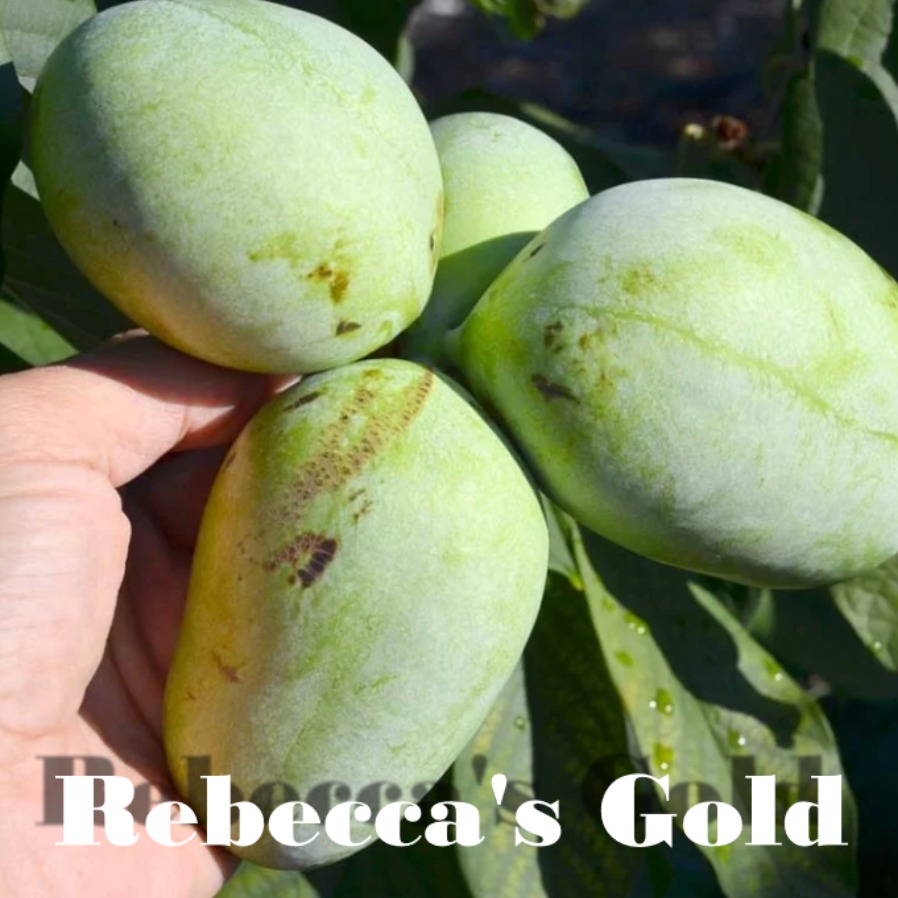
Physical Attributes: The fruit is typically heavy for its size due to its high water and sugar content. The skin is notably thin. Palette: It reaches elite Brix levels (up to 24), offering a flavor that is intensely tropical with a lingering caramel-honey finish. Texture: This is a "custard-heavy" variety. The pulp lacks structural fiber and is famously juicy, making it easy to scoop with a spoon but difficult to handle once it has fallen from the tree.
Orchard Productivity
Reliability: Mature trees are reliable, though they may yield slightly less in total weight than the "jumbo" Peterson hybrids. Its value lies in the quality of the sugar concentration. Canopy: The tree develops a standard, rounded shape that is easy to manage. It doesn't have the extreme vertical dominance of some modern varieties, allowing for easier harvesting from the ground.
Management and Logistics
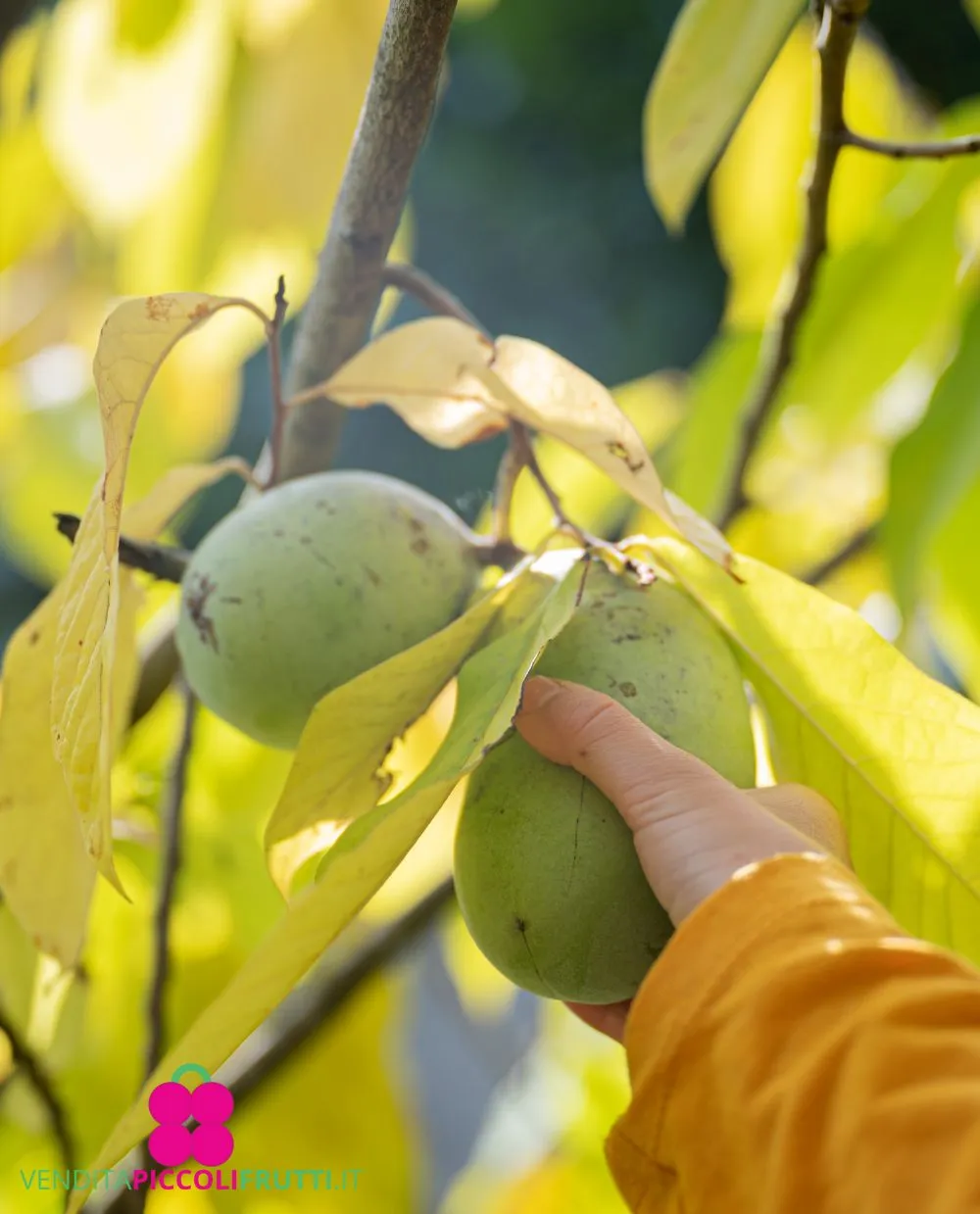
Maturity Timing: Its late-season window (October in many regions) makes it a great "last harvest" variety to extend the season. However, northern growers should place it in the warmest, sunniest part of the orchard to ensure it fully ripens before the first frost. Delicate Handling: This variety requires a "gentle hand." Using harvest baskets with soft linings is recommended to prevent skin bruising and subsequent oxidation.
Environmental Adaptation
Well-adapted to the temperate USA. It has shown excellent long-term survival in Zone 6 gardens. It is a vigorous tree that, once established, requires minimal intervention other than standard pruning.
Conclusion
Rebecca’s Gold is for the grower who wants the most "syrupy" fruit in the grove. It is a masterpiece of vintage selection that delivers a level of sweetness that modern hybrids are still measured against. It remains an essential variety for those who process fruit into jams, purees, or simply enjoy the richest fresh pawpaws the world has to offer.
Breed Performance Summary
| Indicator | Cultivar Metric |
|---|---|
| Heritage Line | J.M. Riley Selection (1974) |
| Average Fruit Mass | Medium-Large (≈108-226 g) |
| Flavor Class | High Intensity / Caramel-Sweet |
| Sugar Content | Elite (21.4-24 Brix) |
| Maturity window | Late (Mid-Sept - October) |
| Flesh Texture | Very Soft / Juicy / "Soupy" |
| Storage Life | Very Low (Highly Oxidative) |
| Hardiness Grade | Standard Heritage (USDA 5-8) |