Key Points
- Origin: Discovered by Woody Walker in a historic orchard near Richmond, Kentucky.
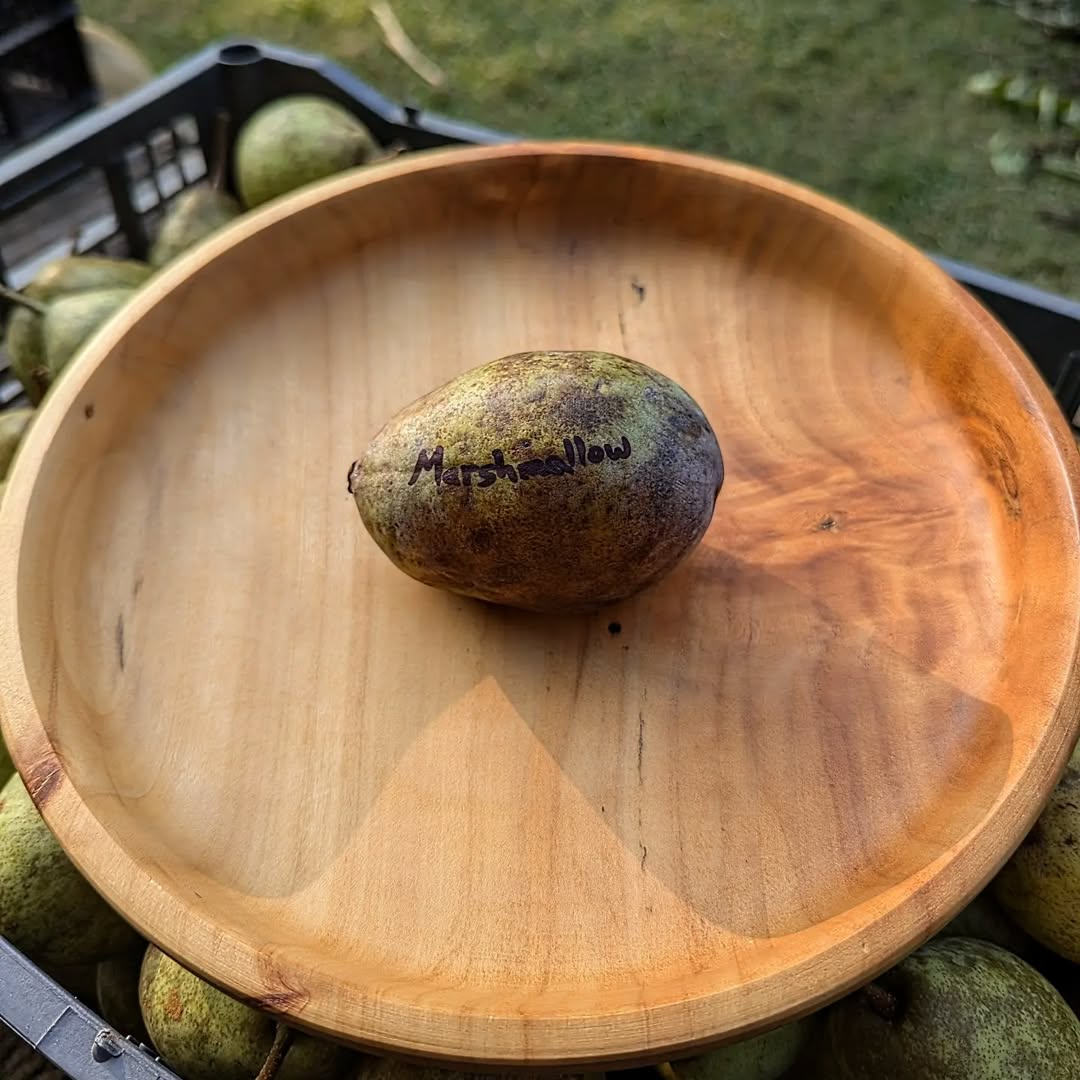
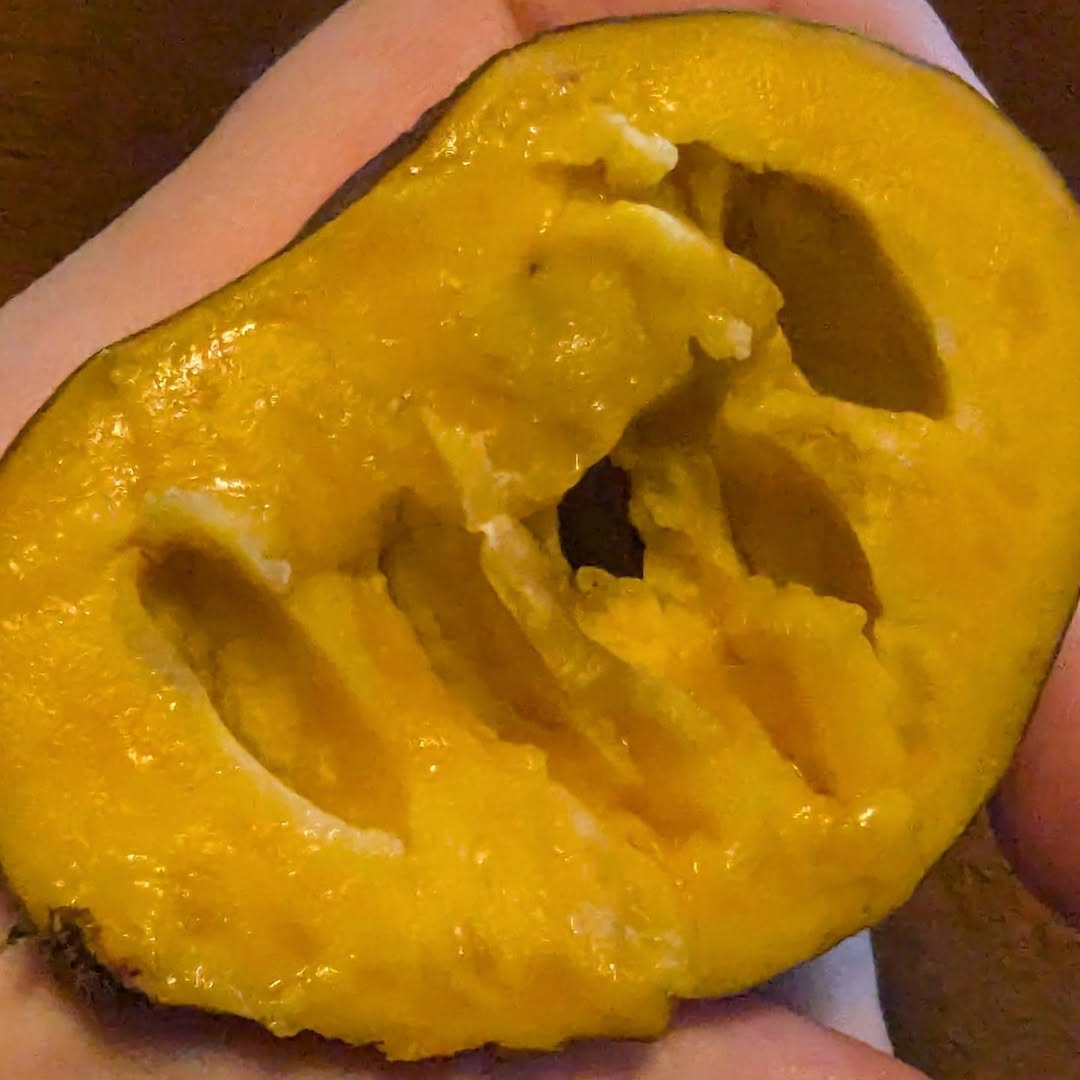
- Fruit Architecture: Medium-sized specimens (200–255 g) with vibrant yellow-orange pulp.
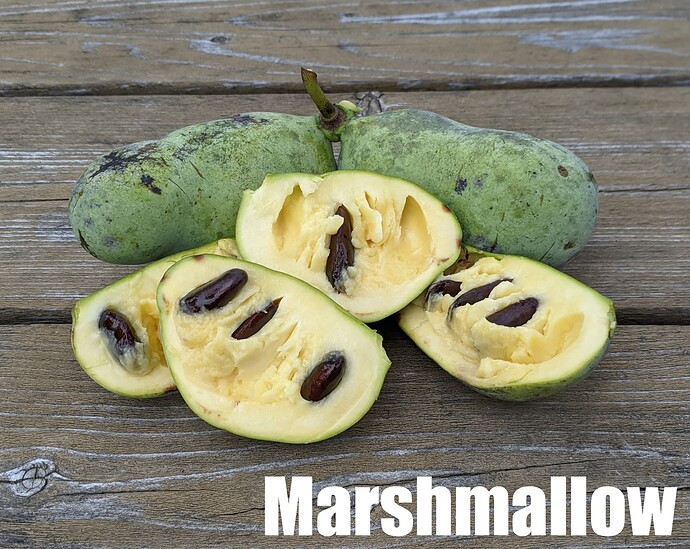
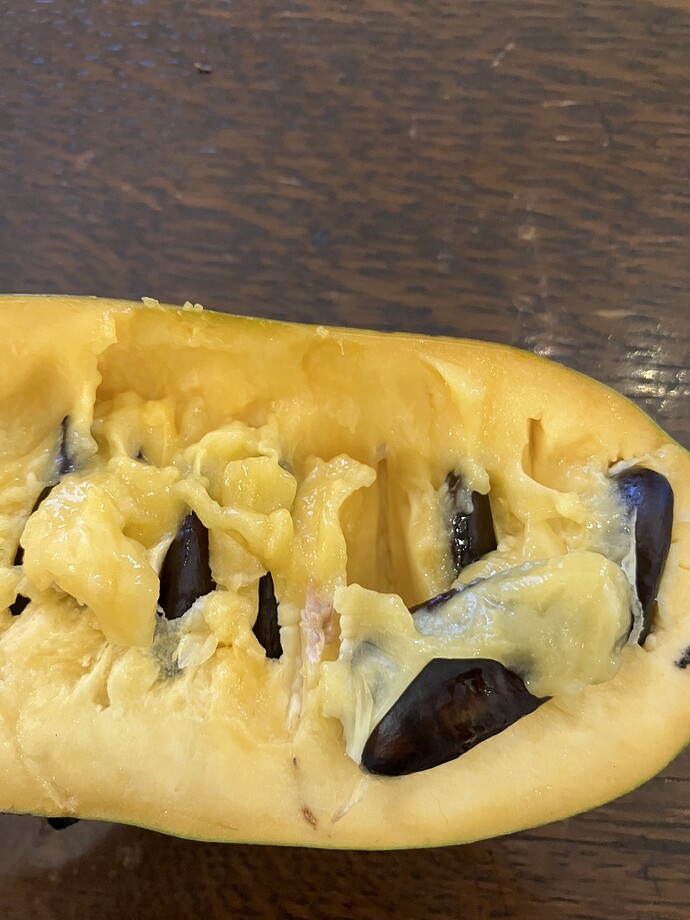
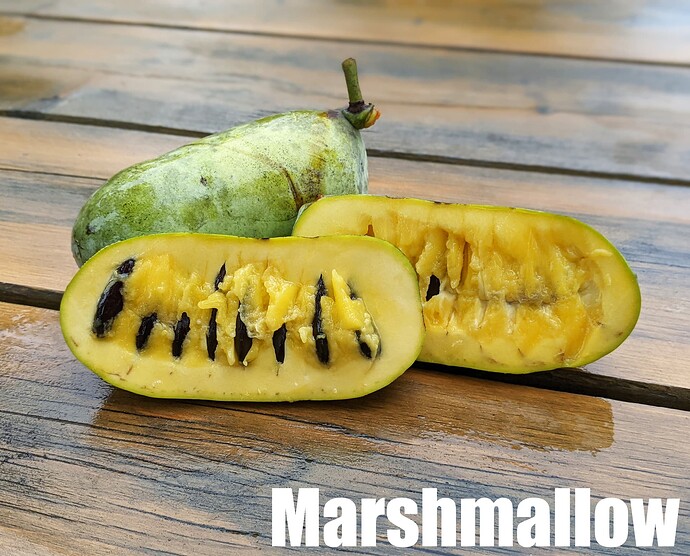
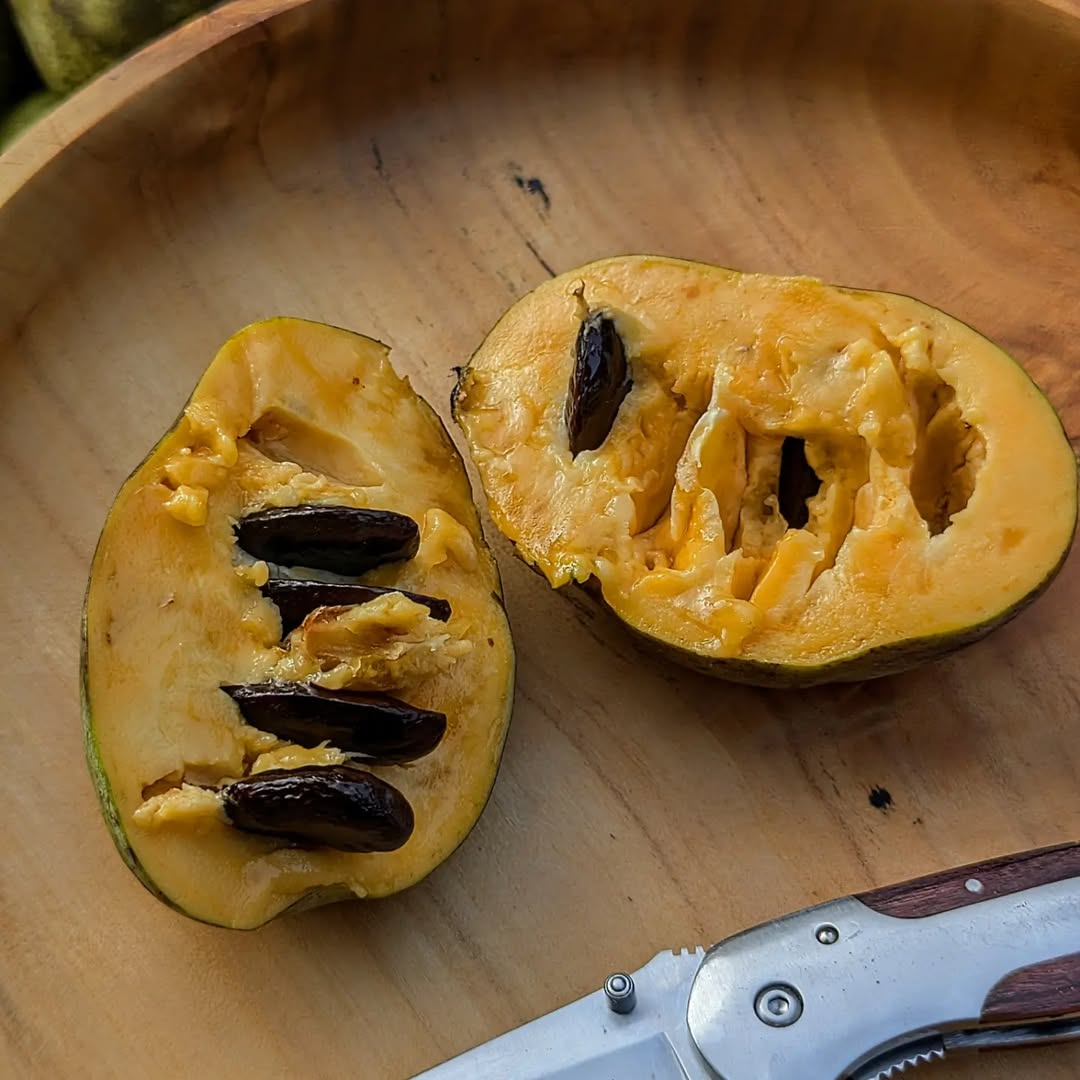
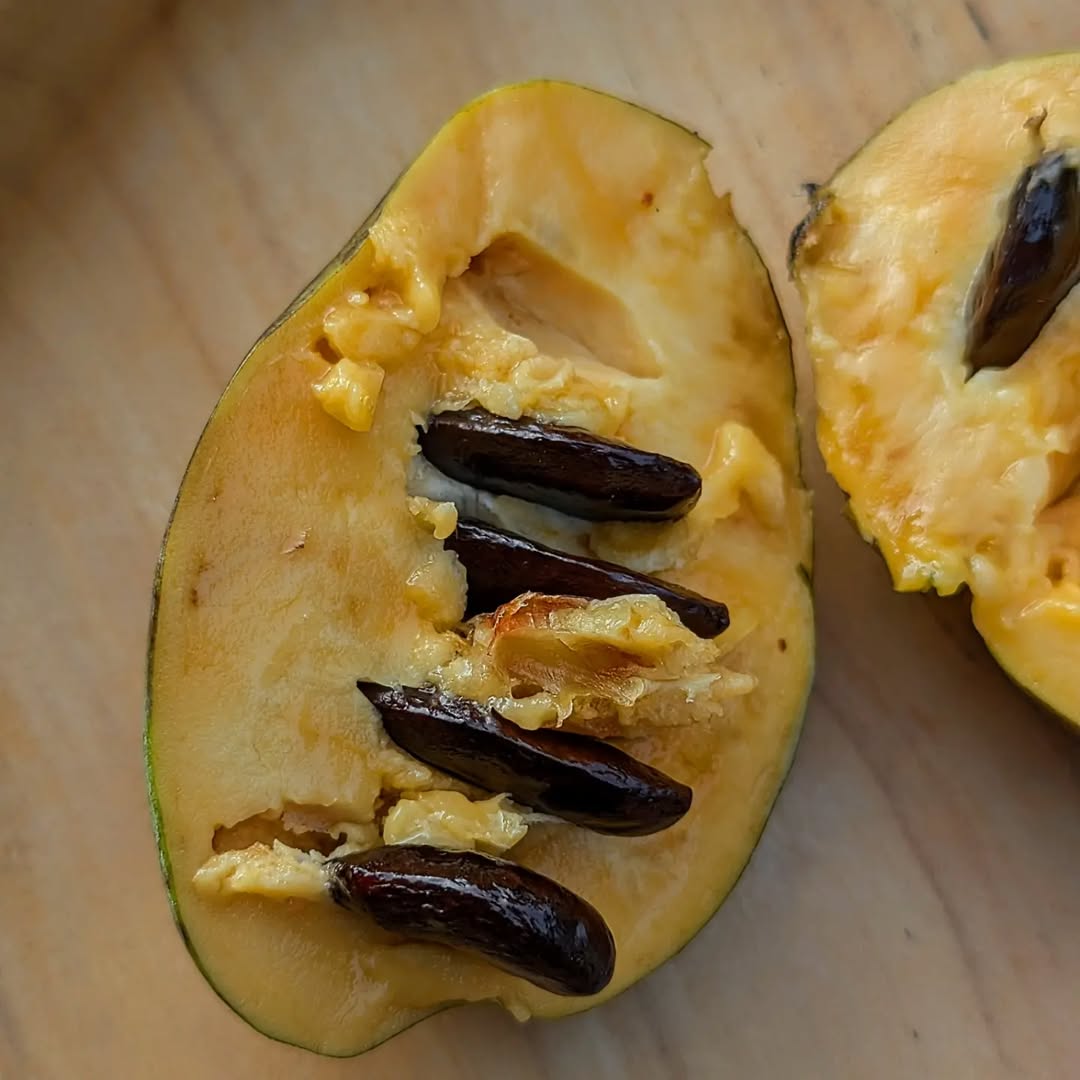
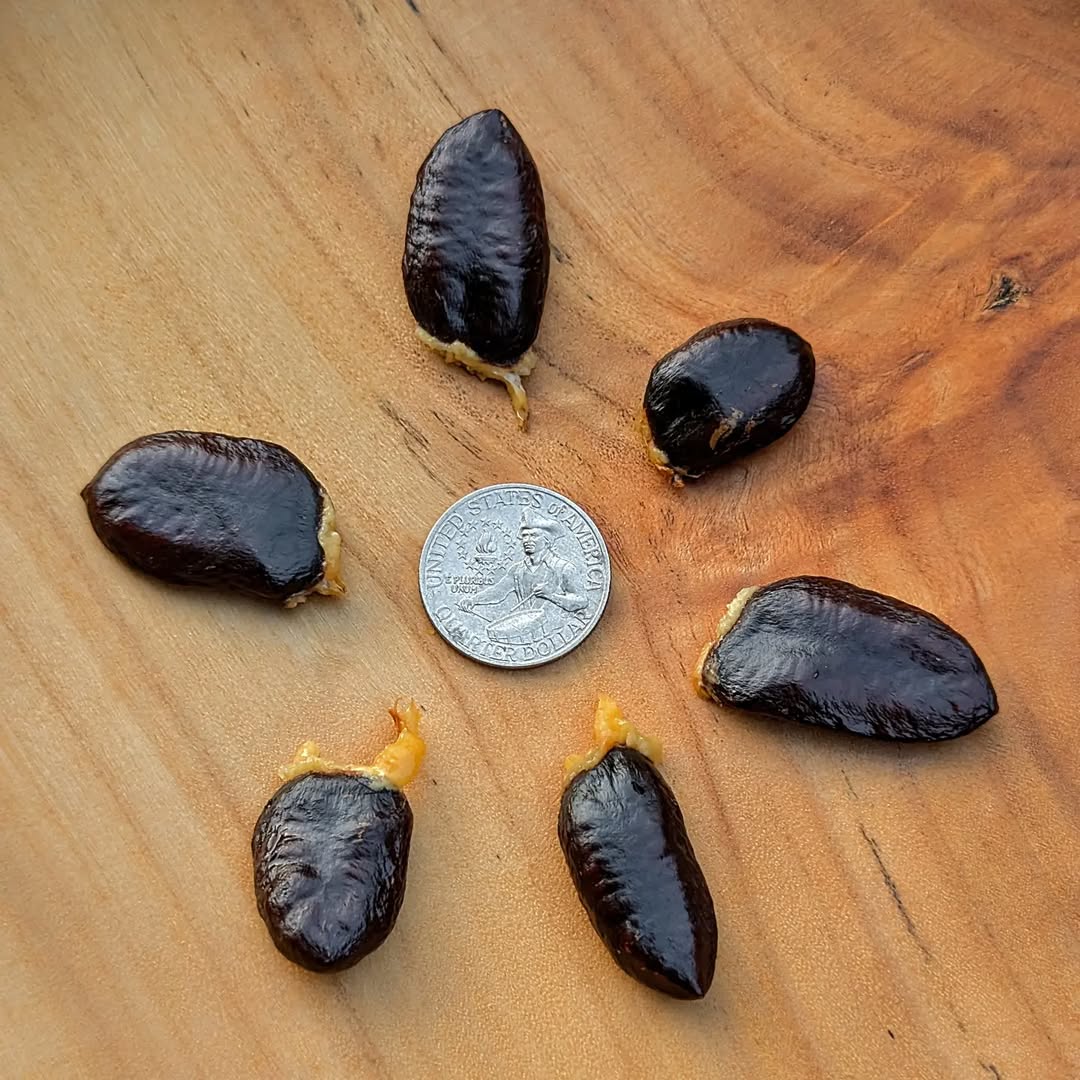
- The "Freestone" Advantage: One of the few varieties where seeds separate cleanly from the pulp—ideal for processing and dessert preparation.
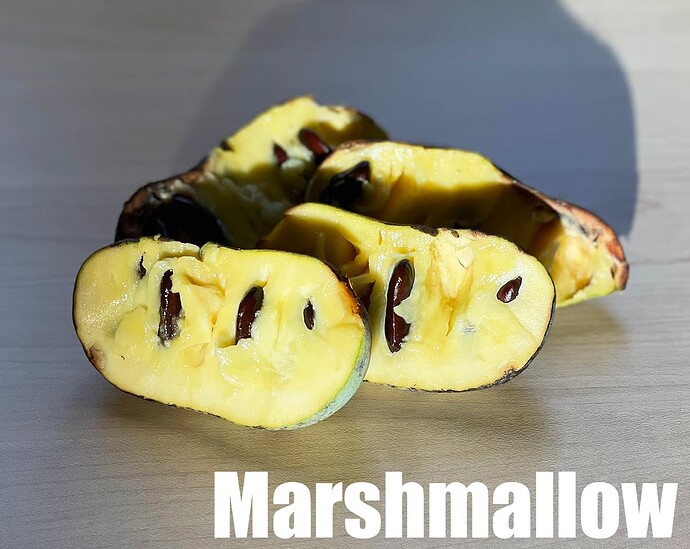
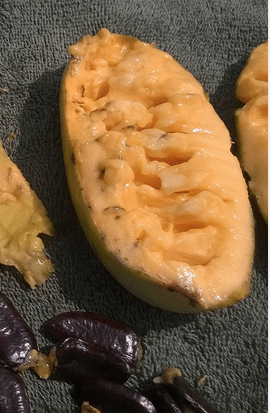
- Sensory Profile: Melting, marshmallow-like consistency; extremely juicy and sweet.
- Seasonality: Early to early-mid season ripener (Late August – Early September).
- Horticultural Vigor: Fast-growing and robust tree, excellent for residential landscapes.
- Storage: Best enjoyed immediately; the soft, juicy texture results in a shorter shelf life than firm industrial hybrids.
- Hardiness: USDA Zones 5–8 (High resilience established in regional Kentucky trials).
Variety Description
Summary
Marshmallow is a standout cultivar discovered by enthusiast Woody Walker. Its name is a direct tribute to its ethereal, airy, and melting texture which approximates a fruit-flavored marshmallow or chiffon custard. Beyond its elite flavor, it is scientifically significant as a "freestone" variety. While most pawpaws require messy extraction to remove seeds, Marshmallow’s seeds drop away cleanly. This makes it a primary candidate for breeding programs aimed at commercial mechanization and a delight for home cooks who value speed in the kitchen.
Discovery and Provenance
Found sequestered in a legacy planting in Richmond, Kentucky, this variety represents the best of "backyard" selection. It has been popularized by top-tier nurseries like Peaceful Heritage for its reliable production of high-sugar fruit.
Fruit Analysis
Mouthfeel: The pulp is saturated and silky, lacking the grainy "sand" texture found in wild selections. Weight: Consistently produces 7-9 oz (200-255 g) fruits, which are the perfect size for single-portion consumption. Flavor Complexity: It is dominated by a honeyed sweetness, backed by a tropical "punch" that lingers. Processing: Because it is freestone, the "pulp recovery" rate is remarkably high, making it the variety of choice for pawpaw ice cream and puddings.
Orchard Habits
Vegetative Growth: It is a vigorous grower that establishes quickly compared to slower varieties like Sunflower. Ripening Window: As an early-to-mid season variety, it escapes early frost risks in northern latitudes, completing its ripening cycle by mid-September in its native zone. Yield: Demonstrates good consistency, especially when cross-pollinated with other Kentucky-derived varieties.
Resilience and Management
Disease Resistance: Shows strong natural immunity common to the species. Handling: Due to its extreme juiciness, the fruit is delicate. It is not recommended for traditional long-distance shipping but is the ultimate "tree-to-table" variety for local markets and families.
Collector's Verdict
Marshmallow is a "must-have" for its practical utility. The freestone trait alone justifies its place in an orchard, but the elite, melting texture ensures it remains a favorite for eating fresh. It is the definition of a high-quality "hand fruit."
Breed Performance Summary
| Indicator | Cultivar Metric |
|---|---|
| Primary Trait | Freestone (Easy seed separation) |
| Pulp Texture | Chiffon / Marshmallow / Melting |
| Flavor Profile | Honeydew / Tropical Honey |
| Fruit Weight | 200–255 g (Standard) |
| Seasonality | Early - Early Mid |
| Vigor | High (Rapid establishment) |
| Best Use | Fresh Eating / Processing |