Key Points
- Origin: selection by Woody Walker, Richmond, Kentucky.
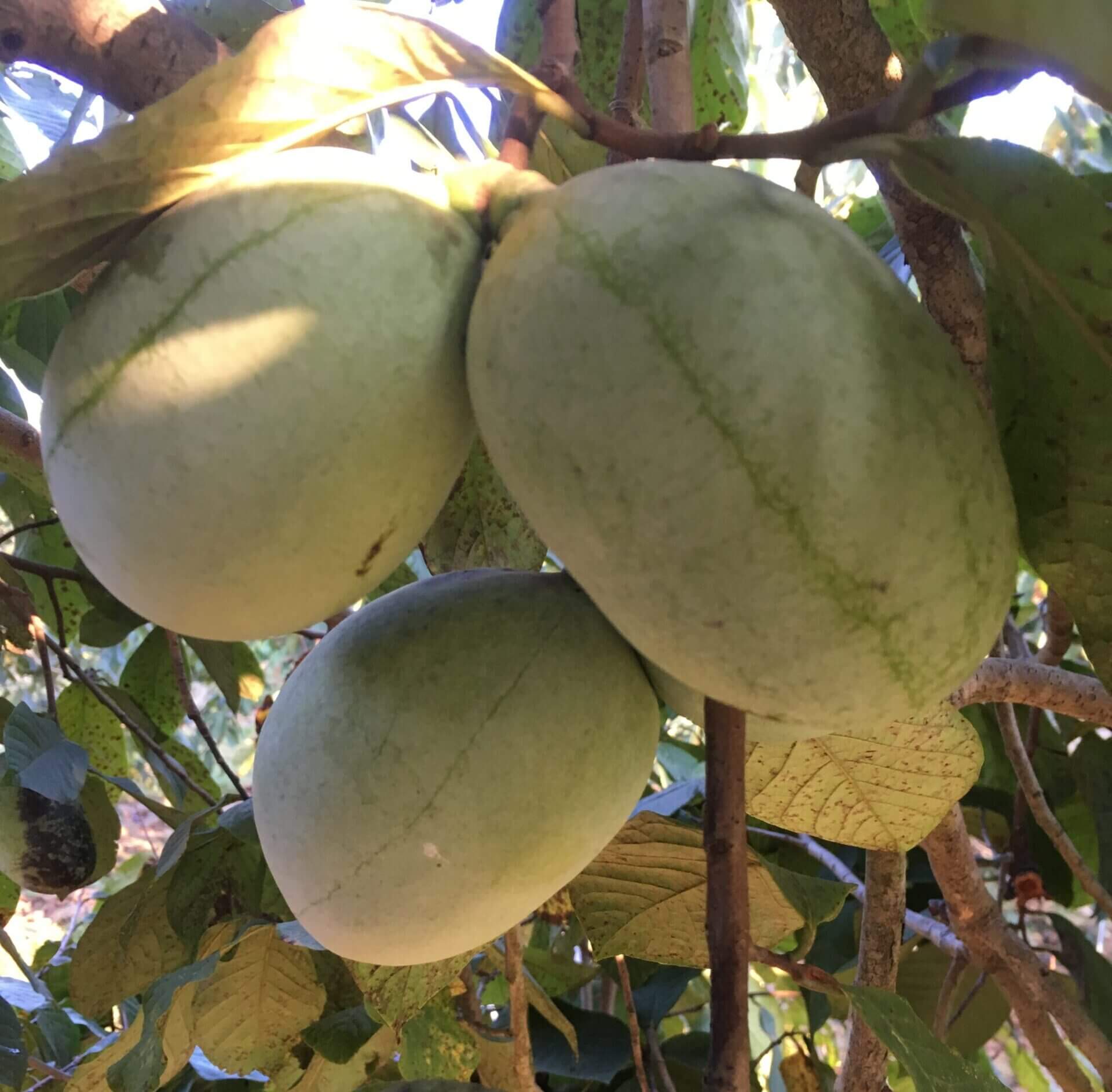
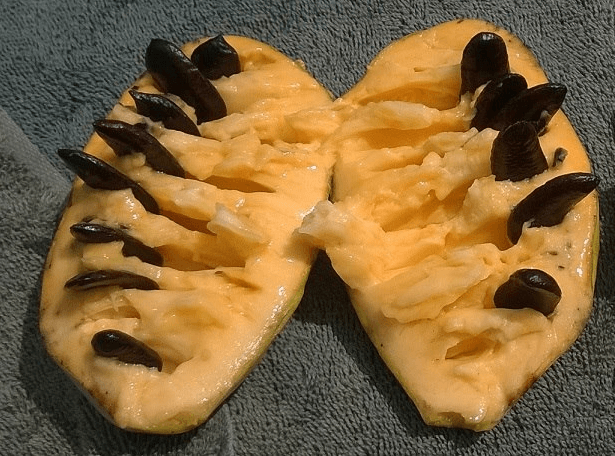
- Fruit: medium–large (≈255–300 g), honey-dew taste, dense texture, partially freestone.
- Ripening: mid-early (late August – September).
- Yield: quality fruit, suitable for processing.
- Tree: moderate vigor, 3–5 m.
- Resilience: standard pawpaw hardiness; Phyllosticta possible in wet seasons.
- Climate: performs well in cooler regions including the UK.
- Transport: dense pulp improves keeping and shipping.
- Cold hardiness: USDA 5–9.
Variety Overview
Quick summary
Honey Dew is a Woody Walker selection (Richmond, KY). Fruit averages 255–284 g with honey-dew melon flavor and dense, custardy texture. Many fruits are partially freestone, so seeds come out cleanly. Growers consider it a premium dessert cultivar that also behaves well in cooler or UK-like climates, originating from the same homestead as Walker selections Marshmallow and Cantaloupe.
Origin
Nursery catalogs explicitly list Honey Dew as a Woody Walker find from Richmond, Kentucky.
Fruit size & weight
Cothron cites ≈255–284 g per fruit, while nurseries such as Beautiful Beginnings and Nuttrees note ≈275–300 g. A practical working range on the mother tree is 255–300 g.
Texture, flavor, freestone traits
Expect refreshing melon flavor and creamy/dense texture. Seed ratio is roughly 12%, and many fruits release seeds easily. Ripe skin shifts to yellow with faint green accents; flesh is pale yellow.
Ripening window
Honey Dew is described as mid-season or mid-early depending on climate: late August–September in warm areas, September into early October in cooler sites.
Yield, climate fit, transportability
Mature trees can crop about 9–13.6 kg annually. Hillbilly Pawpaws and other growers highlight reliable performance in British/northern climates thanks to solid cold hardiness. The firmer pulp suits both table use and processing, and it handles transport better than softer cultivars. Tree form is compact and rounded with moderate vigor.
Diseases & resilience
No major weaknesses are repeatedly cited; like most pawpaws, Honey Dew may show leaf spot (Phyllosticta) during humid years plus routine local pests, but overall resilience is considered standard.