
Key Points
- Origin: wild form selected by Tyler Halvin in Iowa, USA; named after the breeder.
- Ripening: very early (July–August in the USA, late August in cooler regions).
- Cold hardiness: down to -25...-30°C, USDA zone 5; adapted to northern regions.
- Taste: very sweet, pineapple-like, creamy texture without bitterness.
- Fruit size: 225–400 g, large for pawpaw.
- Yield: potentially generous, but depends on pollination; fruits in 3–4 years.
- Tree: 3.7–7.6 m, controlled by pruning to 2.5–3 m.
- Pollination: cross-pollination required, needs another tree; effective hand pollination.
- Resistance: high, few problems with diseases/pests.
Variety Description
Origin and Breeder
Halvin's Sidewinder is a wild (found in nature) form of Asimina triloba, noted and selected by Tyler and Dana Halvin in southwestern Iowa (USA). The original tree grew in the understory and reached about 12 m in height. This variety is sometimes called simply "Halvin" or "Halvin's Side Winder," and it is registered under the authorship of Tyler Halvin. The name "Sidewinder" comes from the breeder's internal designation.
Ripening Time
Halvin's Sidewinder is distinguished by very early fruiting times: in the southern USA, fruits ripen in late summer. Specifically, in Kentucky it ripens in late August. According to the breeder's own testimony, the variety can ripen even in July. However, some gardeners note that in cooler regions (zones 5–6), fruits may only ripen by late August. In corresponding climatic conditions, Reddit users call Halvin's Sidewinder a "very early" (July–August) variety, though others note delays until the end of the season. In Western Ukraine conditions (first temperature drop around October 10), fruit harvest is expected to fall in late summer – early autumn, similar to other early varieties.
Cold Hardiness and Adaptation
Halvin's Sidewinder originates from Iowa (zone 5–6) and is considered adapted to harsher conditions. According to descriptions, it is particularly suitable for northern regions due to high cold hardiness and early ripening time. For example, a French source emphasizes that this variety is "particularly adapted to northern regions and conditions outside the typical pawpaw growing zone, thanks to cold hardiness and early maturity."
Taste, Aroma and Texture
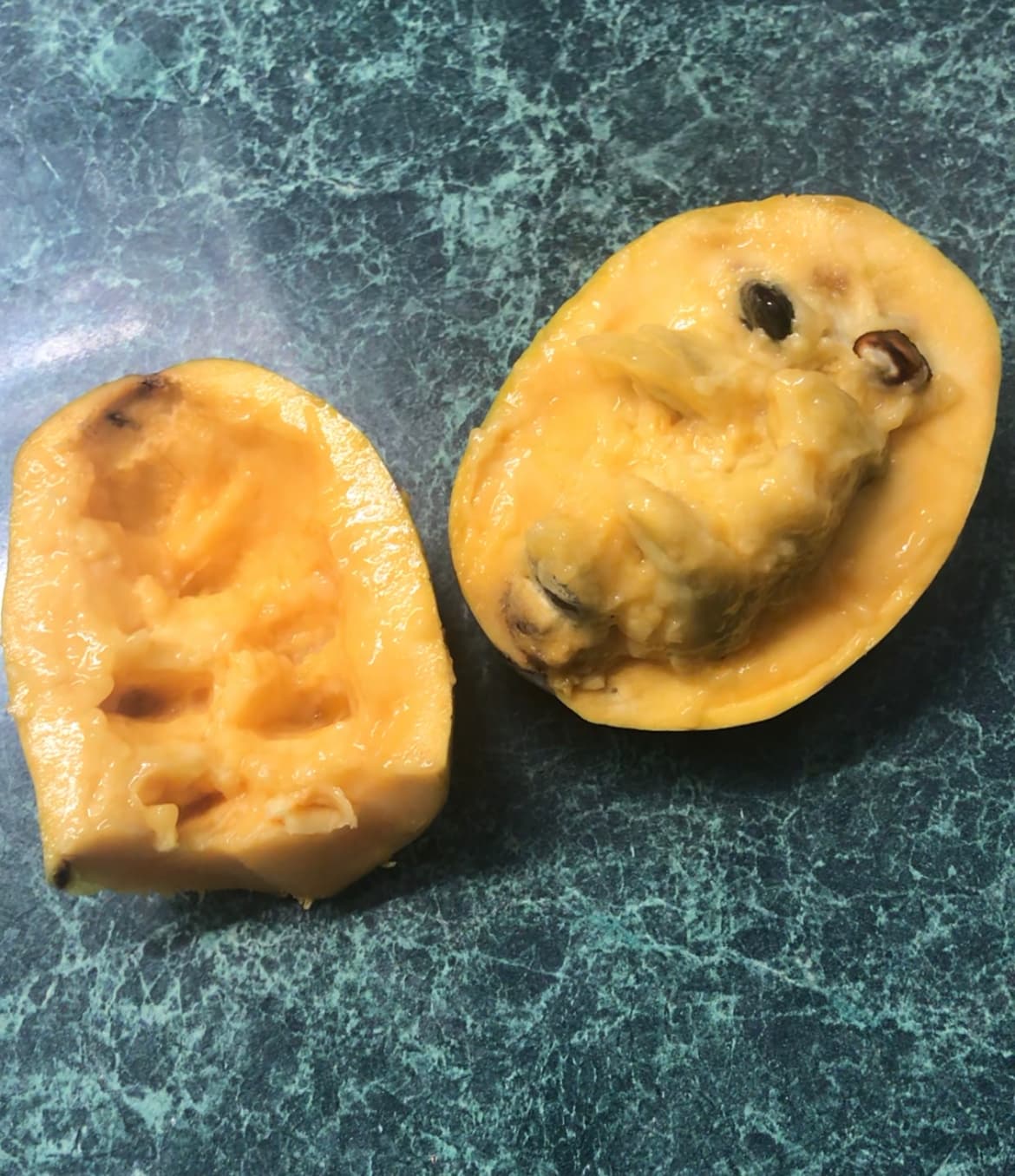
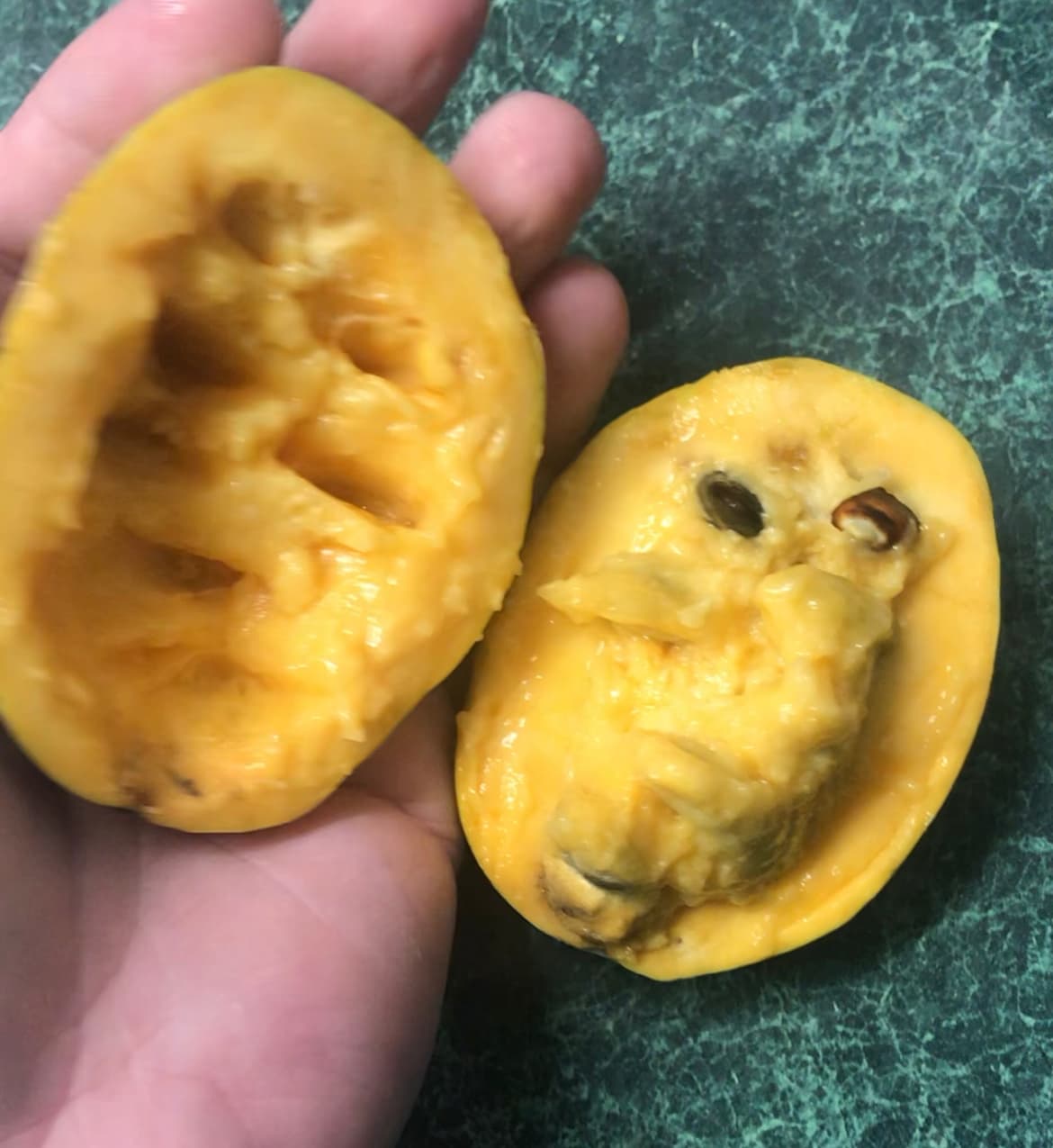
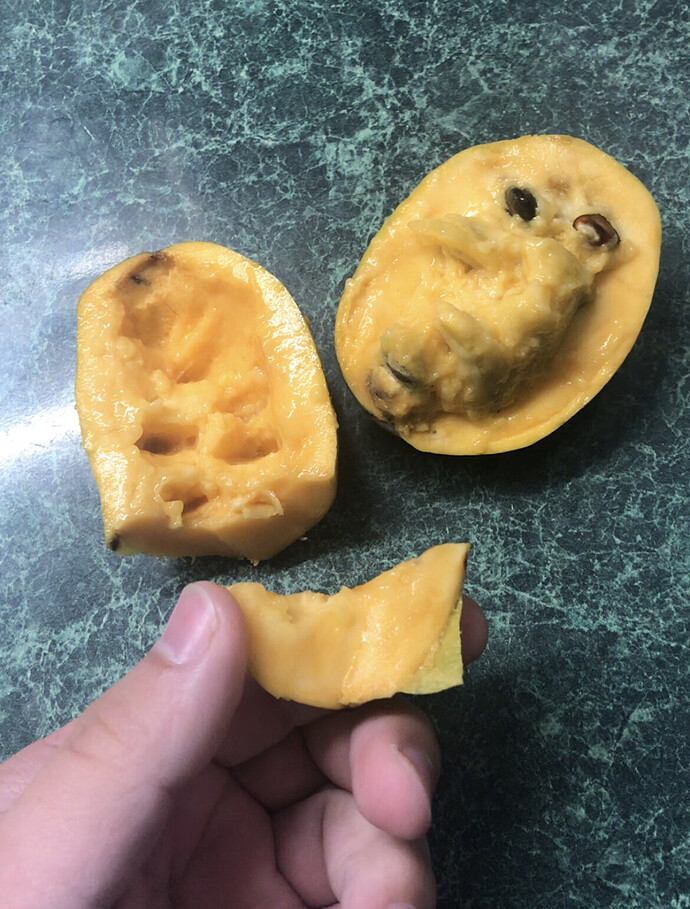
Halvin's Sidewinder fruits are distinguished by a very sweet and pleasant taste without bitterness. It is known that the flavor notes of this variety are felt as "pineapple-like." The flesh has a creamy, slightly "avocado-like" (thickened) consistency, smooth texture, and rich fruity aroma. For example, the description notes "very sweet, smooth, without aftertaste, with a light pineapple aroma." However, practitioners report that on their trees it often ripens only in late summer. Overall, reviews emphasize the excellent taste of this pawpaw and its cold hardiness, but warn that in the north it is advisable to have a time buffer before frost arrives for full fruit ripening.
Fruit Size
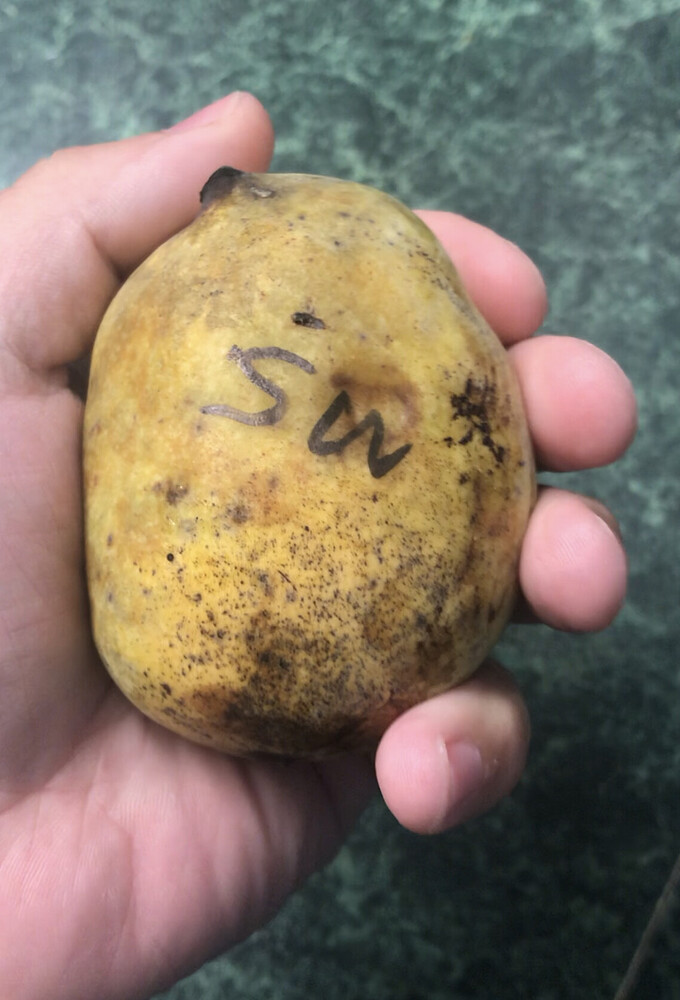
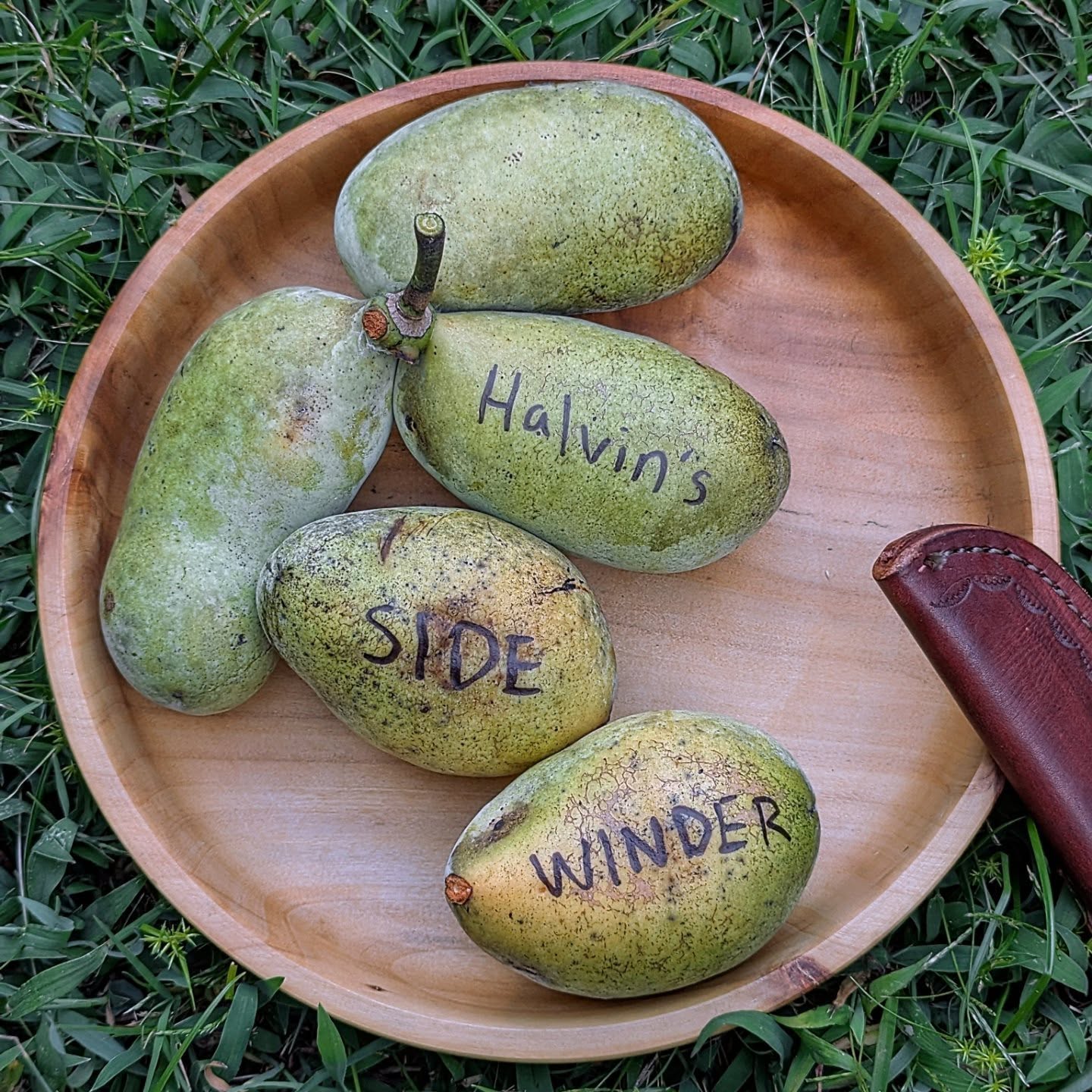
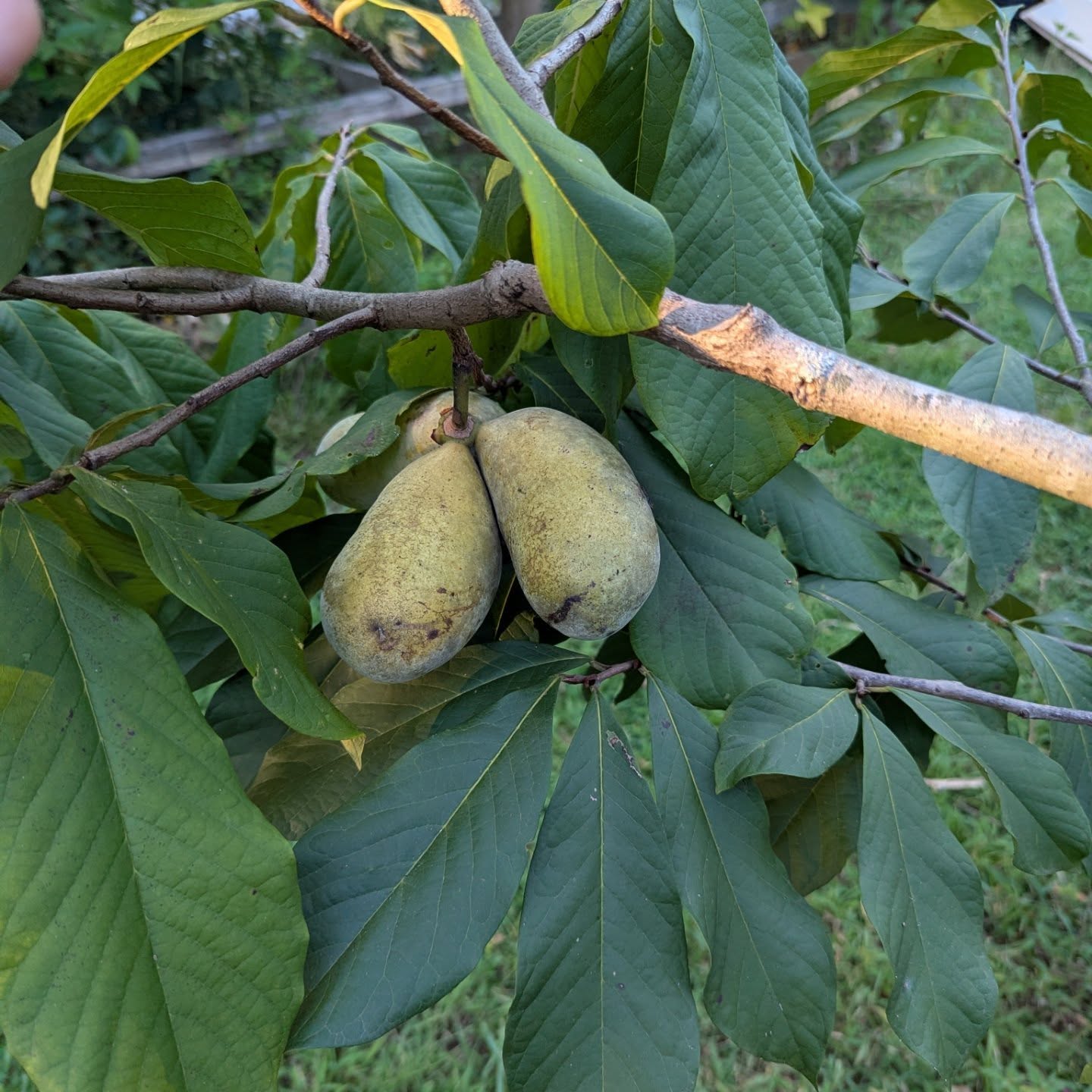
The fruits of this variety are quite large. The weight of one fruit ranges approximately from 225 to 400 g. Thus, Halvin's Sidewinder belongs to large-fruited pawpaw varieties: under favorable conditions, weight can reach about 400 g. Aroma: honey, melon, pineapple notes. Taste: pineapple, honey, melon, ripe cantaloupe, citrus notes. The taste itself is very well balanced and not overly sweet. Texture: from excellent to outstanding. Creamy, not mushy. Skin: good, quite thick, minor defects.
Yield and Regularity of Fruiting
No specific publications about Halvin's Sidewinder yield were found.
Tree Growth Vigor
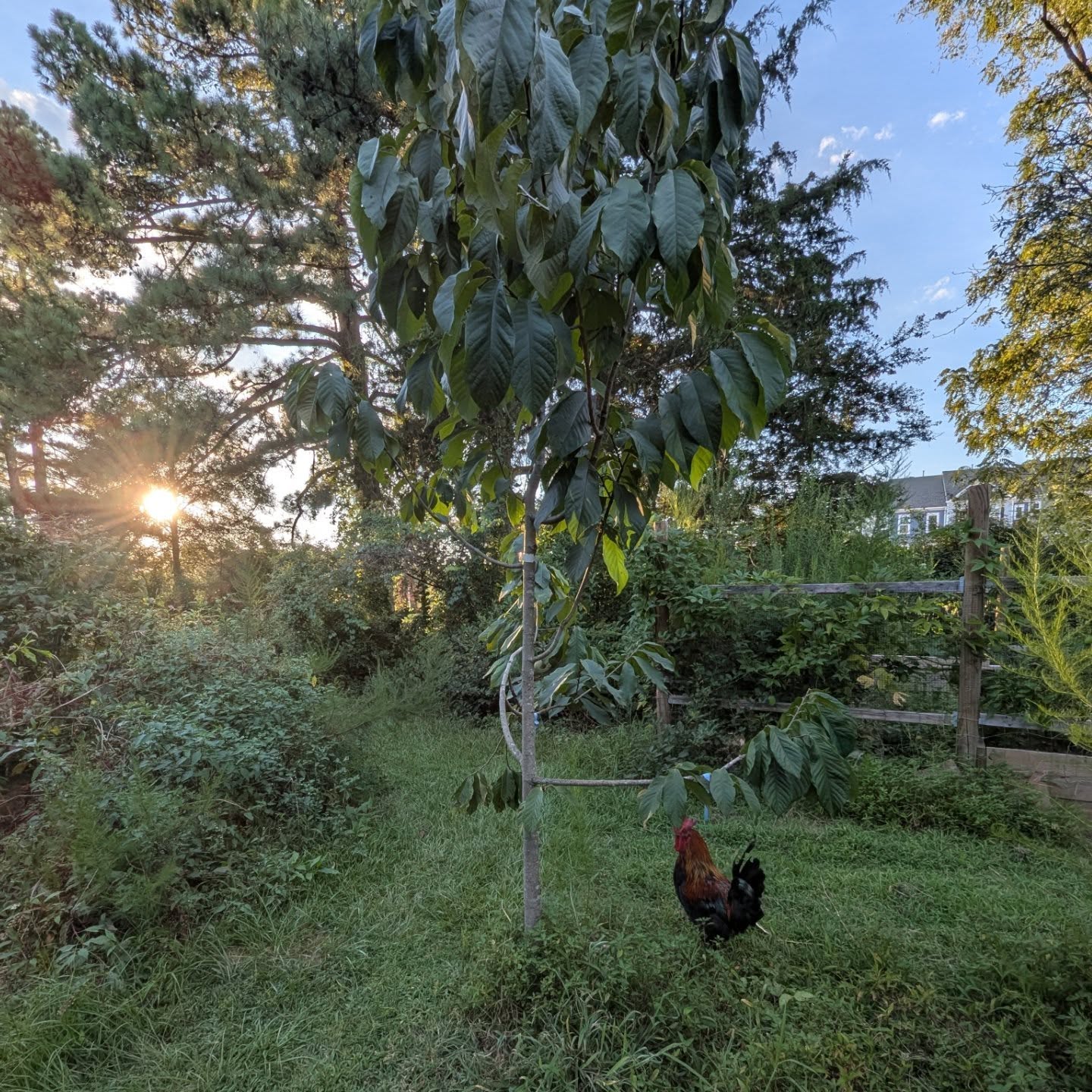
Halvin's Sidewinder grows with approximately the same intensity as other varieties: grafted seedlings often begin fruiting 3–4 years after planting. Height can be controlled by pruning – it is recommended to prune the tops to 8–10 feet (2.5–3 m) for convenient fruit harvesting.
Pollination
Like all pawpaws, Halvin's Sidewinder is not self-pollinating. The flowers of each tree contain both male and female parts, but fertilization effectively occurs only with cross-pollination by different genetically distinct trees. That is, for fruit formation, at least two plants of different varieties (or genetic clones) are needed. It is recommended to plant trees 2.5–5 m apart. In conditions of weak natural pollination, many growers practice hand pollination (transferring pollen with a brush), which significantly increases fruit set.
Disease and Pest Resistance
Pawpaw in general is characterized by high resistance to most diseases and pests. Halvin's Sidewinder inherits these qualities. There is no data that Halvin's Sidewinder has unusual weak points: it, like other selections, is noted for its "remarkable" absence of serious problems with diseases or insects. Nevertheless, for prevention, it is recommended to follow general agronomic advice – spatial placement, soil mulching, pest control.
Growing Experience in Climates Similar to Western Ukraine/Northern US States
Halvin's Sidewinder has been tested and recommended for zones with short growing seasons. In particular, gardeners in northern Poland (USDA 5b–6a, equivalent to Central European zone) called it one of the earliest varieties and recommend it as a pollinator. In France, it is also noted that this variety tolerates cooler climatic conditions well due to high cold hardiness. Thus, Halvin's Sidewinder may be promising for Western Ukrainian climate (with conditions similar to the territory of Ivano-Frankivsk or Ternopil regions). Despite the need for good pollination, it has every chance of showing normal yield in a moderate climate with sufficient summer warmth.
Where to Buy
Halvin's Sidewinder is a small niche variety, but it can be found in specialized nurseries in North America. In Ukraine, there are currently no nurseries offering Halvin's Sidewinder, but some European seedling importers (for example, the German Pawpawschule) may deliver American pawpaw varieties.
Grower Reviews
Internet forums give conflicting impressions about Halvin's Sidewinder. The breeder rated the variety as "truly early" (harvest in July) with small fruits. However, practitioners report that on their trees it often ripens only in late summer. For example, one user received fruits in late August, although the trees were still partially unripe. However, other enthusiasts call Halvin's Sidewinder a "very early" variety, capable of ripening in July–August even in the northeastern region of the USA. Overall, reviews emphasize the excellent taste of this pawpaw and its cold hardiness, but warn that in the north it is advisable to have a time buffer before frost arrives for full fruit ripening.