Key Points
- Origin: discovered in a wild population in Kentucky (Florence/Versailles), promoted by Blake Cothron.
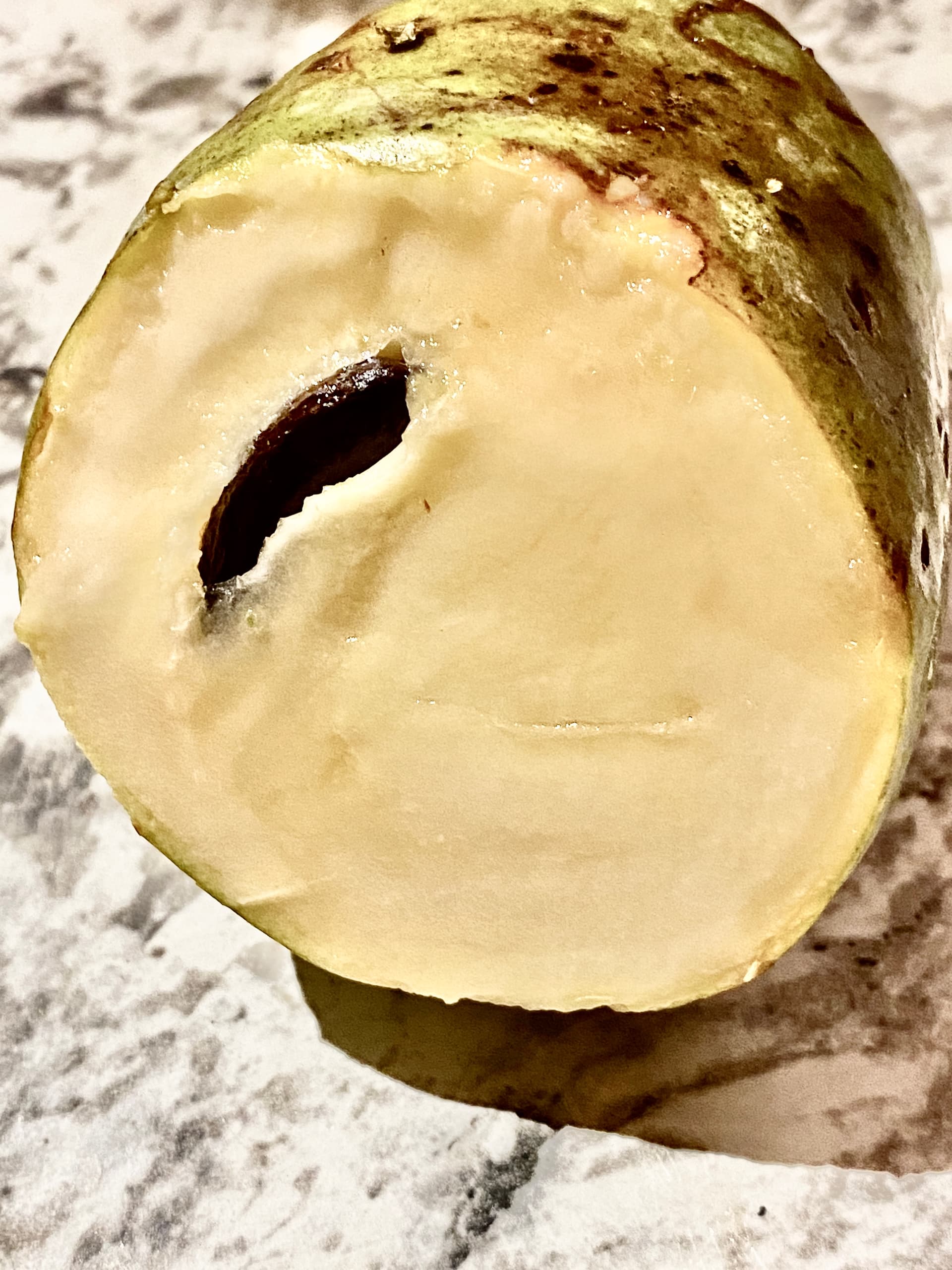
- Fruit: flesh is almost white, creamy texture, taste with caramel-vanilla notes, size 150–400 g.
- Ripening: late summer/early autumn (late August – September).
- Yield: high, reliable even in difficult years.
- Tree: vigorous, 4–6 m.
- Pollination: cross-pollination required, another variety needed.
- Resistance: no major problems with diseases/pests.
- Synonyms: Florence White, Preston’s pawpaw (possible confusion).
Detailed Description of Balarama White/Florence White Variety
Summary
Balarama White — discovered/found in a wild or semi-wild population in the Florence/Versailles area, Kentucky (USA). It is a light-fleshed (almost "white") cultivar with a creamy texture, pleasant taste, large/medium-large fruit mass, proven good endurance, and reliable fruiting in several trials.
Origin and Discovery
Origin (according to advertisements and discussions): mentions point to a find spot near Florence (near the Ohio River) or Versailles, Kentucky; in communities, it's written that a local enthusiast (Scott) found/passed on saplings, and the variety began to be promoted by Blake Cothron/Peaceful Heritage and other enthusiasts.
Synonyms/Name Confusion (Important)
In forum discussions and in the Peaceful Heritage catalog, Florence White is often substituted with Balarama White or they are called the same by origin/source; Blake Cothron in public posts hints that several local finds (Florence, Preston, etc.) are essentially the same clone/selection sold under different names. Therefore, in various sources, it may appear as "Balarama White" or "Florence White/Preston’s pawpaw" – and they are often identical. Recommendation: when buying, ask the seller for the exact name, photos of ripe fruit, and the origin of the sapling.
Fruit Description — Size, Color, Texture, Taste
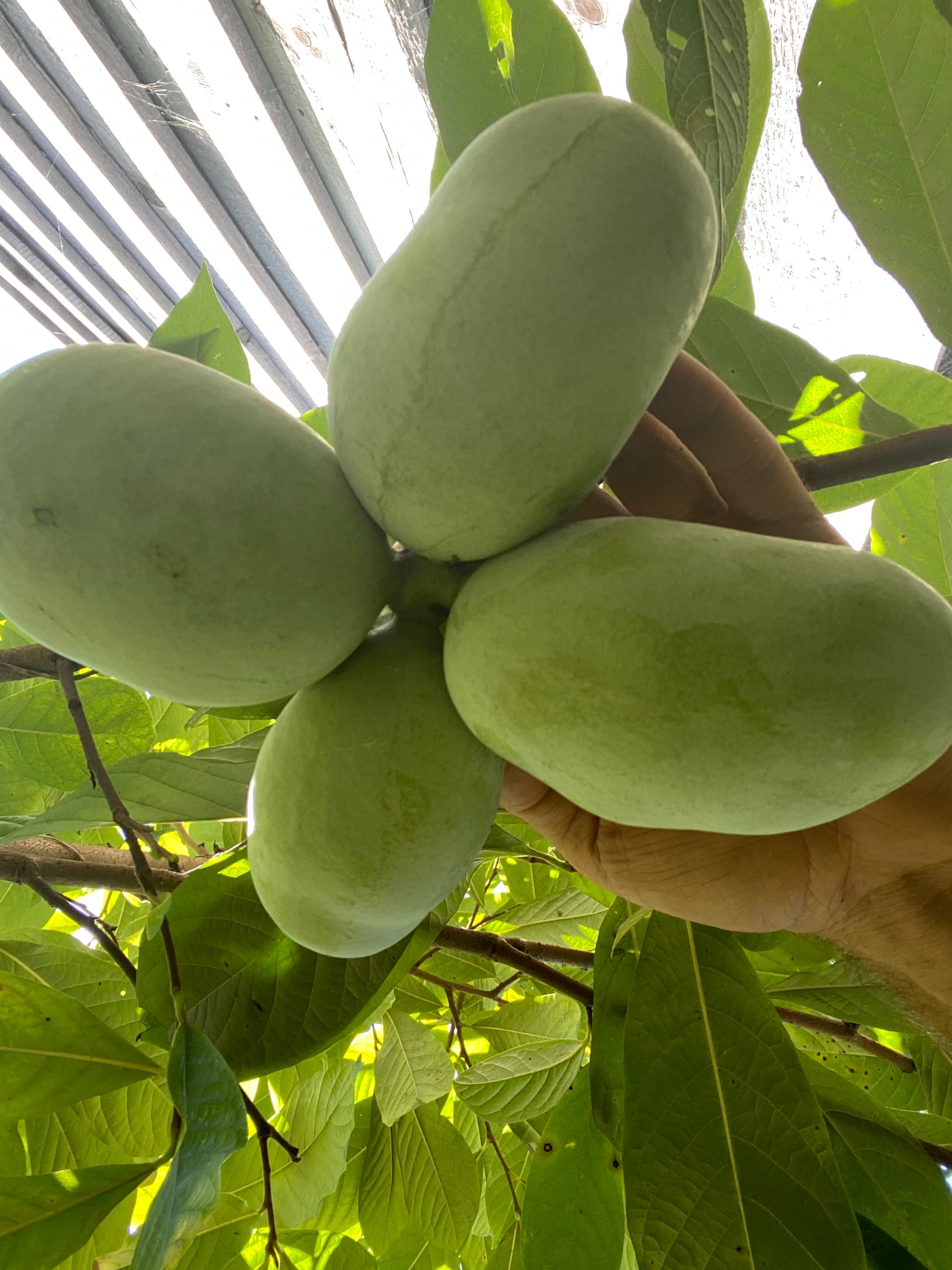
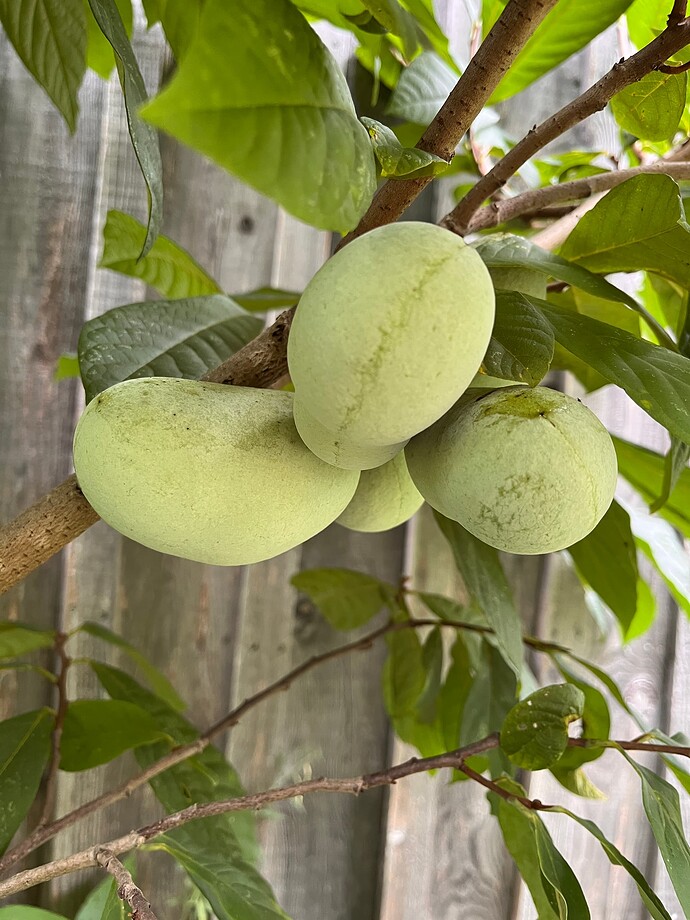
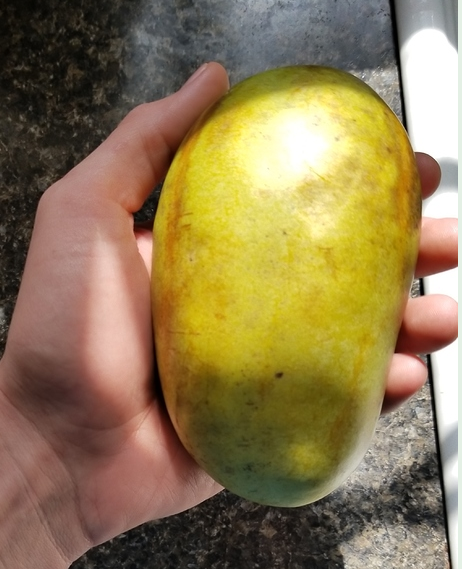
Flesh Color: very light — "almost white/very pale yellow" (white-fleshed). This is one of the key features and the reason for attention to the variety. Fruit Size: mentions point to medium-large to large fruits (in various descriptions — "medium-large" or "very large"); exact average grams for Balarama White are not published, but compared to other varieties, it's about 150–400 g/fruit (estimated). In practical reviews, it is described as "decently sized, attractive, plump/blemish-free". Texture: creamy, "custard-like", dense/buttery; the pulp is described as pleasant in consistency. Taste: in reviews — very good/pleasant, "caramel/vanilla/mild tropical" (the taste is rated positively; some tasters call it a very delicate, "soft" version of the classic pawpaw aroma).
Ripening Times
Few precise public dates exist for Balarama White; however, by origin from Kentucky and reports of ripening in farms (grown in 2023–2024), fruits ripen in a typical pawpaw period — late summer/early autumn (late August – September, in cool years – September-October). In some experimental plantings, it was noted as one of those that "ripened in 2023 when others failed" (meaning it has decent resistance to early frosts or blooming at a favorable time). this is useful evidence for climates with spring frosts.
Tree, Growth Vigor, Viability
Growth Vigor: mentioned as vigorous — i.e., relatively strong-growing, establishes well. Adult Tree Size: typical — ≈4–6 m height (depends on pruning and local conditions).
Yield and Fruiting Regularity
Several reviews of the variety note high yield and that Balarama White bore fruit in a "hard" year when others did not – this speaks to good viability and potential reliability. No exact published numbers (kg/tree) are available in open sources.
Pollination
Like allTHERS, Balarama White requires cross-pollination by a different genetic partner (another variety) to guarantee good set. For small gardens, 2–3 different varieties blooming at the same time or with overlapping bloom phases are enough. Manual pollination (transferring pollen with a brush) is a way to increase the fruiting percentage.
Disease and Pest Resistance
In reports on Balarama White, no major problems with diseases have been recorded; individual observations say "zero disease so far" for this clone in a certain garden. Overall, pawpaw as a species has moderate resistance to major diseases; wet seasons may cause superficial leaf spot.
Availability
The developer-provider is Peaceful Heritage/Blake Cothron who sells (and promotes) a very similar/identical clone under the name Florence White (its card and description are present in the Peaceful Heritage catalog). If you want to buy, Peaceful Heritage is one of the main sources in Kentucky.
Gardener Reviews and Practical Observations
The general tone is positive: people note the light flesh, creamy texture, pleasant caramel-vanilla taste, large "externally attractive" fruits, as well as good yield in certain conditions. No negative or systemic remarks (e.g., chronic disease or low winter hardiness) were found in open discussions.
Data Gaps and Limitations
There are practically no scientifically published quantitative studies for Balarama White (e.g., average fruit weight in a large trial, stable yield figures kg/tree, detailed cold hardiness data). Most data comes from forums, catalogs, and practical testing in small farms. Therefore, some claims (e.g., "very large fruits") should be taken as guidelines rather than scientifically measured values.
Conclusion and Tips
Balarama White/Florence White is a promising but still little-studied white-fleshed variety with good flavor and potential fruiting stability.