Key Points
- High-performance cultivar stabilized and selected in Ontario, Canada.
- Produces large, dessert-quality fruit with a significantly low seed-to-pulp ratio.
- Extreme cold resilience; rated for USDA Zone 5 (surviving temperatures down to -29°C).
- Requires cross-pollination from a genetically distinct variety for fruit set.
Variety Description
Origins and Architecture
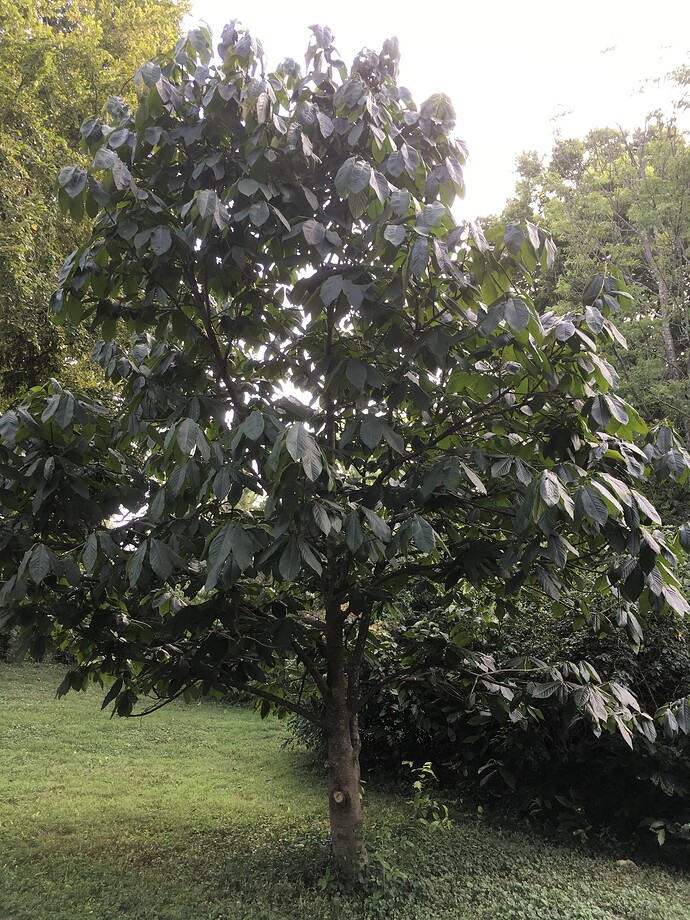
Released as Campbell's #1, NC-1 was selected by Doug Campbell in Niagara-on-the-Lake, Ontario, in 1976. This variety was specifically chosen for its ability to thrive in northern latitudes where other cultivars struggle. The tree is structurally sound, reaching heights of 12-16 feet, and is noted for its distinctive dark bluish-green foliage, making it a valuable ornamental specimen even when not in fruit. It exhibits a moderate, stable growth rate and a broad, open canopy.
Fruit Specification
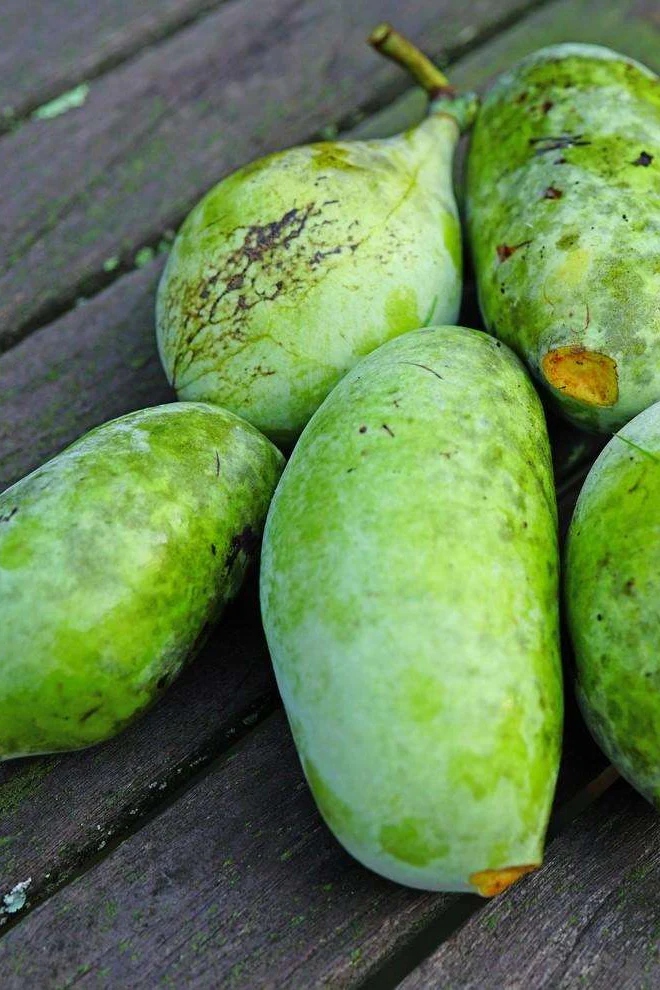
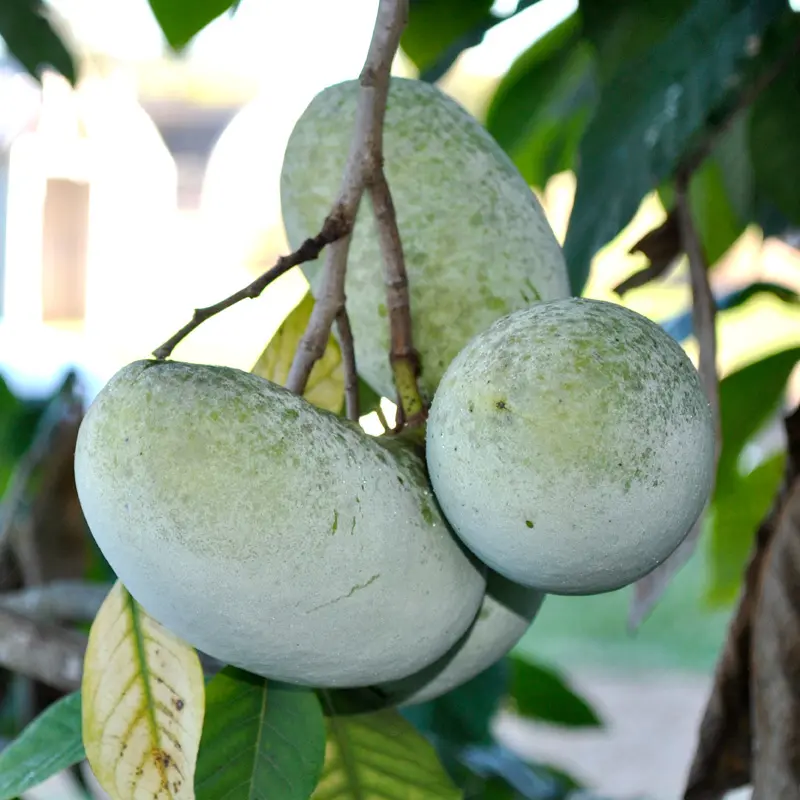
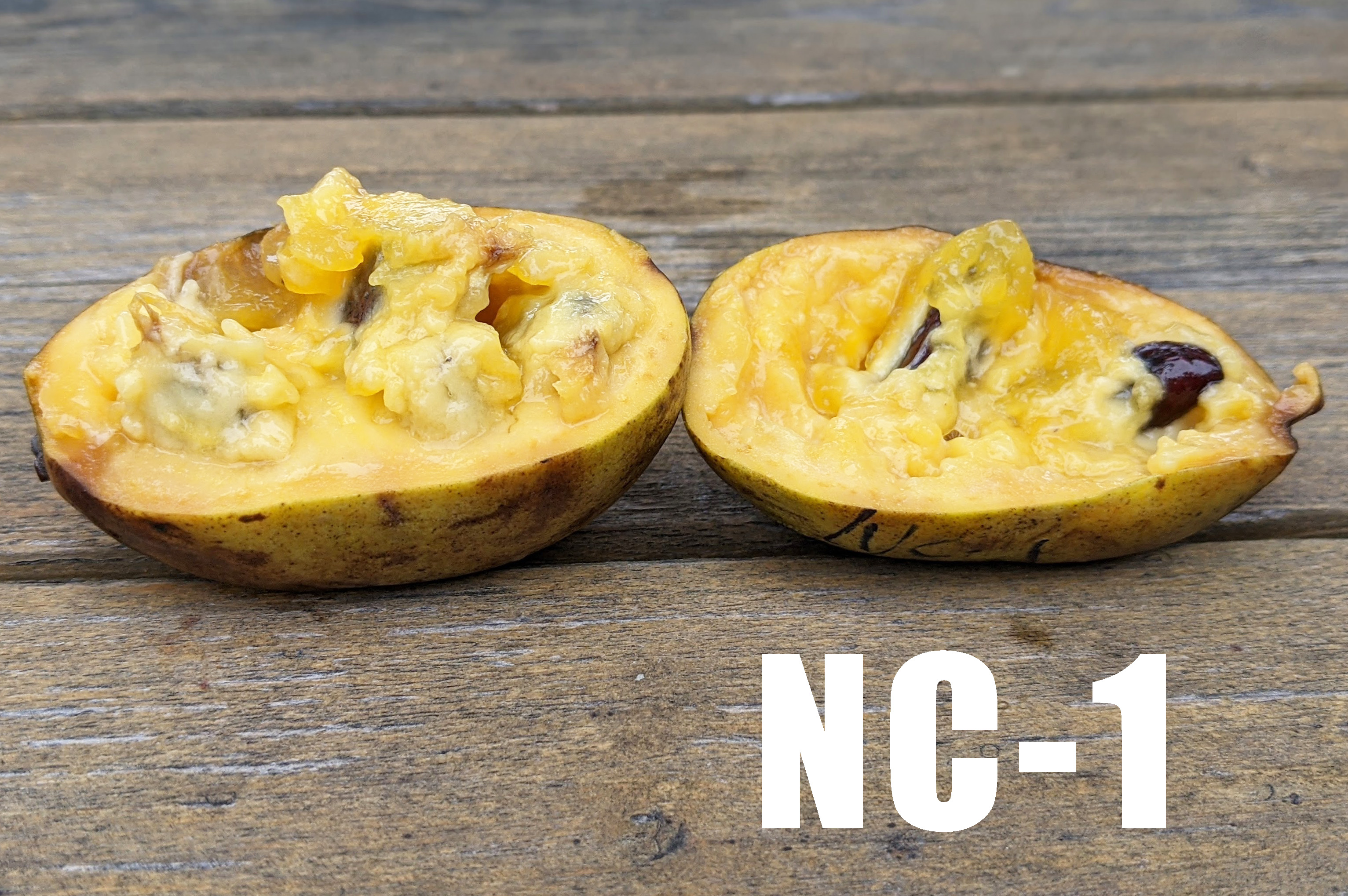
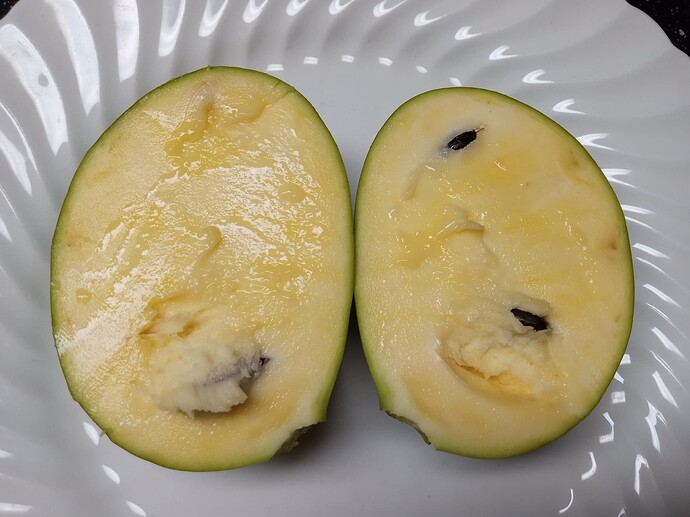
The fruit of NC-1 is characterized by a thin, protective yellow-green skin that yields to a rich, buttery yellow flesh. It is a "meat-heavy" variety, with seeds accounting for only 6-8% of the total fruit mass. The flavor is a sophisticated tropical blend, heavily centered on banana and mango profiles with a high sugar concentration hitting 24.9° Brix in optimal seasons. Harvest typically begins in early to mid-September, depending on the cumulative degree days of the region.
Cultivation Insights
While NC-1 is exceptionally hardy once established, saplings benefit from windbreaks and afternoon shade during their first three years. Its parentage (likely Davis and Overleese) gives it a robust resistance to many common species diseases. To maximize yield, it should be paired with other heavy hitters like Overleese or Sunflower to ensure effective pollen transfer.
Landscape and Utility
NC-1 is an ideal "dual-purpose" tree. Its spring display of deep purple, bell-shaped flowers and its golden-yellow autumn foliage provide seasonal interest. For the grower, it offers a reliable, high-quality harvest that is suitable for both fresh consumption and culinary processing into purees and frozen desserts.
Breed Analysis: NC-1 (Campbell's #1)
This cultivar represents one of the most successful adaptations of the species to northern climates. Analysis of regional variety trials reveals several unique competitive advantages:
- Establishment Speed: NC-1 is known for being an "early starter," often beginning its production cycle several years earlier than slower wild-selection seedlings.
- Northern Provenance: Because it originated in Ontario, its biological "clock" is perfectly tuned for shorter summers and abrupt autumn transitions.
- Sensory Rating: It consistently ranks in the top tier of blind taste tests for its melting texture and lack of the bitter aftertaste often found in unrefined pawpaw selections.
- Pollination Logistics: While the tree produces both male and female flower parts, it is strictly self-incompatible; the presence of a genetic partner is mandatory for any commercial or home production.
Breed Performance Summary
| Indicator | Cultivar Metric |
|---|---|
| Provenance | Doug Campbell, Ontario, Canada (1976) |
| Cold Limit | USDA Zone 5 (-29°C resilience) |
| Mass Category | Large (154–240 g) |
| Edible Ratio | High (Seeds only 6-8% of weight) |
| Sugar Profile | 22.8 - 24.9° Brix |
| Harvest Window | September (Early - Mid) |
| Vigor | Moderate / Stable |
| Asimicin Level | Moderate (2.055%) |
Final Verdict
NC-1 (Campbell's #1) is a mandatory inclusion for any orchard in northern or central regions. It effectively bridges the gap between cold hardiness and the elite flavor profiles usually reserved for southern cultivars. While it exhibits moderate susceptibility to Phyllosticta (leaf spot) and has a slightly higher asimicin content than the Peterson hybrids, its proven survival and flavored consistency in Zone 5 make it a premier "workhorse" variety for the northern grower.