Key Points
- Origin: A wild selection discovered in Tifton, Georgia (c. 1970, Major C. Collins).
- Vigor: Noted for extreme growth rates—it outpaces most modern cultivars, forming a 3–4m canopy in just a few seasons.
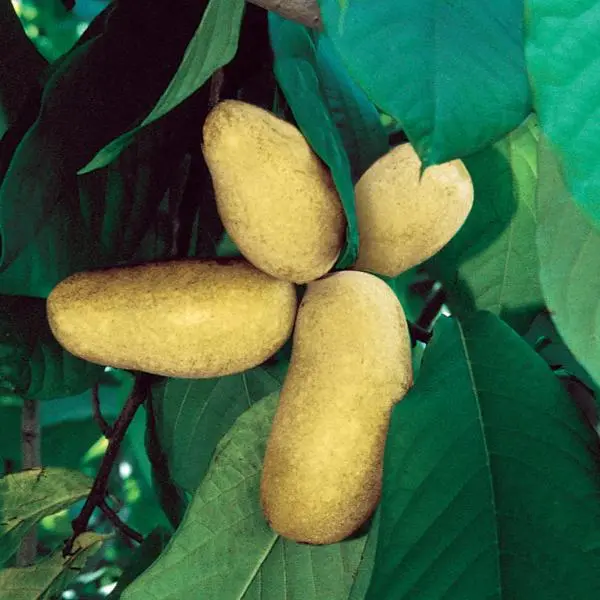
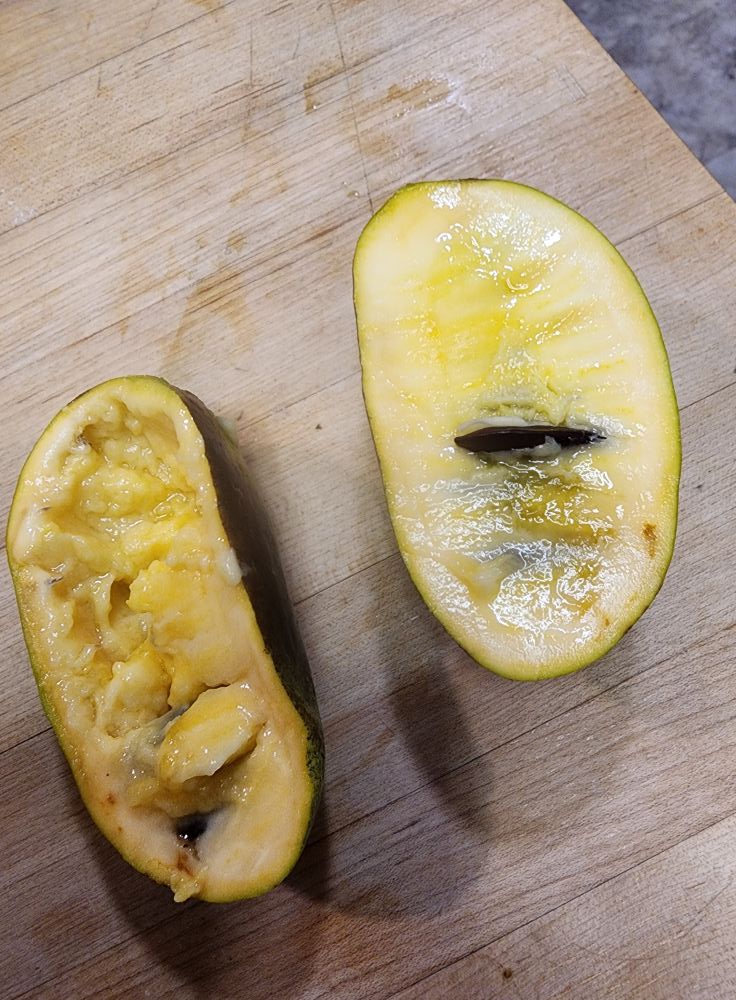
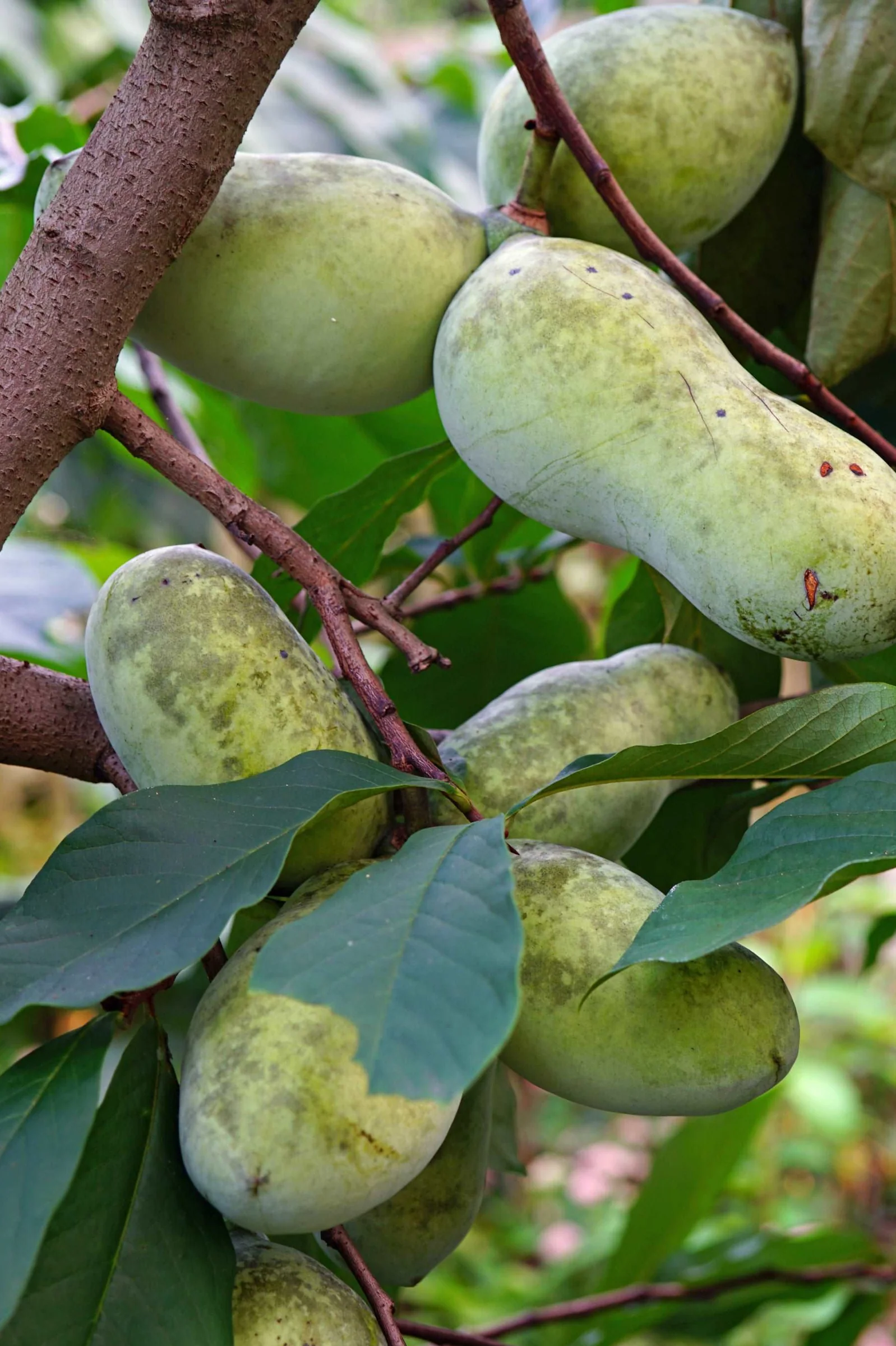
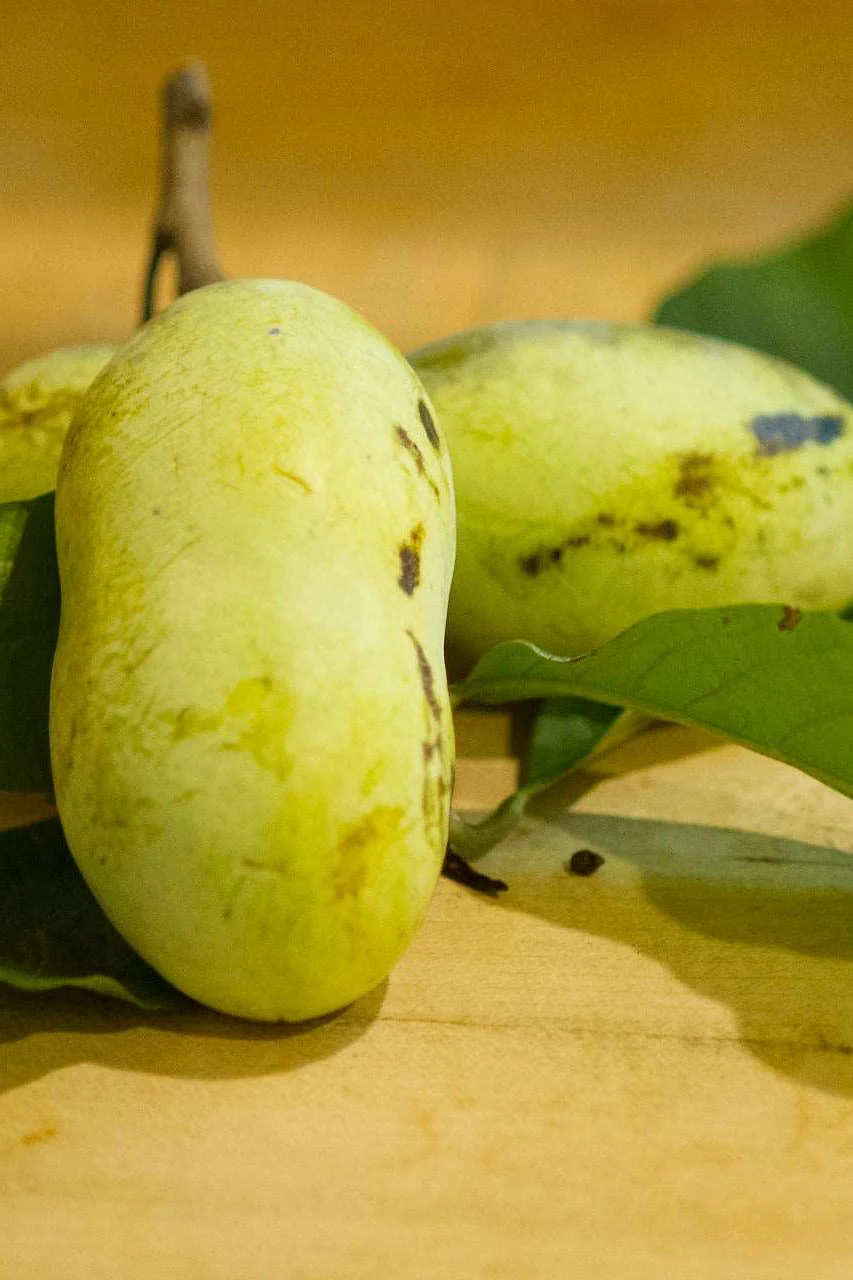
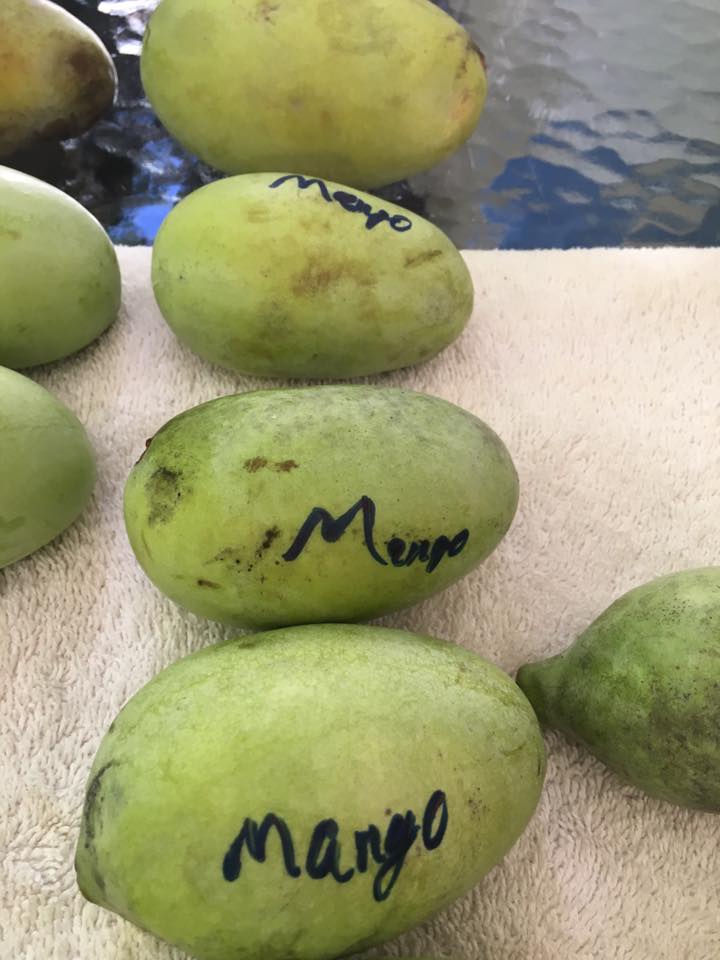
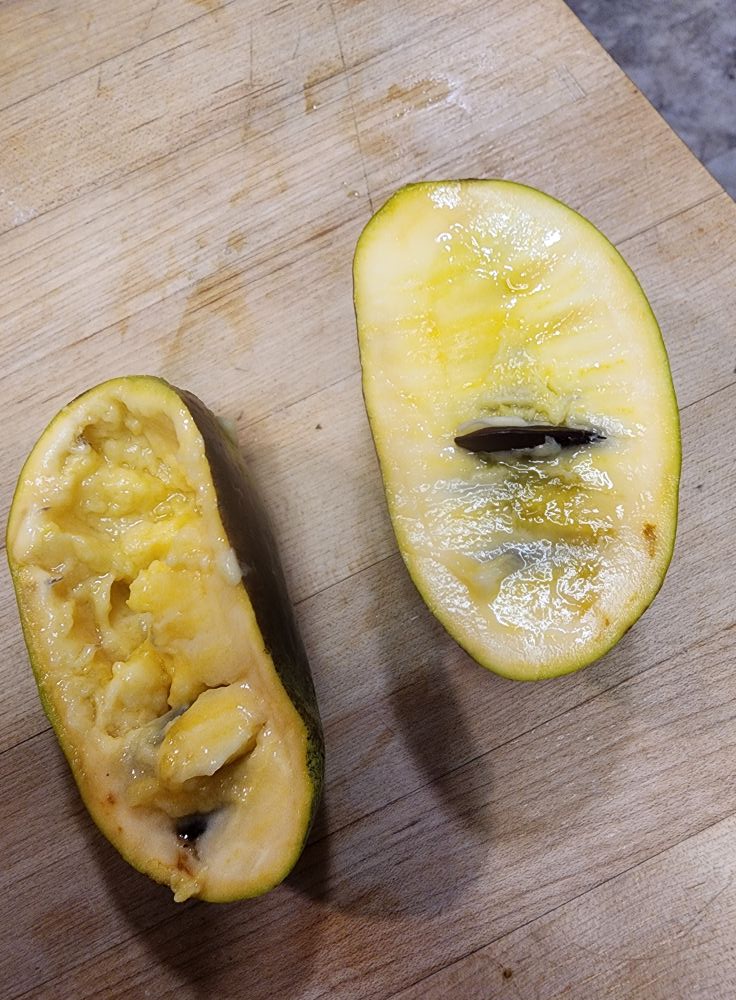
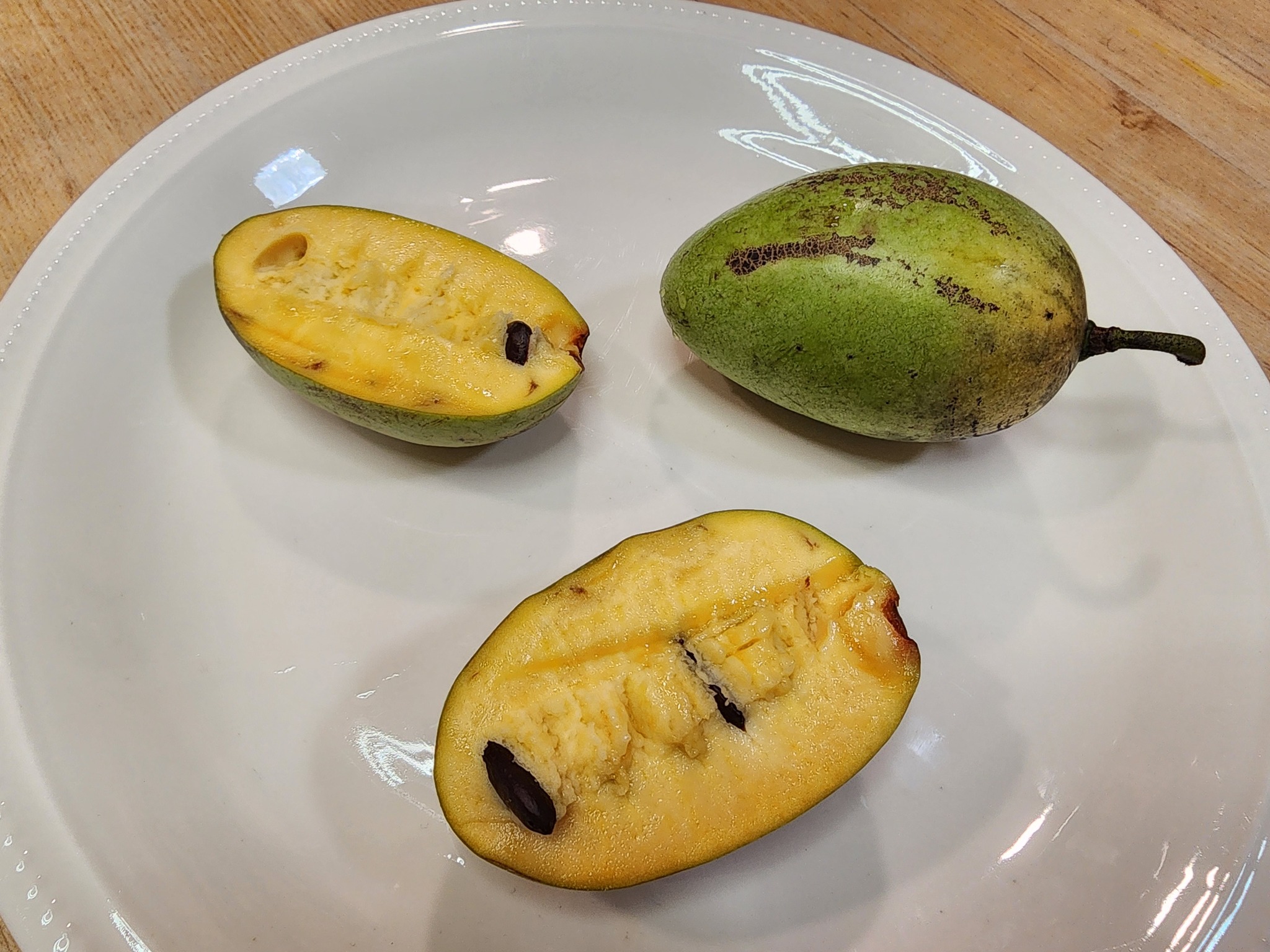
- Fruit Morphology: Medium-to-large specimens (127–293 g) with distinctly orange-hued pulp.
- Ripening: Ultra-early season (late August to early September in the southern US).
- Resource Value: Frequently used as a fast-growing rootstock or in breeding programs to introduce vigor into legacy lines.
- Hardiness: USDA Zones 5–9 (tolerant down to -25 °C).
- Management: Can be prone to fruit splitting in high-rain environments; best suited for sites with reliable summer heat.
Variety Description
Summary
Mango is a historical pawpaw cultivar that originated as a wild discovery in Georgia. It is defined by its aggressive vegetative vigor and its signature orange-yellow flesh, which inspired its name. As an early-season performer, it provides fruit well before many the industrial hybrids. While its tropical flavor is highly praised, its softer, sometimes "slick" texture represents a stylistic divide among enthusiasts. It remains a staple for southern orchards and a vital tool for breeders seeking to accelerate tree development.
Status and History
Selected by Major C. Collins in 1970, this variety has been a benchmark for southern-adapted pawpaws for over five decades. Its southern provenance makes it naturally more resilient to heat stress than some northern-derived selections.
Orchard Performance
Growth Dynamics: It is widely considered one of the fastest-growing pawpaw varieties on the market. Grafted specimens can reach maturity and begin producing in as little as 3–4 years under optimal conditions. Canopy Management: Its vigorous nature requires space; it quickly fills its allotted footprint, reaching 10–15 feet in height. Rootstock Utility: Because it grows so rapidly, it is often favored as a "utility" variety for rapid canopy expansion.
Fruit Analysis
Aesthetics: The pulp is significantly more "orange" than the creamy-white or pale yellow common to other cultivars, giving it a high visual appeal for processing. Weight: Consistent medium-to-large fruits, typically averaging around 250 g. Experience: The flavor is a focused tropical blend. However, consumers who prefer a firm, "cheesecake" texture may find Mango's melting/watery consistency too soft. It is best enjoyed immediately after harvest, as its shelf life is relatively short.
Climate and Resilience
Adaptability: While it shines in the heat of USDA Zones 7–9, it has proven hardy in Michigan and Europe (Zone 5). Disease Profile: Maintains decent resistance but can show susceptibility to Phyllosticta fruit spot in high-humidity/low-airflow environments. In northern climates, its early ripening ensures the crop matures before the first frost.
Collector's Verdict
Pros: Explosive growth, very early harvest, unique tropical look, low seed-to-pulp ratio. Cons: Texture can be too soft for some palettes, prone to bruising, requires careful water management to prevent splitting.
Conclusion
Mango is the "race car" of pawpaws. If you need a tree that matures quickly and provides an early-season tropical harvest, it is hard to beat. While its texture is a matter of personal preference, its reliable performance in warm climates and its vibrant orange flesh make it a permanent fixture in the global pawpaw repository.
Breed Performance Summary
| Indicator | Cultivar Metric |
|---|---|
| Primary Origin | Wild discovery, Tifton, GA (1970) |
| Vegetative Vigor | Extremely High (Market Leader) |
| Pulp Color | Saturated Orange-Yellow |
| Consistency | Soft / Melting / Slick |
| Ripening window | Early (Aug - Sept) |
| Cold Limit | USDA Zone 5 (-25 °C) |
| Availability | Widely Available (Peterson/Legacy lists) |