Key Points
- Breeding: A product of the Kentucky State University program led by Kirk Pomper and Sheri Crabtree.
- Evaluated Code: Known during trials as HI-7-1.
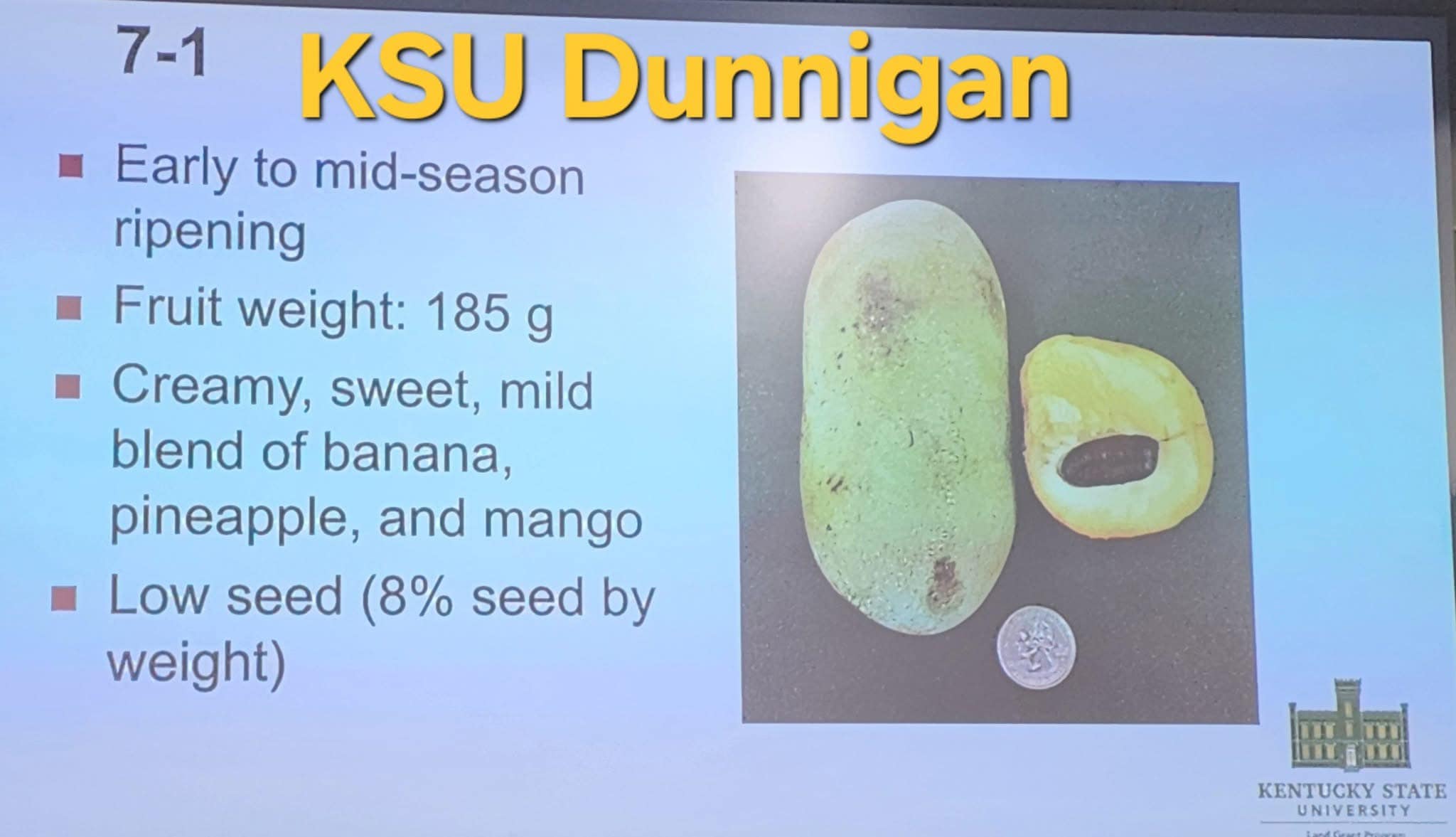
- Fruit Morphology: Large, elongated "banana-shaped" fruits typically weighing 167–241 g.
- Pulp: Distinctive pale blonde or light-yellow hue; elite creamy texture.
- Flavor: Sophisticated cherimoya-banana profiles; ranked among the highest in sensory trials.
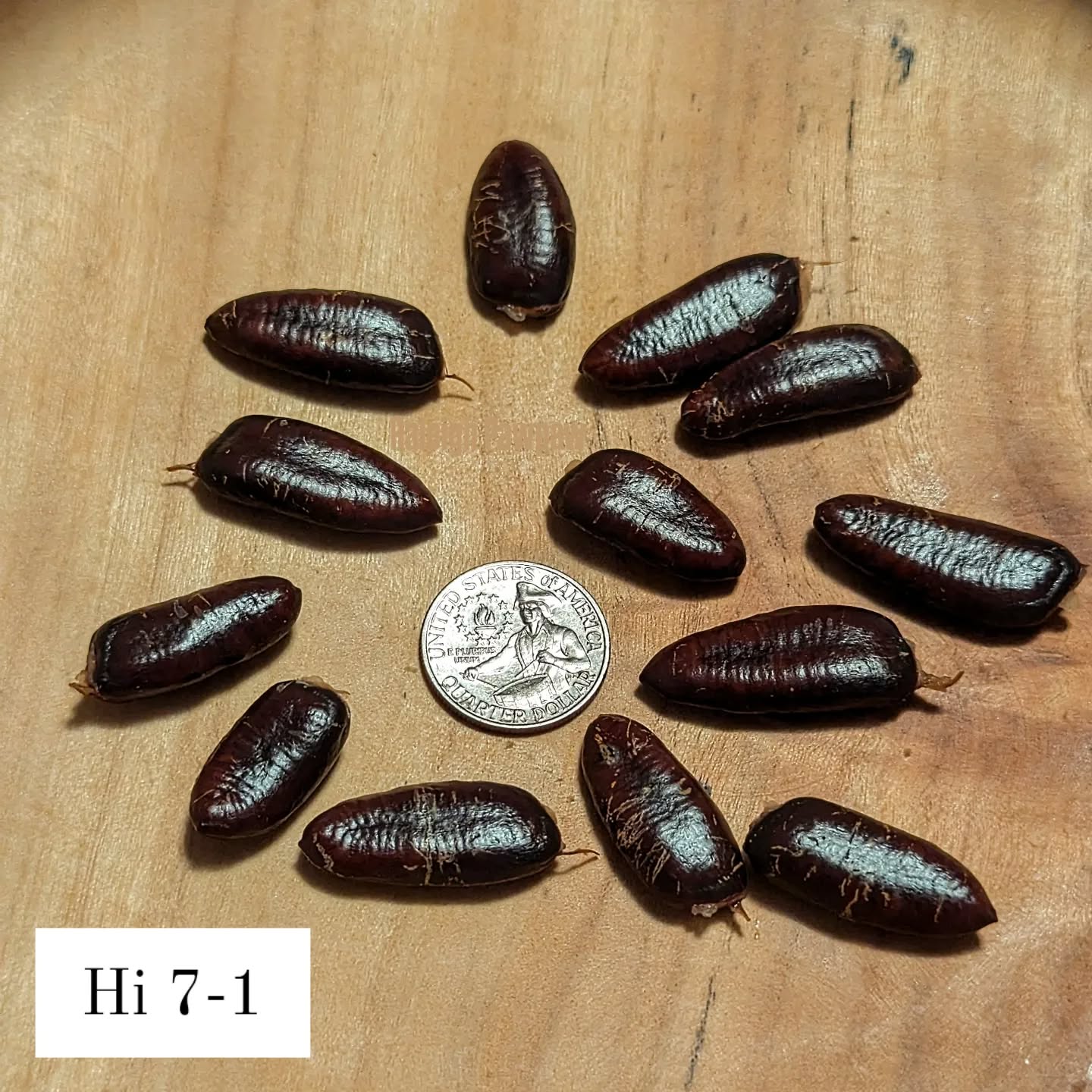
- Seed Ratio: Moderate seed-to-weight content (~9–12%).
- Sugar Content: High density, frequently recorded between 24–27 °Brix.
- Productivity: Reported yields of ≈12 kg per tree in standardized research blocks.
- Disease Resilience: Moderate susceptibility to Phyllosticta; requires localized monitoring in humid zones.
Variety Description
Summary
KSU Dunnigan (HI-7-1) represents a high-tier selective release from the world-renowned program at Kentucky State University. It is celebrated primarily for its large, elongated fruit and a flavor signature that leans towards cherimoya and banana. While its seed percentage is mathematically higher than some cousins (ranging from 9–12%), its extreme sweetness (averaging 25 °Brix) and unique pale-blonde flesh texture make it a favorite for connoisseurs. It matures in the middle of the pawpaw season, typically peaking in the third week of September in temperate climates.
Status and Pedigree
The variety was developed at the Harold R. Benson Research & Demonstration Farm. While its exact parentage is restricted university data, its morphology suggests a heritage optimized for sugar concentration and fruit length.
Horticultural Characteristics
Form: Uniquely long and curved, resembling a large tropical banana. Pulp: Features a refined blonde-custard appearance. Sensory profile: Often described as a "tropical cocktail"—tasting of melon, pineapple, and custard. In professional evaluations by ASHS (2023), HI-7-1 outperformed several established commercial standards for overall palatability.
Metric Analysis
Weight Metrics: Mature trees produce fruits in the 167–241 g range. Yield Efficiency: Research plots have recorded consistent yields of 12 kg per tree. While lower than industrial heavyweights like KSU-Chappell, the quality-per-kilo is exceptionally high. Sugar Profiling: Consistently tests in the elite "super-sweet" category with mid-to-high 20s °Brix ratings.
Orchard Management
Disease Resistance: Demonstrates moderate resistance to common fungal pathogens, though vigilance against Phyllosticta is advised for growers in southeastern US or high-humidity European zones. Propagation: Succeeds well through standard chip-budding techniques onto seedling rootstocks.
Conclusion
KSU-Dunnigan (HI-7-1) is a specialized release targeting the premium fresh-fruit sector. Its combination of elongated "novelty" shape, super-high sugar density, and cherimoya-like flavor makes it an essential addition for growers aiming for the highest flavor rankings, even if it requires more active disease management than its counterparts.
Summary Data
| Metric | Value / Detail |
|---|---|
| Program | KSU, Kirk Pomper / Sheri Crabtree |
| Average Fruit Weight | ~167–241 g |
| Yield Density | ~12 kg / tree (benchmark) |
| Primary Flavor | Cherimoya / Banana / Melon notes |
| Pulp Texture | Pale blonde, firm-creamy |
| Sugar Content (°Brix) | ~24–27% (exceptional) |
| Seed Content | ~9–12% |
| Disease Resilience | Moderate (Phyllosticta monitoring advised) |
| Status | Released Cultivar |