Key Points
- Origin: wild selection discovered by Woody Walker in Madison County, Kentucky.
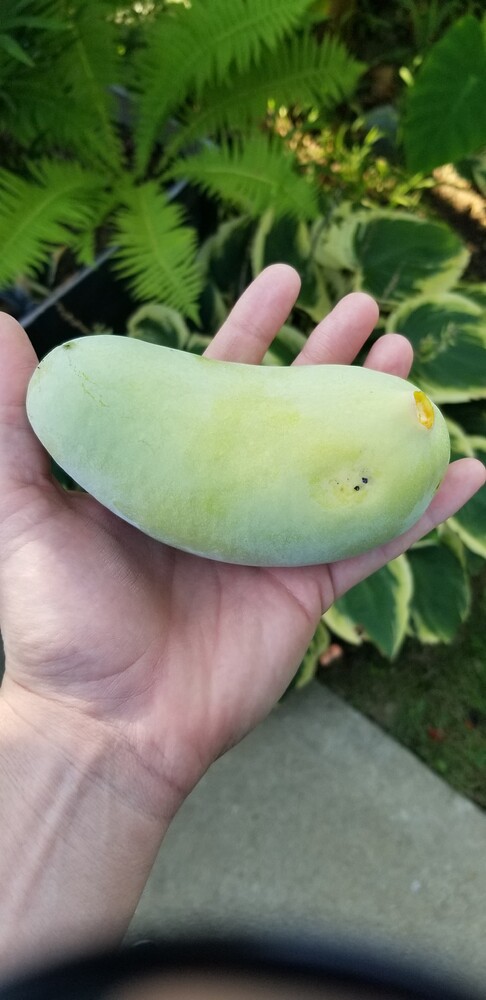
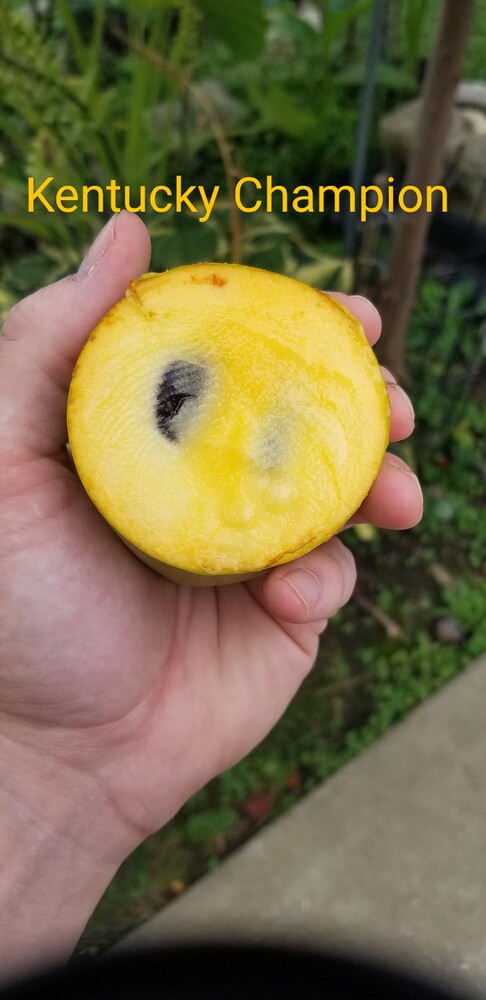
- Fruit: relatively large (≈230 g), sturdy skin, golden-orange flesh, "melon–orange" flavor with hints of acidity.
- Seeds: low seed-to-pulp ratio of ≈8.3%.
- Ripening: mid-early.
- Yield: often described as "shy bearing," showing inconsistent productivity.
- Tree: the original "Champion Tree" of Kentucky.
- Pollination: requires cross-pollination.
- Hardiness: USDA 5–9.
- Resistance: standard for the species; no noted special vulnerabilities.
Variety Description
Summary
Kentucky Champion (KY Champion™) is a wild selection discovered by Woody Walker in Madison County, Kentucky. The original "Champion Tree" was recorded as the largest in the state. It is described as a very early-ripening variety with substantial fruits (averaging ≈230 g), possessing a durable skin and dense, golden-orange flesh. The flavor is a complex melon–orange with a pleasant acidity reminiscent of pineapple or raspberry. Its seed ratio is notably low (≈8.3%). While positioned as ideal for regions with shorter growing seasons (lower GDD), some reports mention it can be shy-bearing, making its commercial utility a subject of ongoing evaluation.
History and Discovery
Discovery: found by Woody Walker in Madison County (near Richmond), KY. The historic tree attained "state champion" status in local forest registry and media. As of 2019, the specimen was 38 years old and reached 8.5 m in height. Harvest begins early, typically maturing just two days after Summer Delight. GDD requirements range from 2291 to 2979 depending on the site.
Introduction and Distribution
The variety was formally introduced through England’s Orchard & Nursery and is now marketed as KY Champion. In Europe, it is found in specialty catalogs as "Kentucky Champion." It remains a classic example of a "local selection"—a standout wild tree brought into cultivation for its agronomic merits.
Fruit Overview
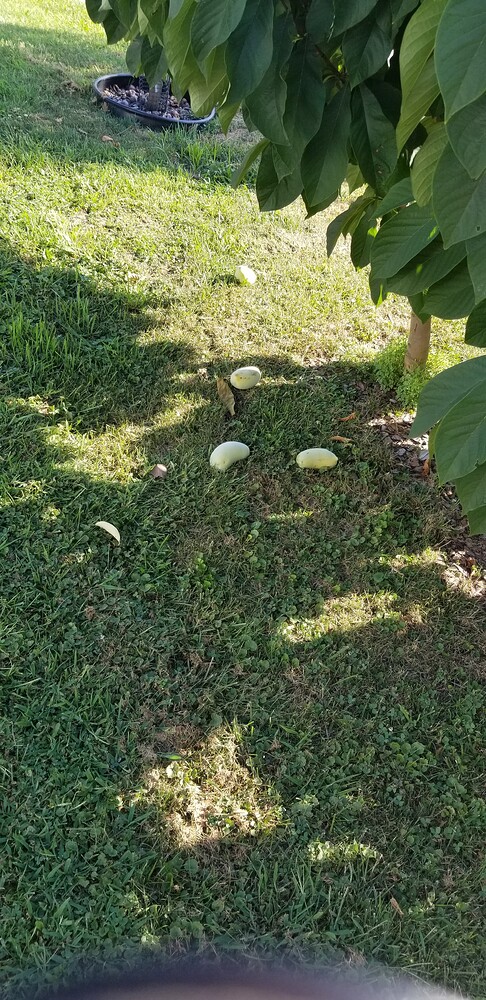
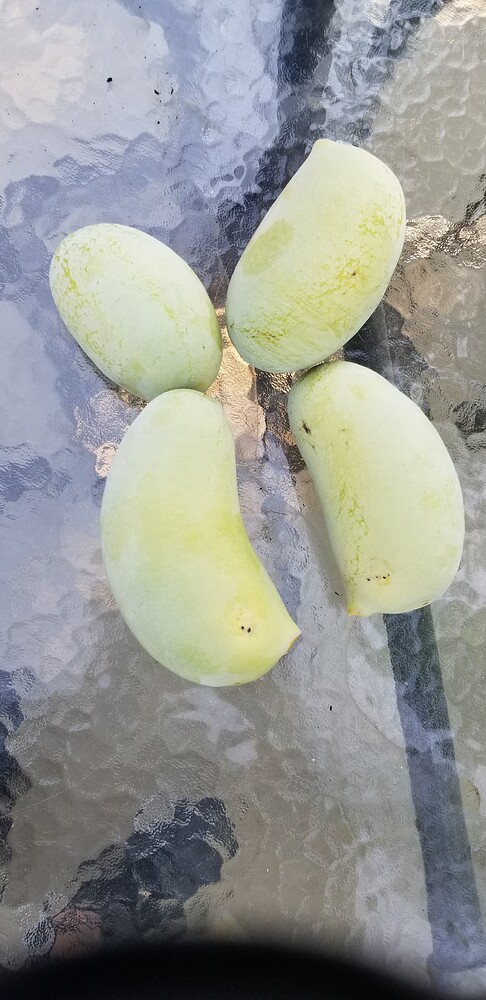
Weight: Many descriptions cite an average of 230 g, with some specimens reaching up to 400 g. Shelf life is notably short, so immediate consumption or freezing of the pulp is recommended. The seeds are easier to remove than those of many other cultivars. Form: elongated banana-shape with a tough skin. Pulp: dense and golden-orange. Flavor: complex melon and orange notes with refined acidity. Seed Ratio: exceptionally low (8.3%), providing a high yield of edible pulp.
Ripening Times
Early: in comparative trials, KY Champion consistently ranks as one of the earliest ripening cultivars, often categorized as "very early."
Productivity
Yield: estimates range from 15–20 kg per tree. However, it is sometimes referred to as "shy bearing," meaning fruit set may be lighter or more inconsistent than in heavy-cropping commercial standards. For reliable cropping, it requires cross-pollination from Varieties like Overleese or NC-1.
Tree Habitus
While the original champion tree is quite large, nursery specimens typically grow to 4–6 m. The cultivar is remarkably sturdy and takes well to grafting. Growth habit is upright with a rounded crown and moderate vigor.
Pollination
Cross-pollination is essential for stable yields. While some early reports hinted at partial self-fertility, this is not confirmed for reliable crops. Ensure other early-flowering cultivars, specifically Overleese or NC-1, are accessible to pollinators.
Disease Resistance
No special vulnerabilities or unusual resistances are recorded for KY Champion; it follows standard pawpaw health trends regarding leaf spotting and fruit perishability.
Recognition
State Champion Tree: Extensive local press coverage in media like the Richmond Register and community grower forums has cemented its status as a landmark variety. Photographic and video archives of the original tree are widely circulated in enthusiast circles.
Expert Evaluation
Practitioner Reviews: Community feedback is mixed. Enthusiasm for its early ripening and flavor is high among certain growers and sellers. However, some independent KSU evaluations suggest more modest results regarding yield stability. Critical assessment of site performance is encouraged for new orchardists.
Data Limitations
While marketing data is abundant, peer-reviewed, long-term standardized datasets regarding Brix levels and annual yield stability are less accessible. Most figures originate from nursery trials and historical orchard observations.