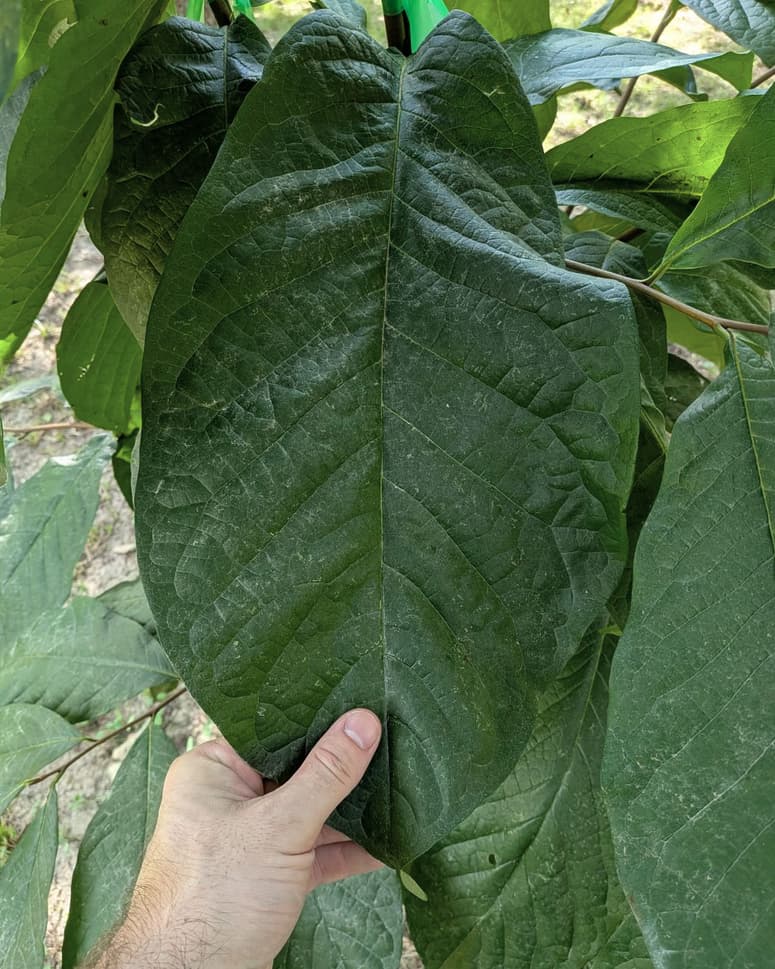
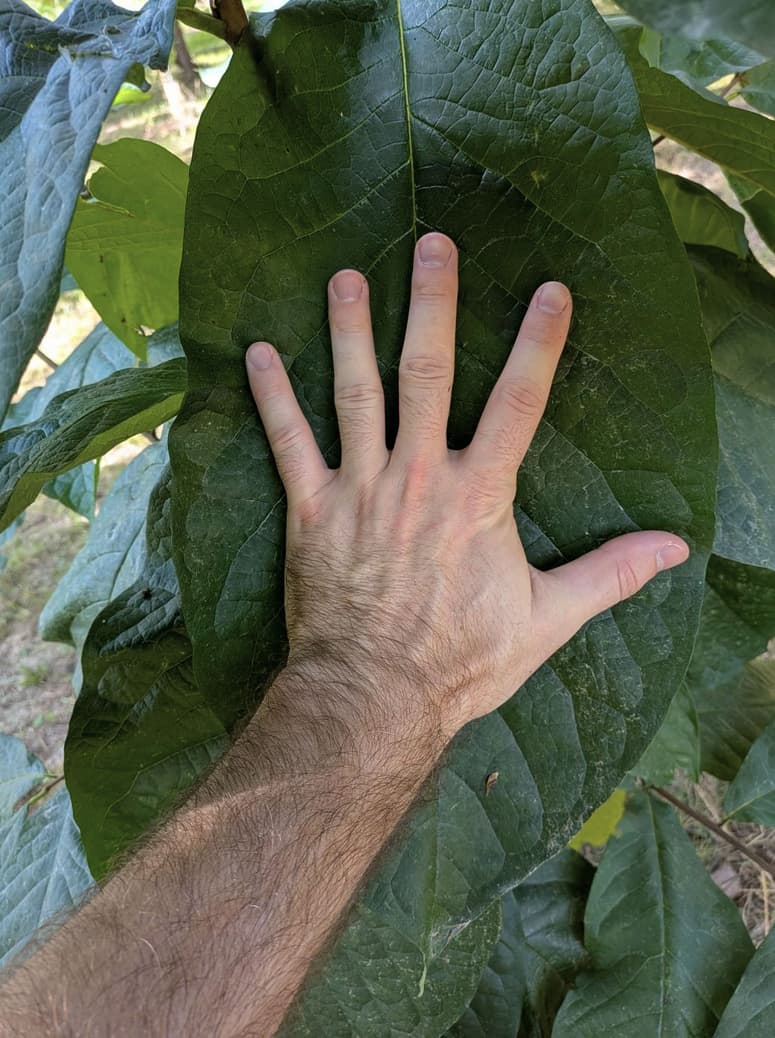
Key Points
- Origin: selection by Jerry Lehman, Terre Haute, IN.
- Parentage: Sunflower × Sam Norris-15.
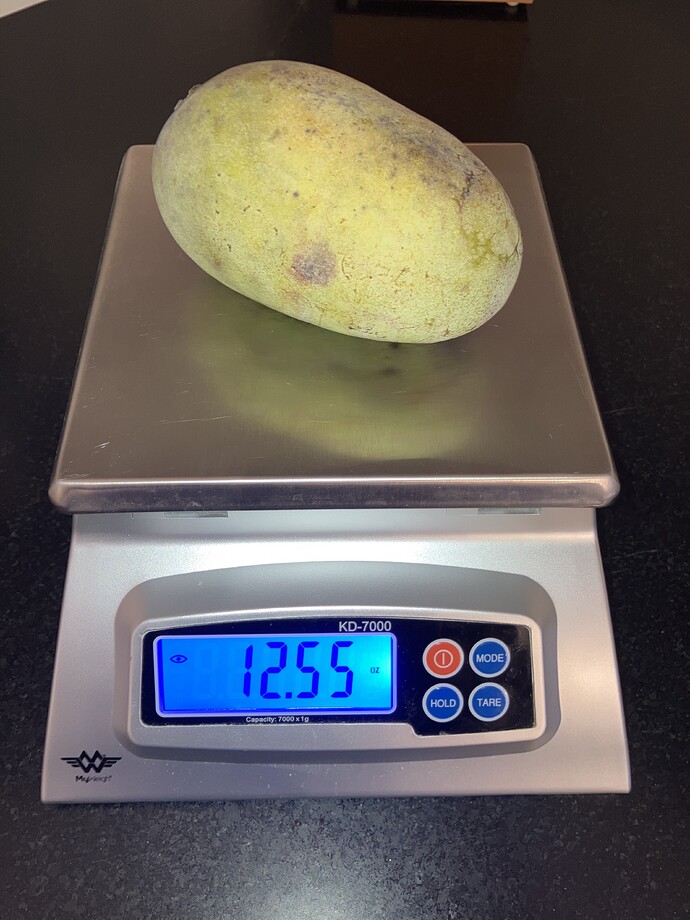
- Fruit: Large to very large (≈283–454 g, occasionally 680–900+ g), banana-mango flavor, creamy texture.
- Ripening: Mid-late to late (September – early October).
- Yield: Productive; award-winner for both flavor and size.
- Tree: 4–6 m, well-shaped habit.
- Resistance: Standard for the species; fruit behaves delicately due to thin skin.
- Pollination: Cross-pollination required.
- Awards: Ohio Pawpaw Festival — "Best Pawpaw" (2013, 2017), "Biggest Pawpaw" (2014).
- Hardiness: USDA 5–9.
Variety Description
Summary
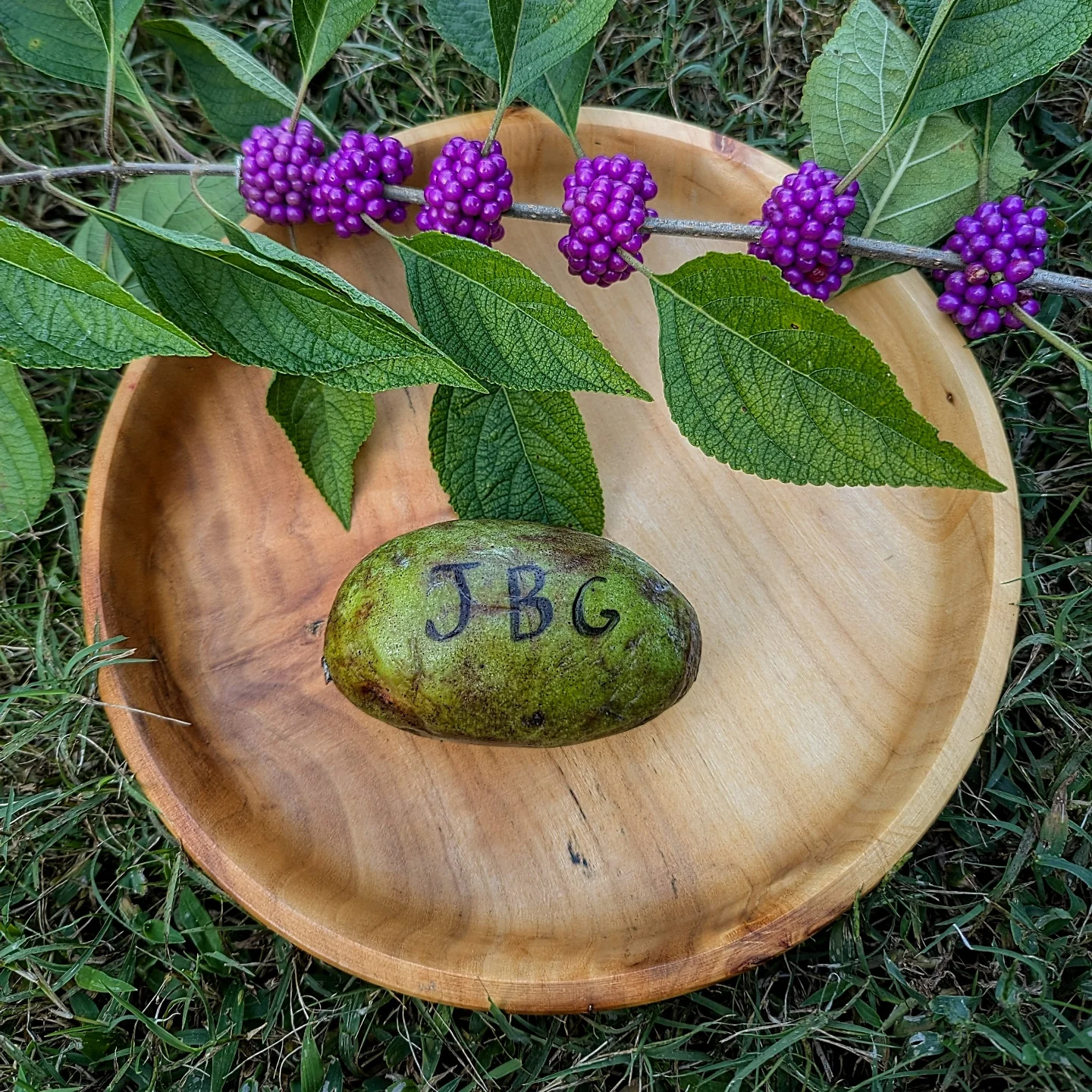
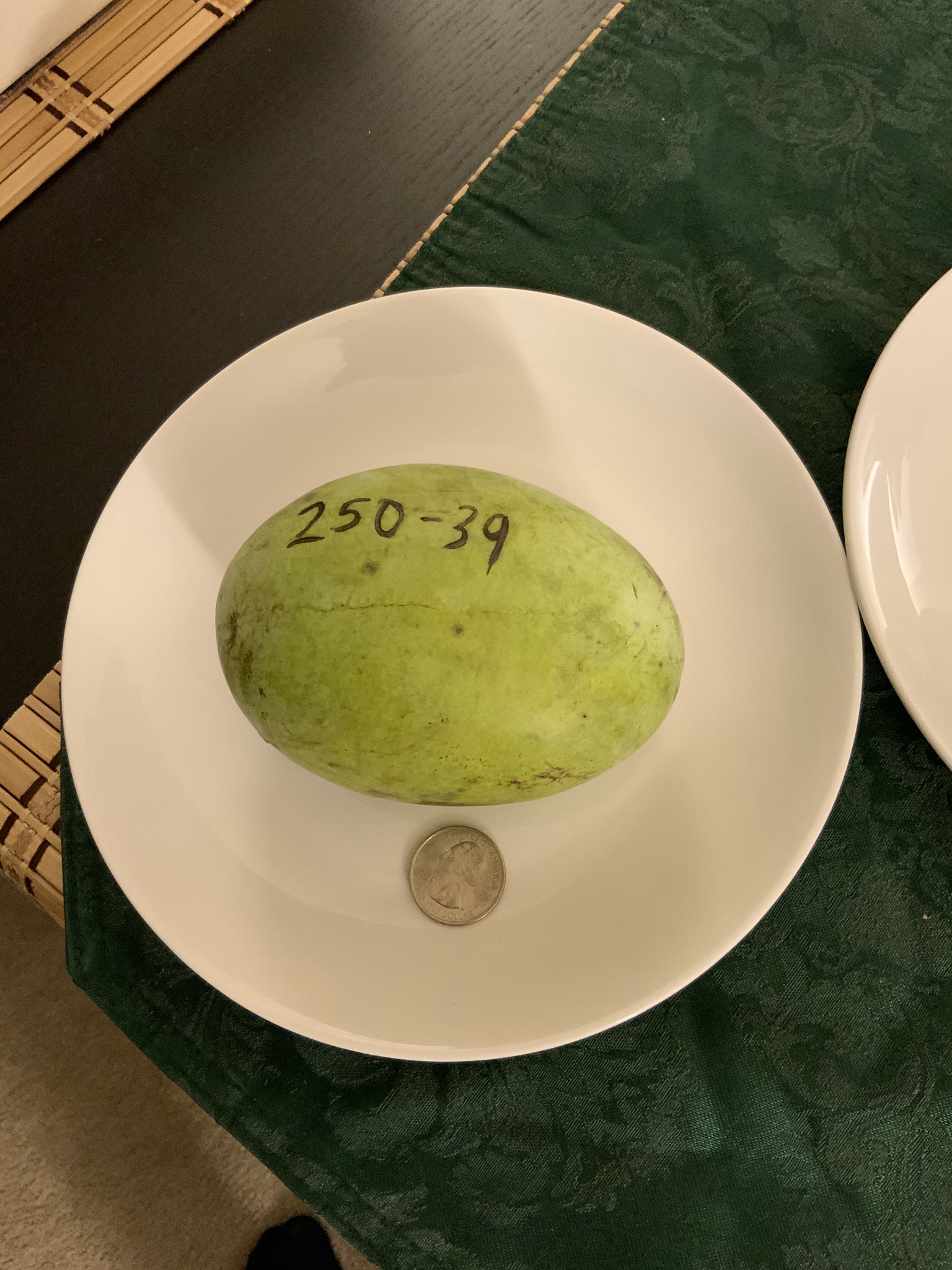
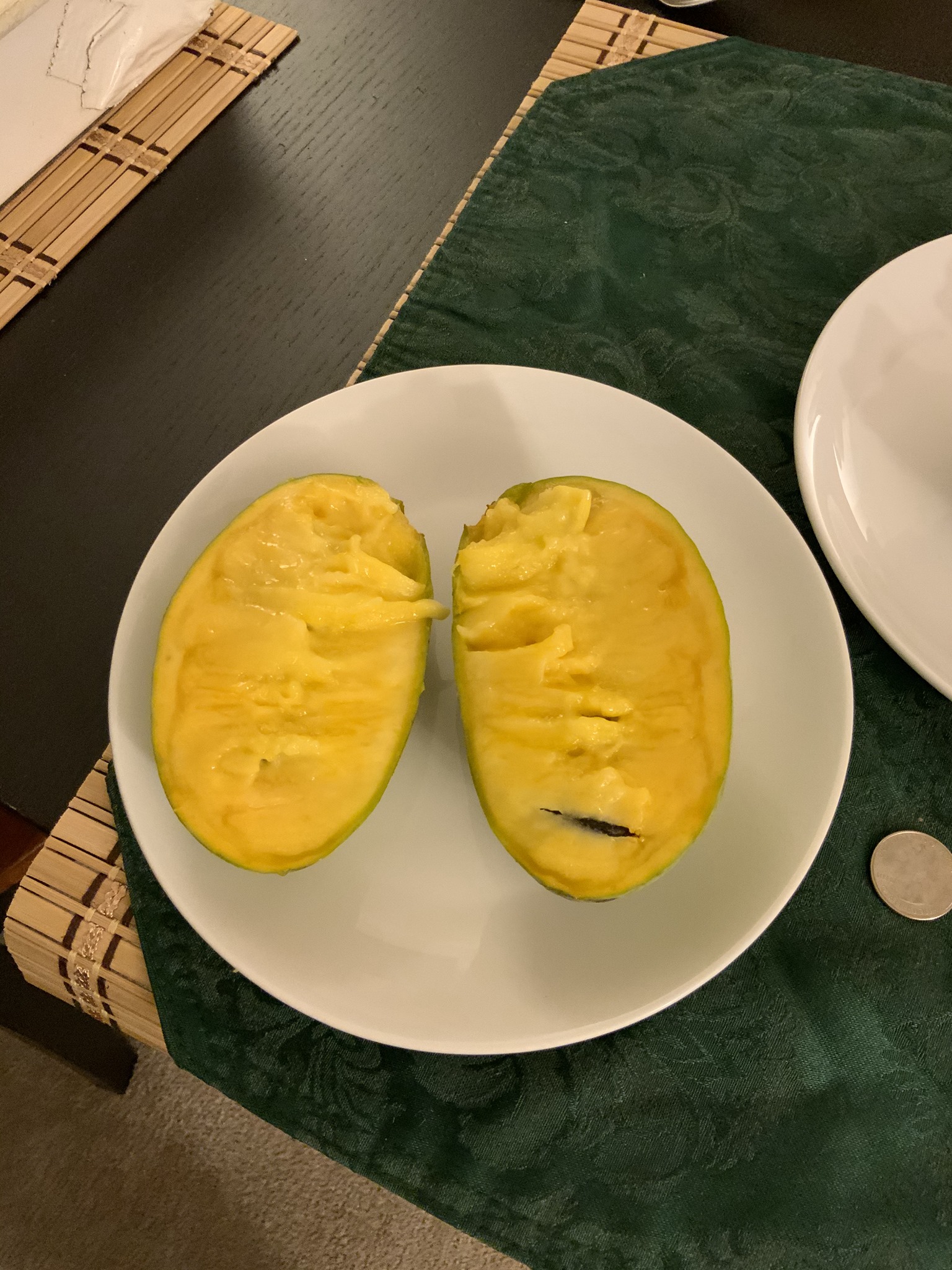
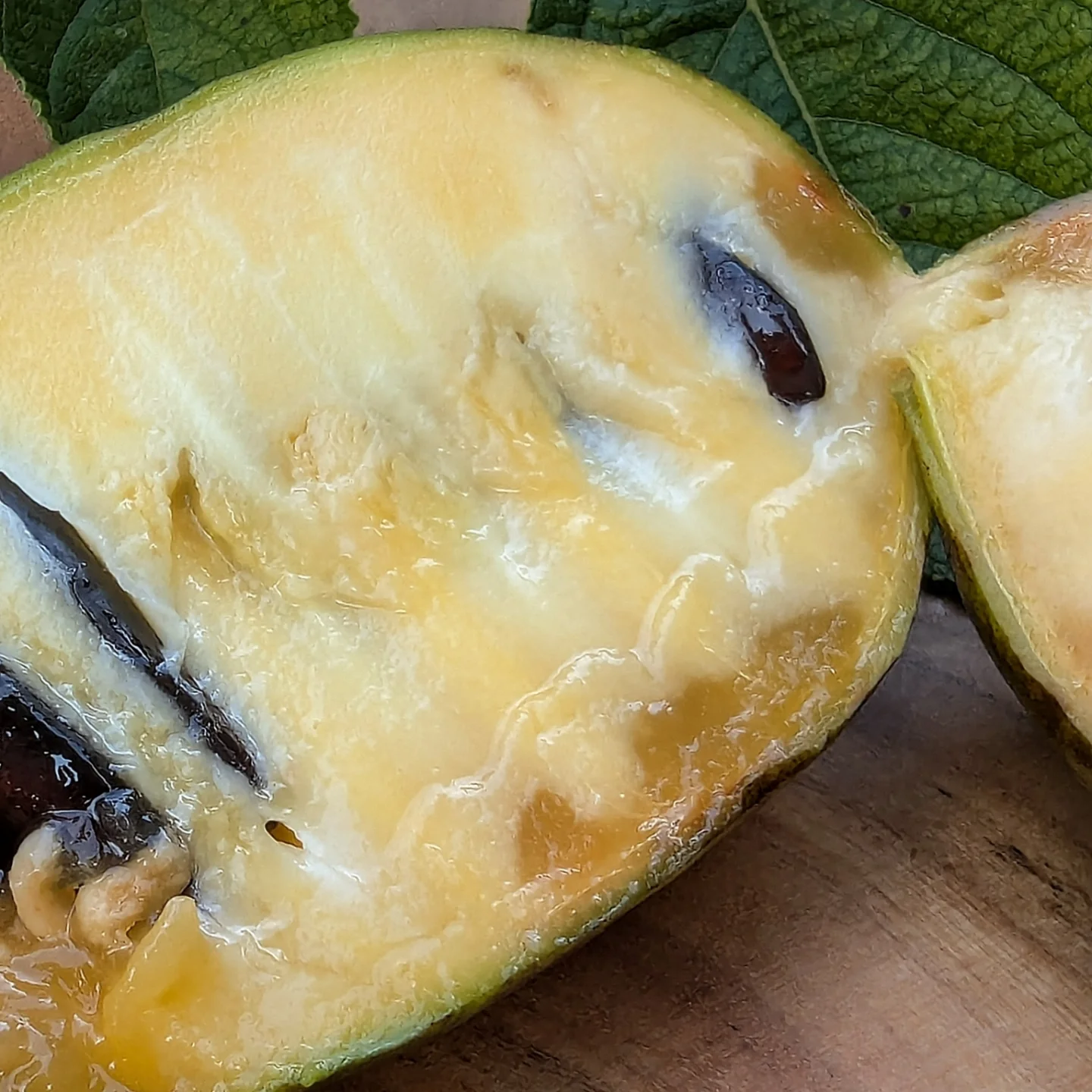
Jerry’s Big Girl (JBG, "250-39") is a premier pawpaw cultivar selected by Jerry Lehman of Terre Haute, Indiana. It is widely recognized as one of the most large-fruited and best-tasting selections available. Typical large specimens range from 283–454 g (often exceeding 340 g), with verifiable reports of individual fruits reaching 680–900+ g under optimal conditions. The fruits possess a complex banana-mango aroma and a highly creamy, custard-like texture. Due to its thin skin, the fruit requires careful handling. It matures in the mid-to-late season and has consistently earned top honors at the Ohio Pawpaw Festival.
Origin and Parentage
Breeder: Jerry Lehman, Terre Haute, Indiana. JBG is one of Lehman's most celebrated numbered selections. Synonyms include 250-39 or simply Jerry’s Big Girl. Its parentage is recorded in multiple specialty catalogs as a cross between Sunflower and Sam Norris-15.
Fruit Characteristics
Size and Weight: Most professional descriptions cite 283–454 g as a standard working range, with ≈283–397 g as a consistent practical benchmark. Record-breaking specimens mentioned in nursery publications include fruit up to 680 g, over 1 lb (454 g), and rare anecdotal reports of 2 lb (≈907 g) monsters. Public festival weigh-ins frequently feature JBG entries in the 700–800 g range, though these represent exceptional "showcase" results rather than the average tree output.
Flavor, Texture, and Seeds
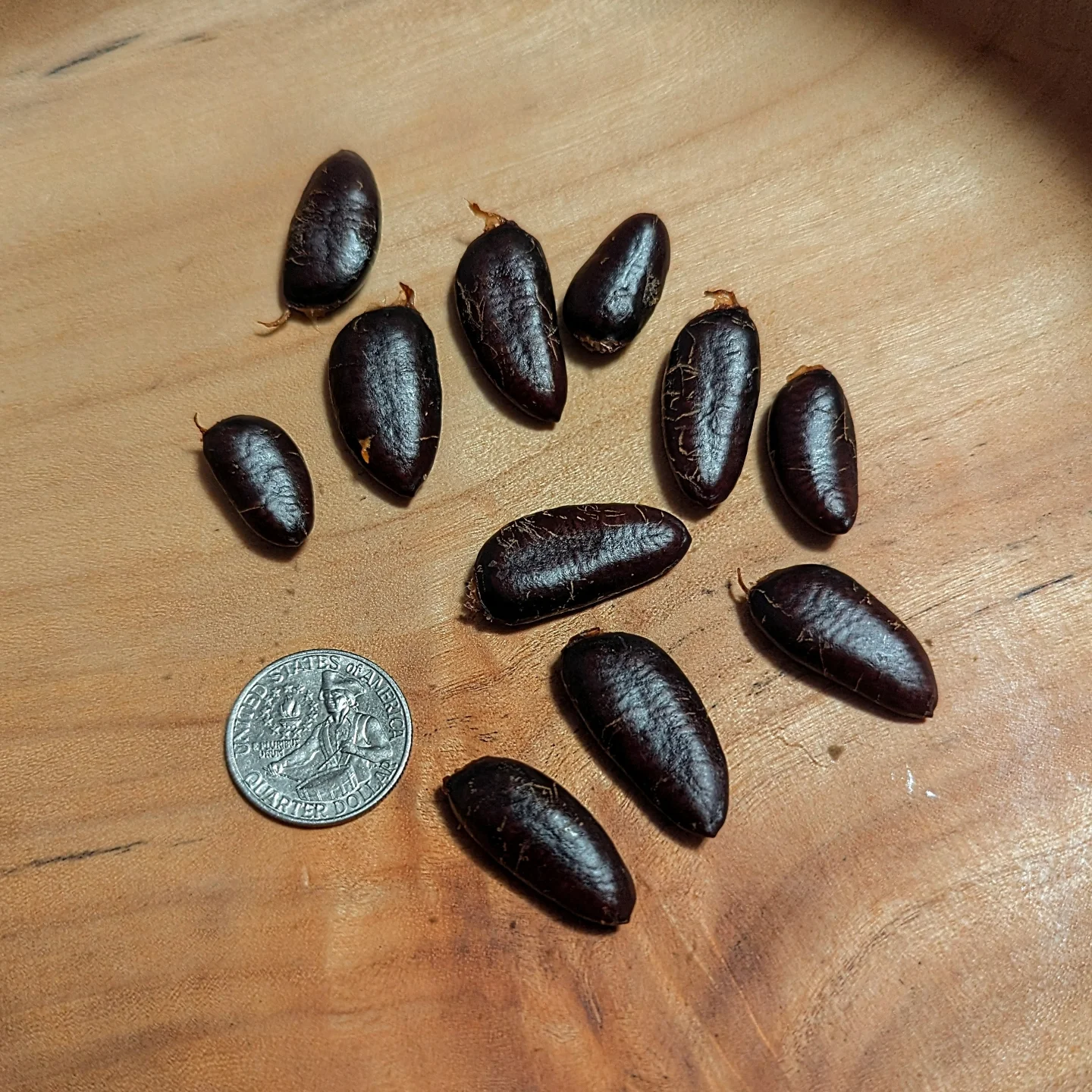
Flavor: described as banana-mango with peach/pineapple notes; it is a frequent winner of blind taste tests. Texture: exceptionally creamy and custard-like. Seed Ratio: possesses a moderately low seed-to-pulp ratio, providing significant usable fruit, though precise percentages vary by year and pollination success.
Tree Habit and Growth
Commonly described as a "well-shaped and handsome tree," displaying an orderly growth habit. Mature height typically falls in the 4–6 m range if left unpruned, consistent with other elite cultivars of the species.
Ripening Times
Mid-Late: in Kentucky (Zone 6), JBG ripens from mid-September to early October. In cooler northern regions, this window may shift toward mid-October.
Storage and Handling
The variety's thin skin makes it less ideal for long-distance shipping; harvest is best suited for local consumption or immediate processing. No unusual vulnerability to standard diseases (e.g., Phyllosticta) is noted, though general pawpaw challenges like fruit spotting and short shelf life apply.
Awards and Recognition
Ohio Pawpaw Festival: JBG took 1st place for "Best Pawpaw" in 2013 and 2017, and 1st place for "Biggest Pawpaw" in 2014. These results are well-documented in festival records and grower archives.
Data Considerations
While maximum weights (700–900 g) serve as indicators of the cultivar's potential, average orchard productivity usually settles closer to the 283–454 g range. Systematic peer-reviewed trials with long-term yield metrics are limited, so growers should rely on commercial descriptions and established festival performance data for planning.