Key Points
- Origin: wild find by Tyler & Danae Halvin, southwestern Iowa (Bedford).
- Ripening: early; compared to typical varieties — approximately 3 weeks earlier; also early in the UK.
- Fruit: ≈225–400 g; sweet without aftertaste, pineapple-banana notes, smooth creamy flesh.
- Yield: good/reliable with proper pollination (practical descriptions).
- Tree: vigorous; working height with pruning ~4.5–6 m; mother tree ~12 m in understory.
- Cold hardiness: USDA 5–9 (general for pawpaw); hardy/resilient, recommended for "northern range limit".
- Pollination: cross-pollination required.
- Do not confuse with: Halvin's Sidewinder — another selection by Halvin.
Detailed Description of Halvin Pawpaw Variety
Origin
Origin: wild seedling found and selected by Tyler & Danae Halvin in southwestern Iowa (Bedford area). Original tree — understory, ~40 ft tall. Status: distributed as a separate clone "Halvin" in a number of nurseries in USA/Great Britain.
Fruits: Size, Taste, Flesh, Seeds
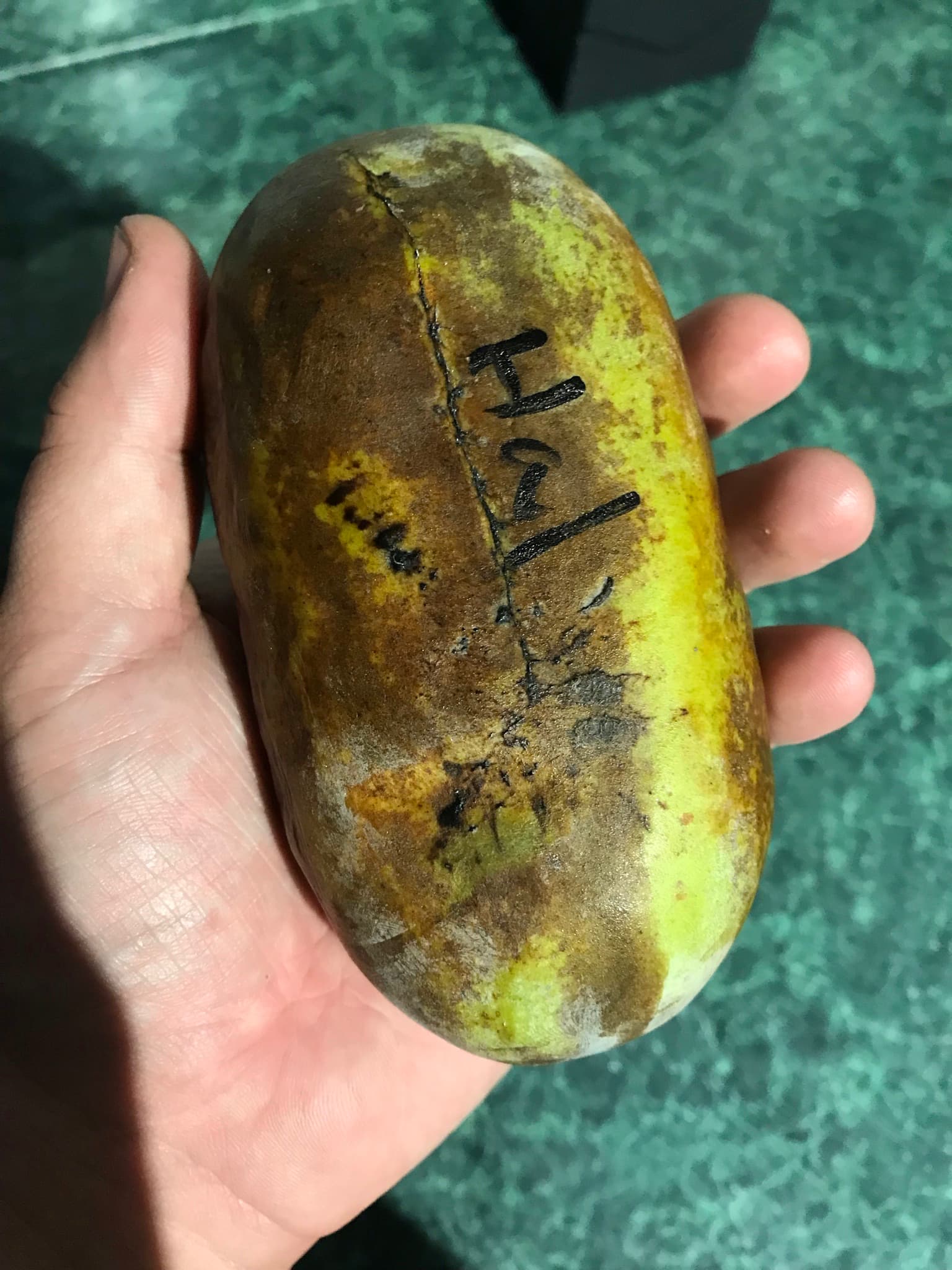
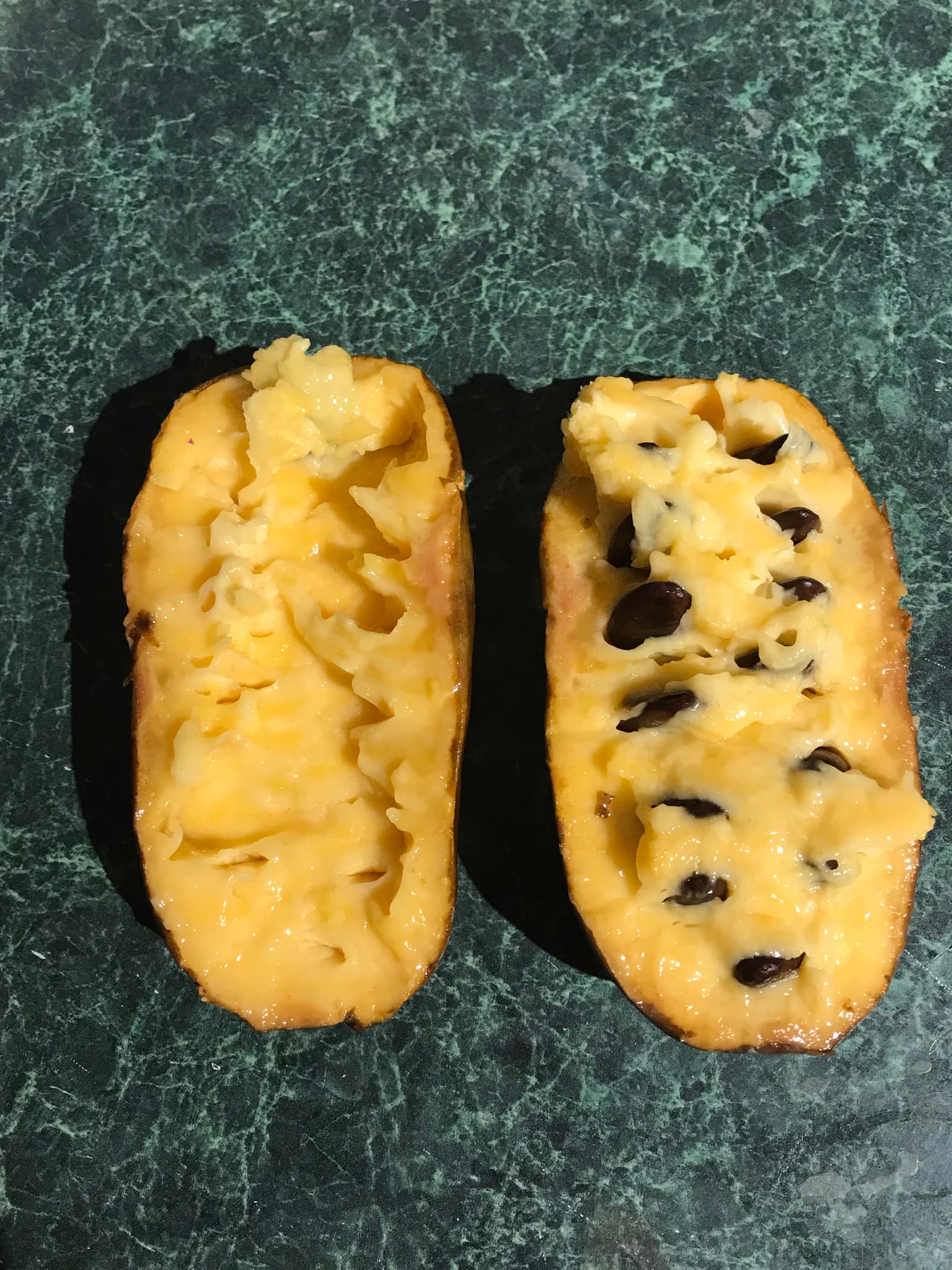
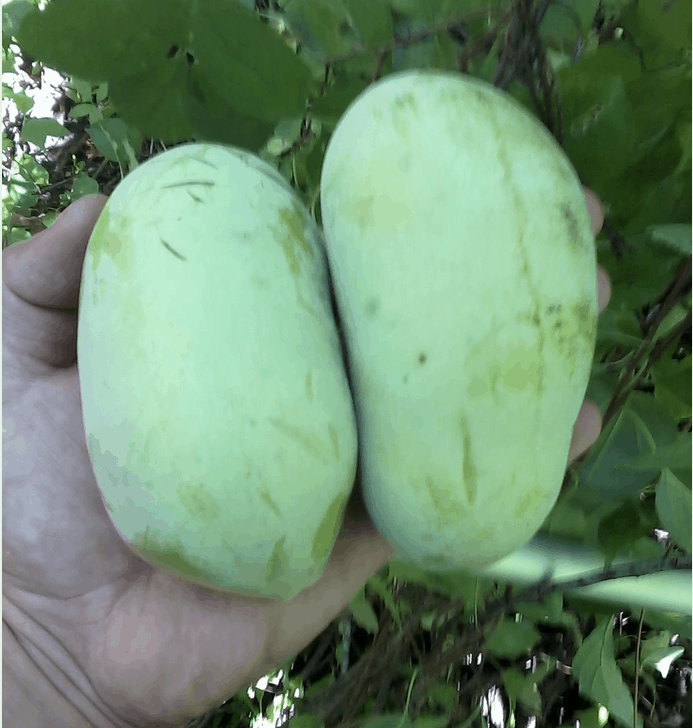
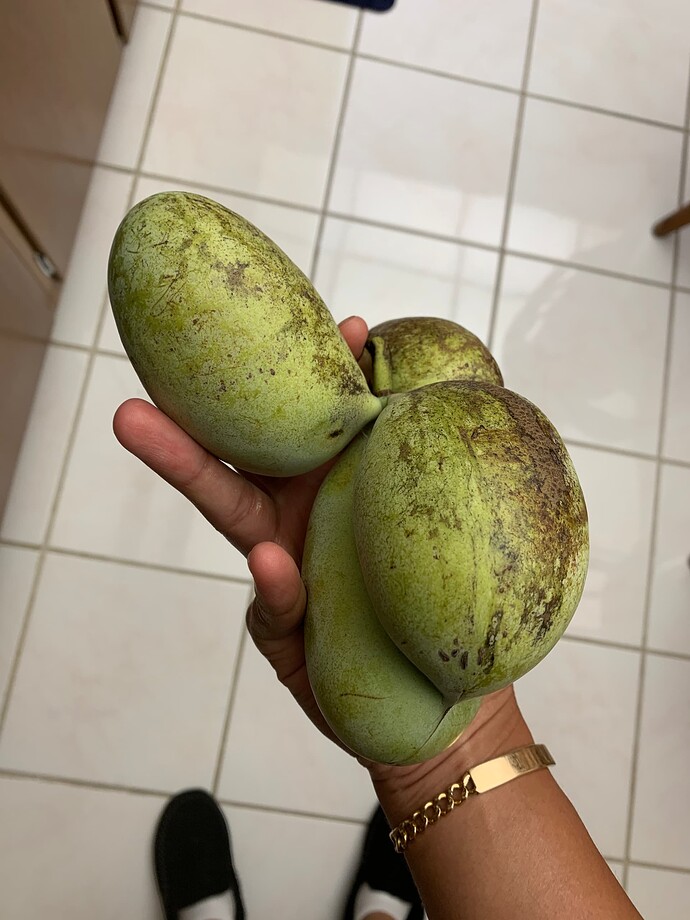
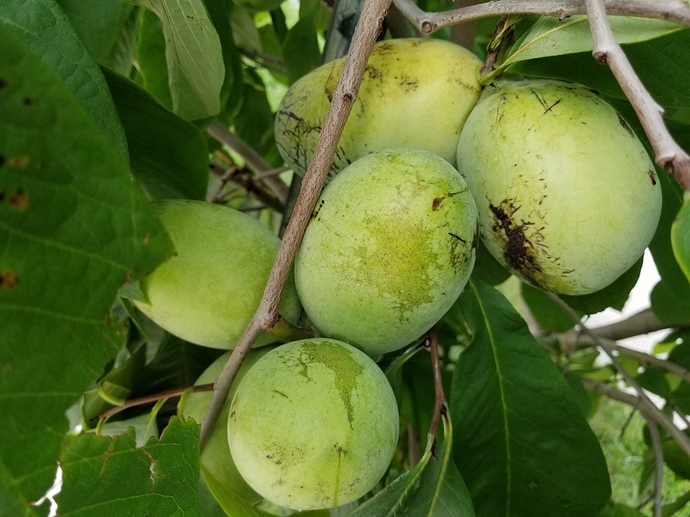
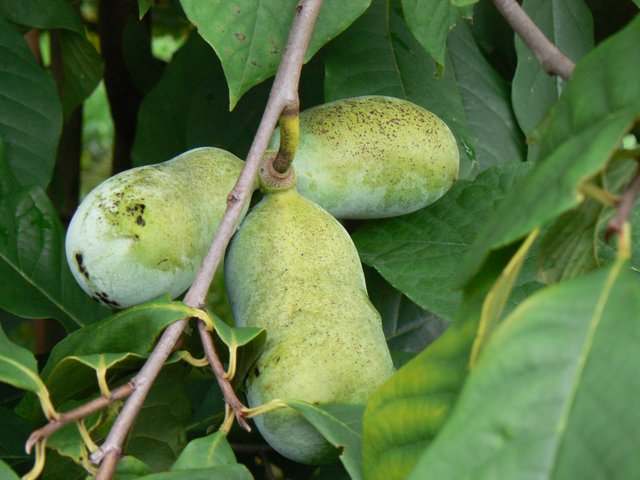
Weight: approximately ≈225–400 g; sources emphasize "medium-large/large". Taste: very sweet, without aftertaste, often with pineapple/banana-mango notes; "mellow", "smooth". Texture: smooth, firm, creamy/custard-like (typical for quality pawpaws). Seed percentage relative to fruit size: ~10%. Fruit skin color after ripening - yellowish-green with random spots. Flesh color: Orange-yellow. Tends to fruit with single fruits, or 2-3 in a cluster, which is more convenient for harvesting and care.
Ripening (Early Maturity) and Suitability for Cooler Zones
Nurseries directly indicate early ripening - early ripening and recommendation for northern range limit, "approximately 3 weeks earlier than other pawpaws", "ripens early in UK". These are important signals for short summers.
Yield
Annual yield at mature age: 13.6-18.1 kg. No official figures in kg/tree, but the variety is positioned as reliable and productive; Hillbilly calls it "very reliable and productive". As with all pawpaws, the final result strongly depends on cross-pollination.
Tree, Growth, Size
Growth vigor: from medium to strong (typical "vigorous" for wild selections). Habit/height: for fruiting pawpaw trees often indicate 4.5–6 m with possibility of limiting by pruning; Halvin mother tree is described as ~12 meters in understory. Tree form is tall and spreading. Growth rate - fast.
Cold Hardiness and Diseases
USDA zones: pawpaw generally 5–9; Halvin originates from zone 5–6 (Iowa) and nurseries emphasize its hardy/resilient nature (good cold hardiness, "for harsh regions / northern cusp"). Diseases/pests: as with most pawpaws, low susceptibility; no specific weak points noted for Halvin. (General advice: ventilation, control of spider mites/fruit worms as needed). This is confirmed by the culture's reputation in university/reference sources.
Pollination
Cross-pollination with another genetically distinct variety/clone is needed; "self-pollination" for stable yields is unreliable, as with all pawpaws.
Halvin vs Halvin's Sidewinder — Are They the Same?
No. The community clearly distinguishes Halvin and Halvin's Sidewinder as different selections from the same author (Halvin).
Table: Brief "Passport" of Halvin Variety
| Characteristic | Description |
|---|---|
| Origin | wild find by Tyler & Danae Halvin, southwestern Iowa (Bedford). |
| Ripening | early; compared to typical varieties — approximately 3 weeks earlier; also early in the UK. |
| Fruit | ≈225–400 g; sweet without aftertaste, pineapple-banana notes, smooth creamy flesh. |
| Yield | good/reliable with proper pollination (practical descriptions). |
| Tree | vigorous; working height with pruning ~4.5–6 m; mother tree ~12 m in understory. |
| Cold hardiness | USDA 5–9 (general for pawpaw); hardy/resilient, recommended for "northern range limit". |
| Pollination | cross-pollination required. |
| Do not confuse with | Halvin's Sidewinder — another selection by Halvin. |