Key Points
- Origin: wild selection found by Carol Friedman in 1998, Hart County, KY.
- Fruit: medium-sized, several seeds, firm texture, excellent flavor.
- Ripening: early → early-mid (August – September).
- Yield: productive, good for transport.
- Tree: 4–6 m, medium growth.
- Resistance: low susceptibility to Phyllosticta.
- Pollination: cross-pollination required, another variety needed.
- Hardiness: USDA 5–9.
Variety Description
Summary
Greenriver Belle is a wild selection found near the Green River (Hart County, KY) in 1998 by Carol Friedman. It is valued as a high-quality, fragrant, medium-sized fruit with a good seed-to-pulp ratio, solid texture, and shipping potential — frequently praised by Neal Peterson and Ron Powell.
Origin and Discovery
Discovery/Date/Found by: The original tree was found near Green River in Hart County, Kentucky, selected by Carol Friedman in 1998. Introduction/Availability: The variety is listed in nurseries and was introduced/sold through Peaceful Heritage Nursery.
Fruit — Size, Form, Pulp, Taste, Seeds
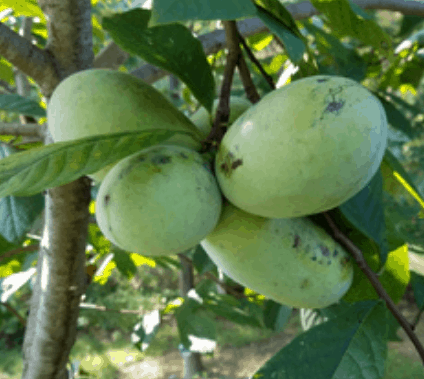
Size: In most descriptions, Greenriver Belle is categorized as medium — some reviews compare it with PA-Golden in form and size. Specific average gram-per-fruit data is not systematically publicized. Fruit length varies from 10.5 to 16.6 cm, with width between 5.7 and 5.8 cm. Neal Peterson and Ron Powell consider it one of their favorite cultivars for its “wonderful flavor”; it is productive, high-quality, without bitterness or unpleasant aftertaste (some notice a light cinnamon taste); medium size; little to no Phyllosticta; reasonably low seed count; and a good producer with firmer texture suitable for transport.
Form/Texture: Usually oval/plump, with a firmer texture compared to many soft cultivars, making them more suitable for shipping.
Pulp and Taste: “Wonderful, bright, no bitterness/aftertaste” — very positive reviews, citing Neal Peterson and Ron Powell as fans of the flavor.
Ripening Times
Described as early → early-mid or mid-season depending on the region; some growers cite it as one of the earlier ripening high-quality selections. Exact dates vary by location.
Yield, Transportability, and Shelf Life
Yield: described as a good/productive producer. Transportability: The firmer texture gives the fruits good shipping potential. Shelf life: Short shelf life — despite the firmness, ripe fruits spoil quickly, so immediate use or processing is recommended.
Diseases — Phyllosticta and Others
Phyllosticta (spotting): Reports indicate low susceptibility to this common pawpaw issue; other registers don't show significant vulnerabilities. (Keep in mind resistance may be local and vary by year.)
General pawpaw pests/diseases (leaf spot, local caterpillars/moths) are relevant; standard agro-technical measures help control them.
Cold Hardiness and Climatic Suitability
USDA Zones: 5–9. Since the variety was found and is successfully grown in Kentucky, it is well-suited for temperate continental climates.
Strengths and Risks
Strengths: Excellent flavor (expert recognized), firmer texture → good for transport; productive.
Risks/Uncertainties: Short shelf life — needs rapid processing/consumption; local variability; limited public multi-year trial data (kg/tree, average mass).