Key Points
- Origin: selection from Berea, KY, introduced by Peaceful Heritage in 2018.
- Fruit: medium–large → large (≈227–454 g), thin skin, creamy pulp, very sweet.
- Ripening: early, late August – September.
- Yield: bears abundantly.
- Tree: 4–6 m, medium growth.
- Resistance: moderate to Phyllosticta, rarely cracks, resilient to conditions.
- Pollination: cross-pollination required, another variety needed.
- Hardiness: USDA 5–9, suitable for temperate climates.
Variety Description
Summary
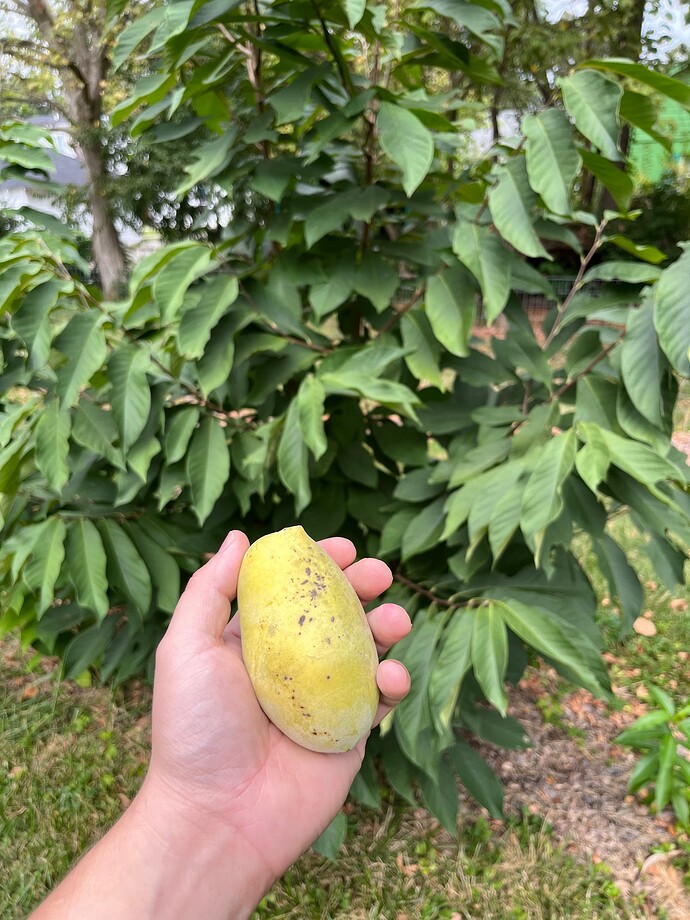
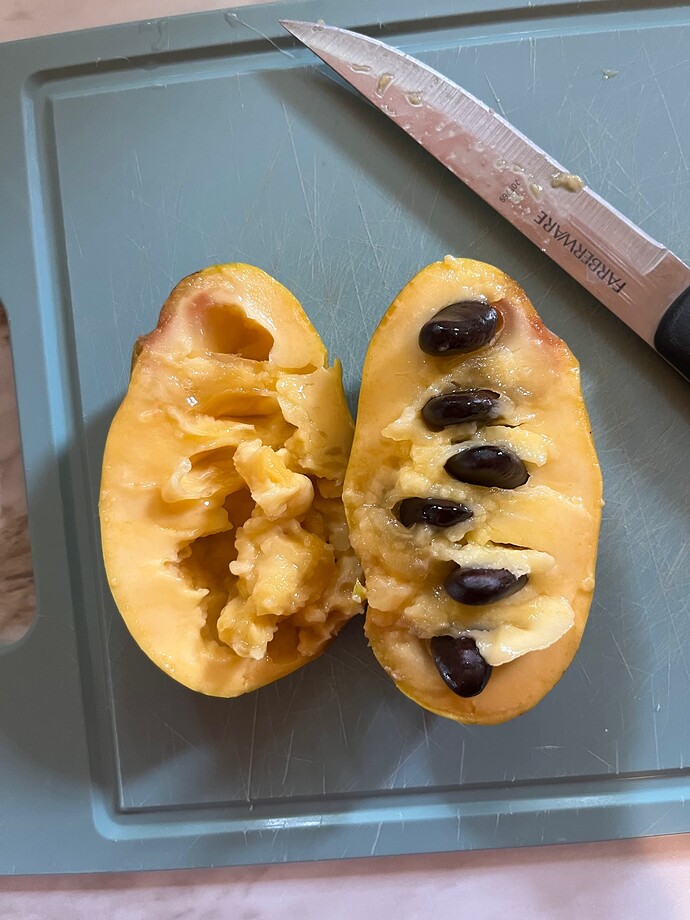
Golden Moon is a pawpaw variety found in Berea, Kentucky; introduced to cultivation by Peaceful Heritage Nursery in 2018. It features early ripening, medium–large to large fruits (≈227–454 g), thin skin, and thick-creamy "marshmallow-like" pulp that is very sweet with excellent texture. It bears abundantly and is resilient to difficult conditions. While it has moderate susceptibility to Phyllosticta leaf spot, fruit cracking upon infection is rare.
Detailed Description
Discovery and Name: Found by the author in Berea, KY. Name: “Golden Moon” (named in honor of the Bengali bhakti saint Chaitanya Mahaprabhu — “The Golden Moon”). Introduction: Presented by Peaceful Heritage Nursery in 2018.
Fruit Size and Form
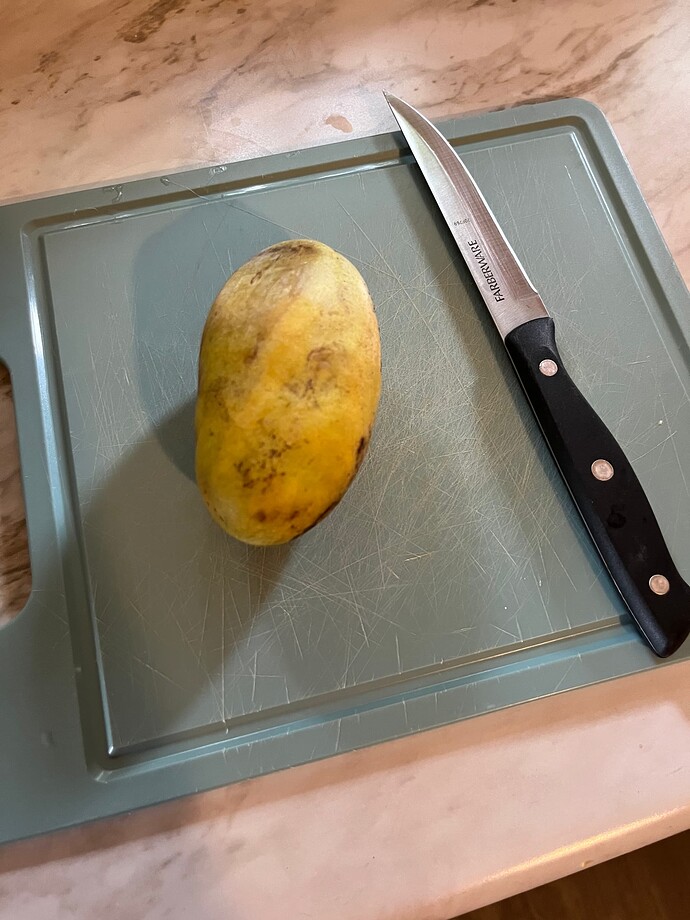
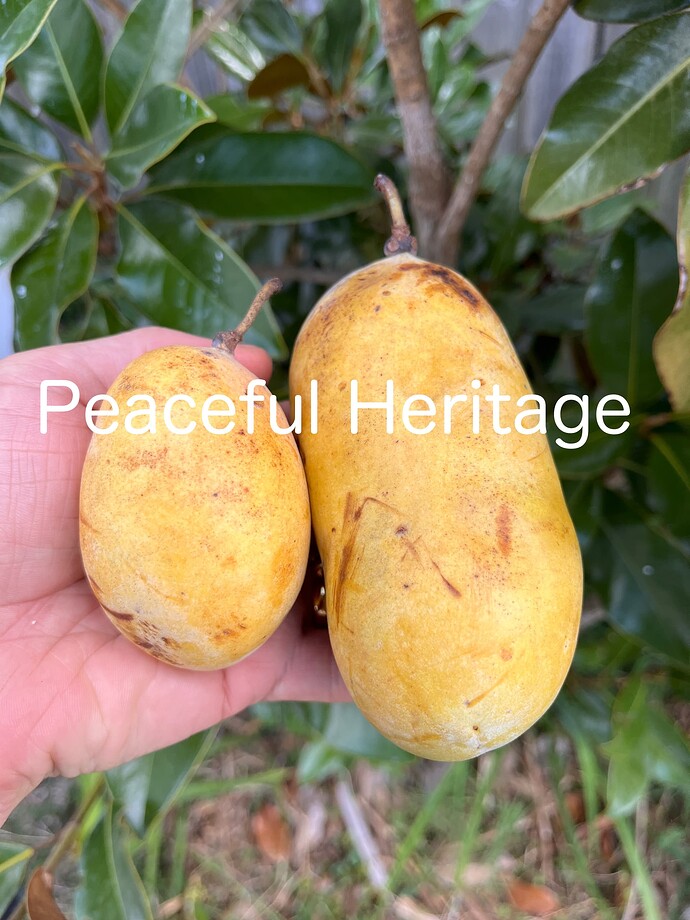
Weight (Guideline): ≈227–454 g per fruit. The average of this range is ≈340 g. Form: oblong and plump; "plump" fruits often form with good pollination. Seeds: medium to low seed count — high proportion of edible pulp.
Skin, Pulp, and Taste
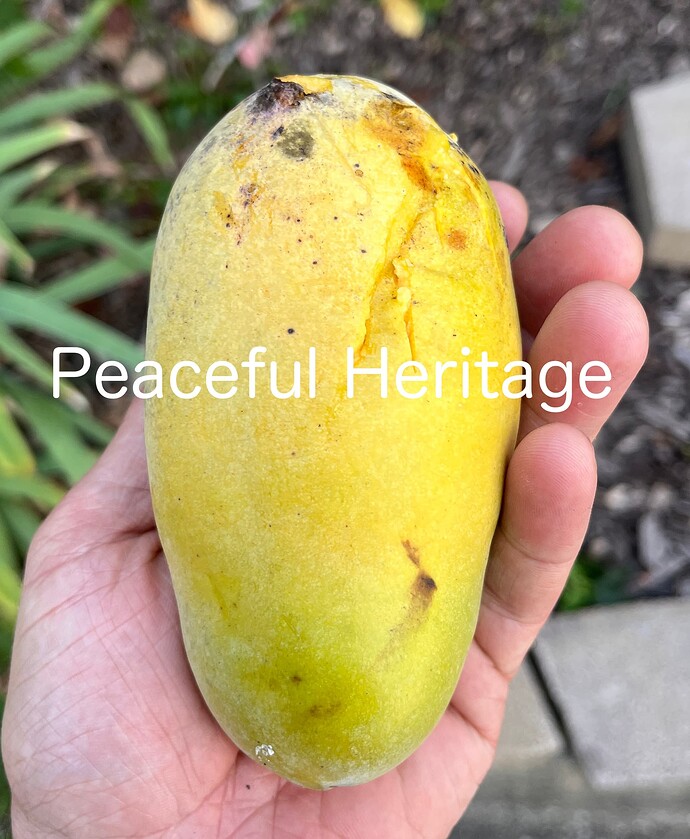
Skin: thin; exhibits a pronounced bright golden "color break" upon ripening — an easily identifiable indicator for picking. Pulp: very thick, “marshmallow-like”. Taste: very sweet, “delicious”, with excellent texture; often compared in quality to the Sunflower variety. Post-harvest behavior: fruits are highly aromatic and prone to rapid ripening/spoilage after picking; recommended for consumption within 1–2 days or for freezing.
Ripening Times
Early: At Peaceful Heritage (KY), Golden Moon ripens in late August – September (depending on the year, but earlier than most varieties).
Yield
Abundant: described as a “vigorous producer” — bears well even in challenging years (relative resilience to unfavorable conditions, as observed by the nursery).
Tree Growth Power
Medium: typical for pawpaw — adult tree ≈4–6 m, growth is moderate but resilient (shows good adaptability in cool/difficult climates).
Pollination
Cross-pollination: Like all pawpaws, Golden Moon requires another variety for reliable pollination; manual pollination is recommended to increase set.
Disease and Resistance
Phyllosticta: The variety is moderately susceptible to leaf/fruit spot (Phyllosticta asiminae), which may cause spots on the fruit; however, Golden Moon reportedly tolerates this infection well without fruit cracking (i.e., the damage does not lead to mass loss of fruits through cracks). General pawpaw pests/diseases (leaf spot, local caterpillars/moths) are relevant; standard agro-technical measures help control them.
Cold Hardiness and Climatic Suitability
USDA Zones: 5–9. Since the variety was discovered and successfully cultivated in Kentucky, it is well-suited for temperate continental climates and shows suitability for regions with cool summers.
Phyllosticta Care
Inspect leaves/fruits in wet seasons; remove heavily infected items; fungicides may be used preventatively during severe epidemics. Since the variety does not crack, the infection is often purely cosmetic.
Harvesting
Look for the bright golden “color break” — it is a reliable indicator of ripeness (more convenient than smell/softness given the thin skin).
Data Gaps/Uncertainties
Large-scale multi-year trials are lacking (number of trees, average yield kg/tree, stats on unripened fruit percentage across different climates). Most information comes from nursery cards, field observations, and enthusiast reviews.