Key Points
- Origin: Woody Walker selection, found on a historic estate in Kentucky.
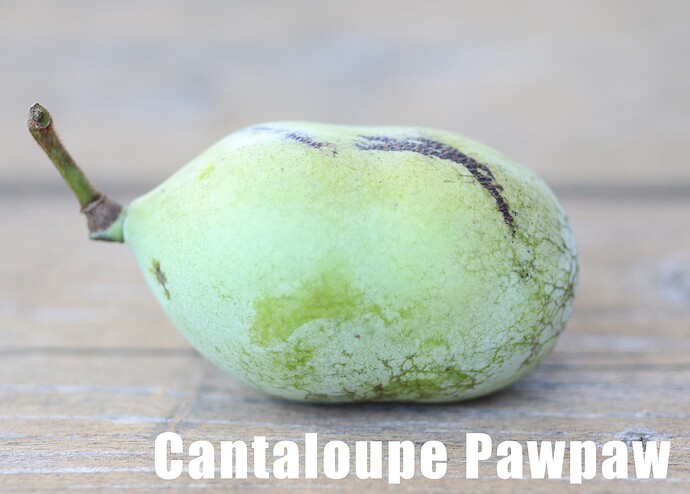
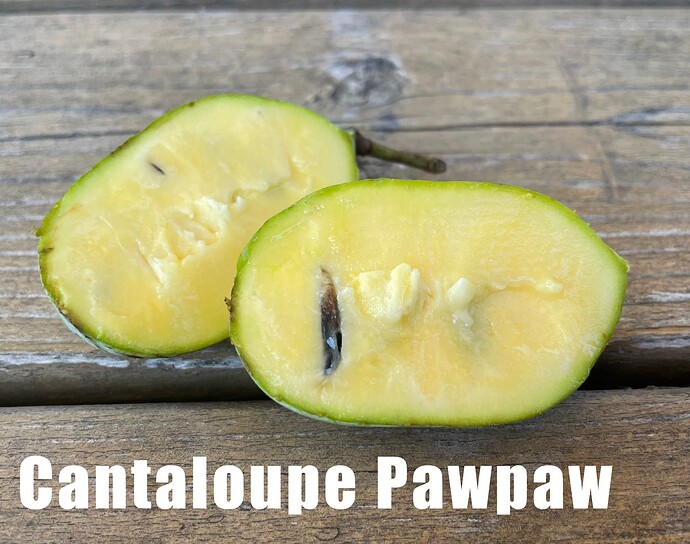
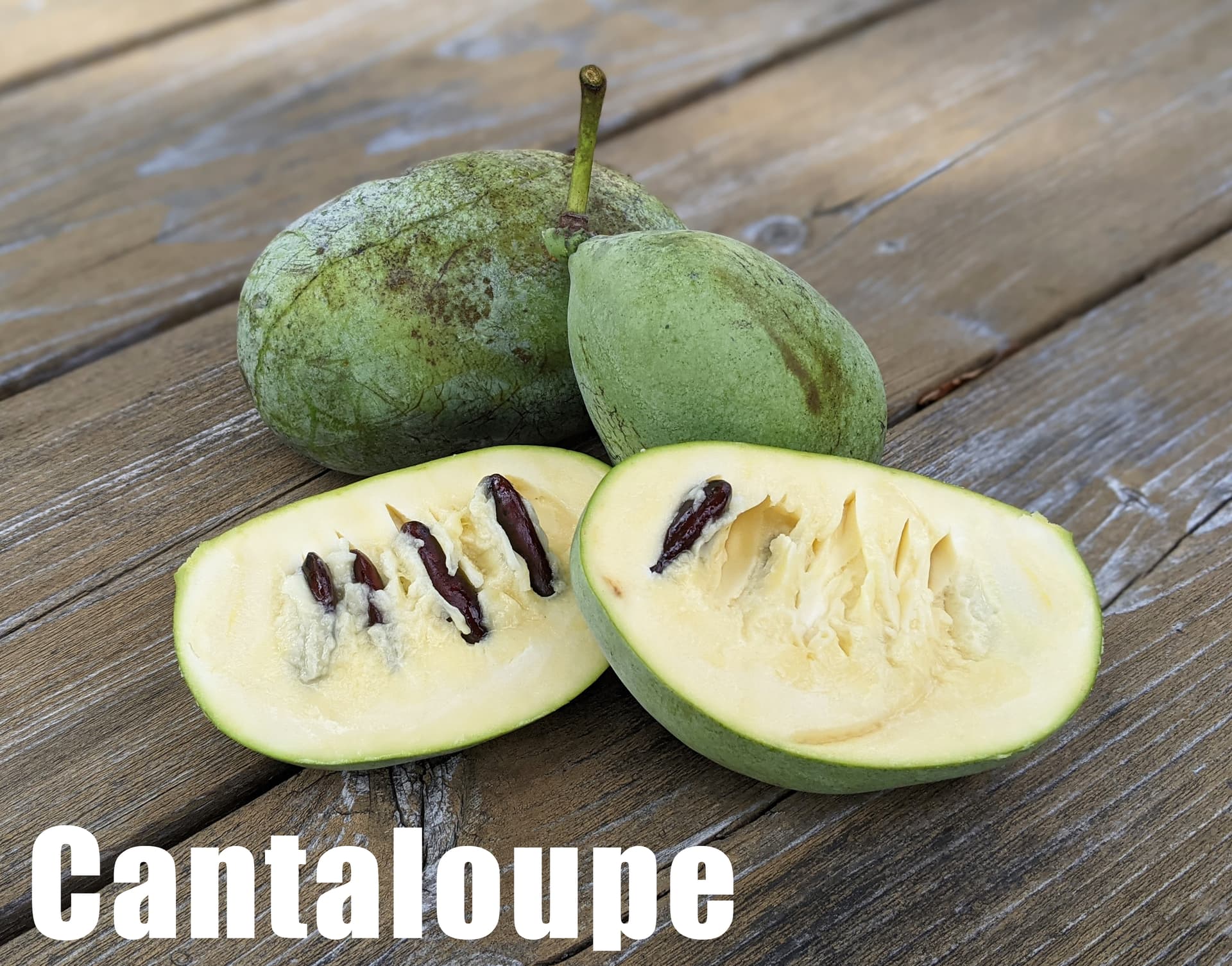
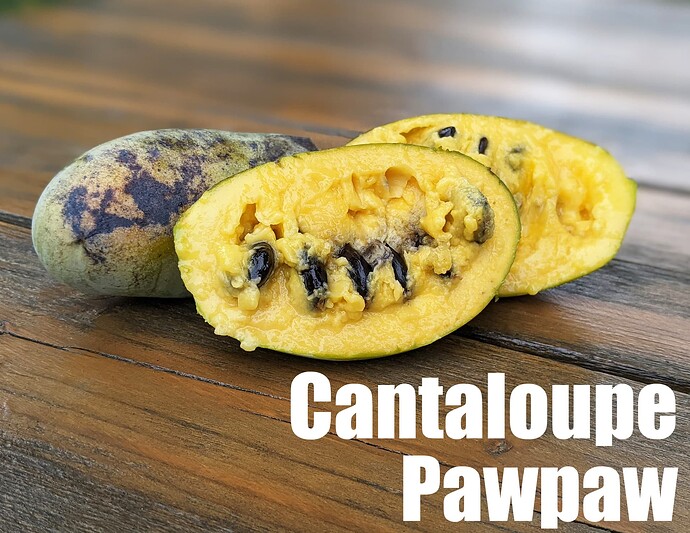
- Fruit: large (~300 g), round-oval, green-yellow skin, creamy pulp with musky taste, freestone (seeds separate easily).
- Ripening: mid-late season (August–September), possibly later in cooler zones.
- Yield: good–high, clusters of 3–4 fruits.
- Tree: 4–6 m, medium growth, fruiting from 3–5 years.
- Resistance: typical pawpaw risks, no major issues.
- Pollination: cross-pollination required, another variety needed.
- Culinary: convenient for processing and desserts due to freestone trait and flavor.
Description of Cantaloupe Variety
Source/Origin
Who/From: selection found/promoted by Woody Walker (Walker Pawpaw Tree Farm), origin — an old estate/planting in Kentucky. Walker introduced a series of similar selections under the "freestone" brand (Marshmallow, Honey Dew, Cantaloupe).
Main Fruit Characteristics
Average weight: ≈300 g/fruit on the mother tree (frequent mentions: "largest of the freestone group, averaging 300 g"). This is a general guide from reviews and nursery cards. Size/Shape: large, round-oval; on the mother tree, clusters of 3–4 fruits often form, and sometimes fruits split "into two clean halves" after falling (field observation description). Skin/Color: green-yellow outside, yellowish-gold with brown spots at full maturity — typical cultivated pawpaw appearance. Pulp/Texture: creamy; taste described as sweet, with musky/melon notes alongside typical banana-mango notes. Seeds/Freestone: seeds separate easily from the pulp (free from "seed-sack") — making the variety very convenient for culinary processing.
Ripening Times
No precise official dates for Cantaloupe ripening have been publicly provided by Walker. General pattern: pawpaws ripen in late August – September in the core of their range, but the exact timing depends on region and year. Given that Cantaloupe originates from Kentucky and yields large fruits on the mother tree, it's estimated as mid-late season (August–September); in cooler regions, large-sized fruits sometimes need more time, so shifts toward later ripening are possible.
Yield and Tree Behavior
Yield: the mother tree shows good-to-high productivity, sometimes multiple clusters with fruits over 300 g; Walker and other enthusiasts give Cantaloupe positive productivity ratings. However, no large-scale quantitative studies (kg/tree in standardized trials) exist.
Tree Growth Vigor and Age of Entry into Fruiting
Typical picture for modern pawpaw cultivars: adult height ≈ 4–6 m, growth rate – medium. Little metric information on growth speed for Cantaloupe exists; Walker is known as a selector/collector whose selections often quickly enter fruiting with grafted saplings (3–5 years to fruiting).
Disease and Pest Resistance
No specific problems unique to Cantaloupe have been noted in open sources. General pawpaw risks: leaf spot during wet seasons, local pests (caterpillars, moths) — usually controlled agro-technically. As a freestone clone in the Walker series, Cantaloupe is positioned as "healthy and suitable for processing", but widespread trials in different zones are still lacking.
Culinary Use and Freestone Advantages
Freestone (easy seed separation) offers great advantages: quick cleaning for fresh consumption, ice cream, purees, jams, and processing; due to its "melon" flavor, Cantaloupe is especially suitable for dishes where one wants to emphasize melon notes (salads, sorbets, cool desserts).
Availability
In Ukraine, adult trees and grafts are already available.
Gardener Reviews and Practical Experience
In thematic forums and groups (GrowingFruit, Facebook pawpaw groups, Instagram), reviews of Cantaloupe are mostly positive: fruit size, taste, and freestone convenience are praised. Some notes suggest that fruits should be left on the tree longer for full ripening to avoid any "under-ripe" aftertaste.
Data Gaps and Unknowns
No wide scientific or long-term trials of Cantaloupe in standardized regional trials (e.g., KSU trials) with exact figures (average yield, climate impact statistics, exact ripening dates in different zones) are available. Most data come from field observations and nursery/enthusiast descriptions.
Summary Assessment
Cantaloupe freestone is a very interesting selection for those who want large, processing-friendly fruits with a melon flavor. On the mother tree, fruits are large (≈300 g), freestone-type, and often clustered, making the variety attractive for both fresh consumption and processing (sorbets, jams, ice cream). The main uncertainty is the lack of extensive long-term trials.