Key Points
- Origin: Tom Wahl clone, Red Fern Farm (Iowa, USA).
- Parentage: Susquehanna × Shenandoah.
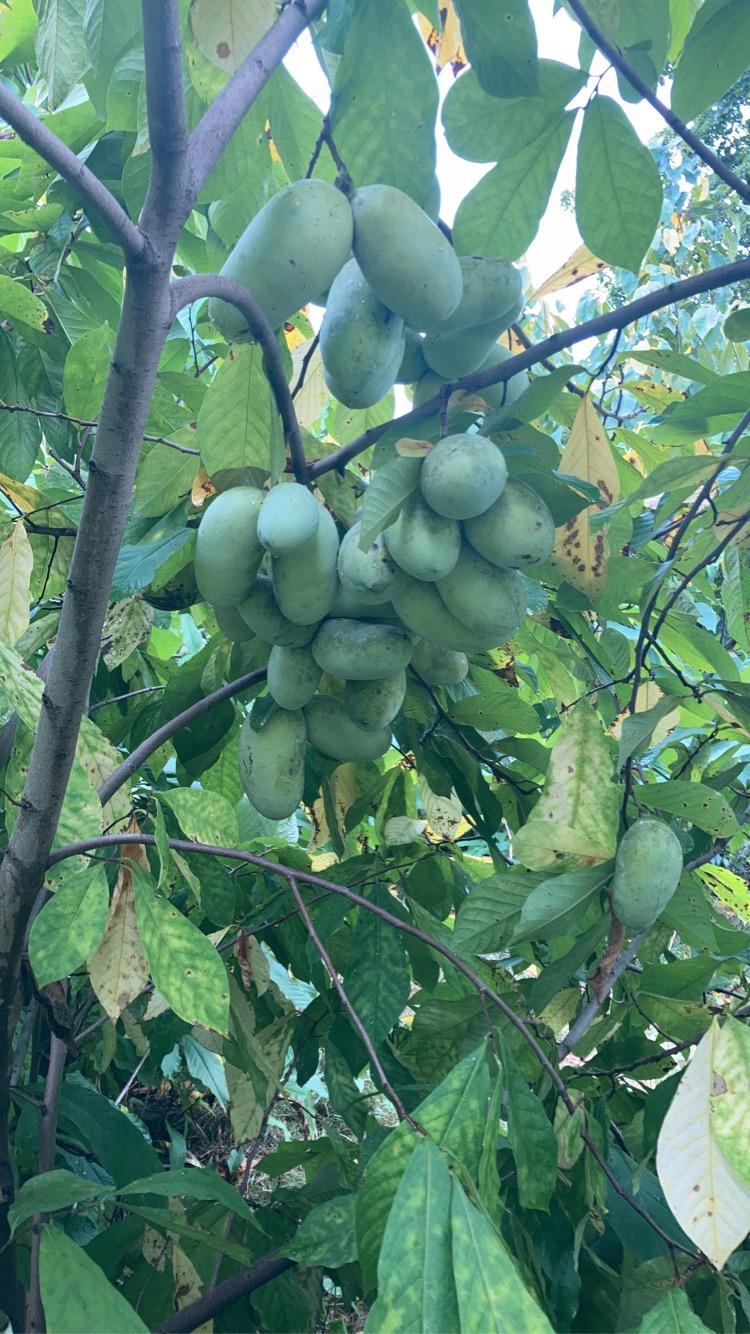
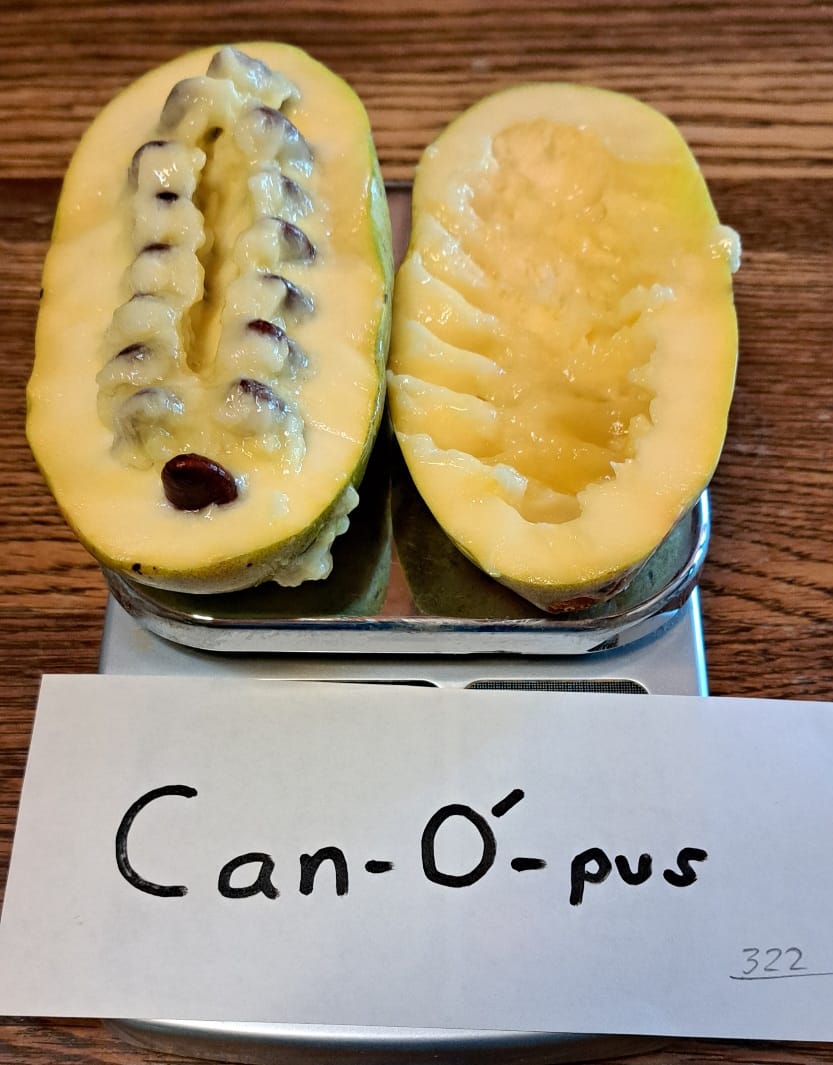
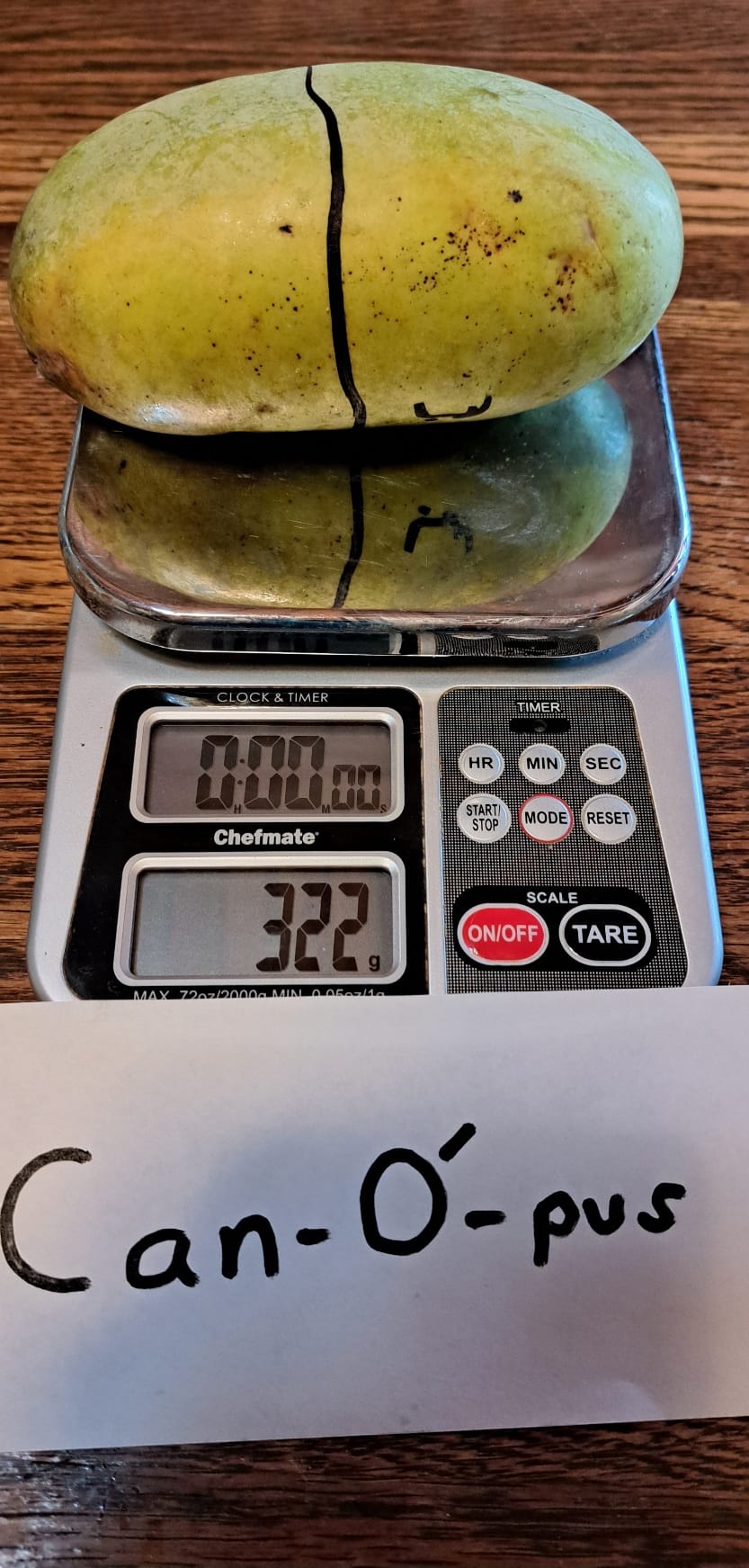
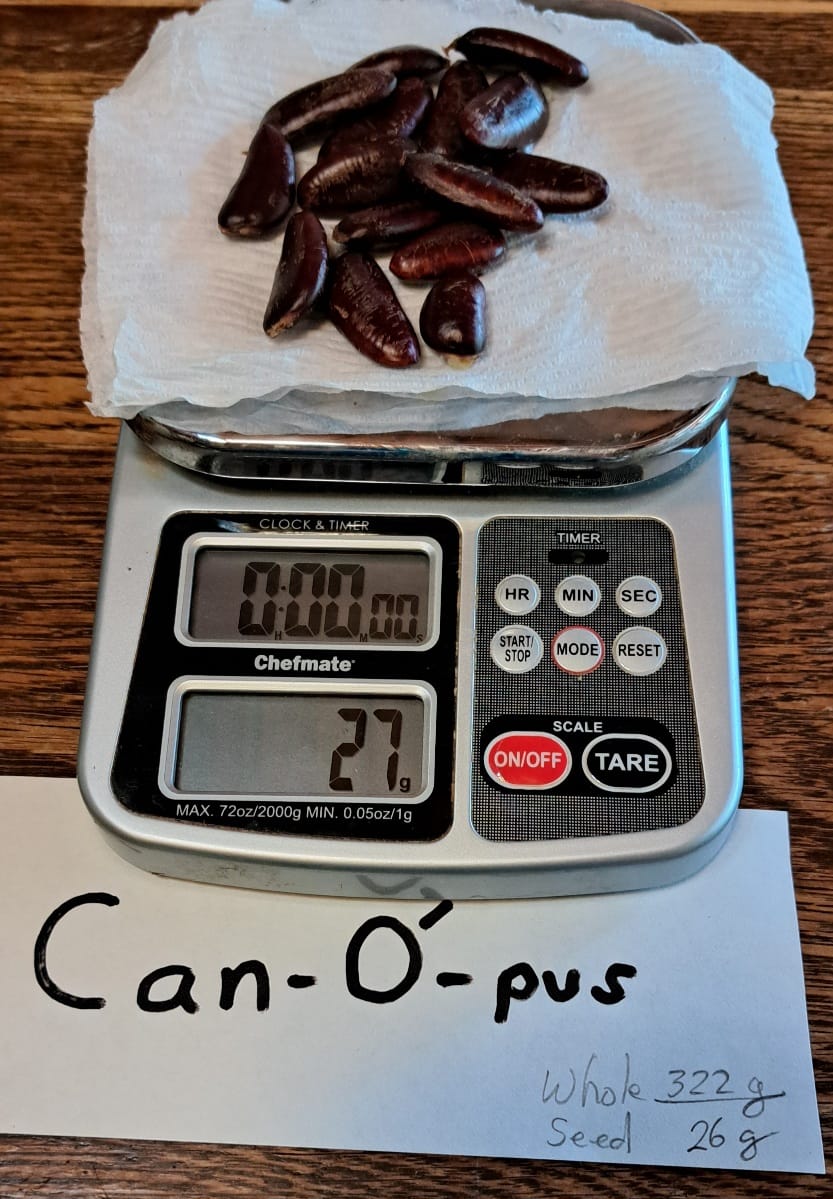
- Fruit: very large (300–400 g, up to 500–700 g), few seeds, creamy texture, tropical taste.
- Ripening: mid/mid-late season (September – October).
- Yield: very abundant.
- Tree: 4–6 m, medium growth.
- Pollination: cross-pollination required, another variety needed.
- Hardiness: USDA 5–9, -26...-12 °C.
- Resistance: few problems with diseases/pests.
Description of Canopus Pawpaw Variety
Origin and Breeder
Breeder/Location: Tom Wahl, Red Fern Farm (Wapello, Iowa, USA). Canopus is one of his selections in the breeding program.
Parentage/Genetics
Parentage: Red Fern Farm indicates that many of their new clones (Regulus, Asterion, Canopus, etc.) come from Susquehanna × Shenandoah crosses or seedling lines based on them. For Canopus, in several descriptions, origin from the same breeding programs (seedling of Susquehanna × Shenandoah) is directly mentioned.
Fruit Description — Size, Weight, Shape, Pulp, Taste
Description from breeder and nurseries: very large fruits, low seed content, excellent flavor (brightly "tropical", custard-like texture). Described as: "very large fruit size, low seed, excellent flavor". Estimated weight: Red Fern does not directly give an average weight for Canopus but calls it "very large"; other Red Fern varieties (e.g., Asterion) have recorded fruits up to ≈700 g in individual cases. Based on comparison with Asterion, one can cautiously assume that Canopus often yields fruits over 300–400 g, sometimes individual specimens can reach ~500–700 g. This is an interpretation of comparison, not a direct measurement of Canopus. ⚠️ Note: exact average values for Canopus (g/fruit) are not published in open sources; a cautious estimate with methodology explanation (comparison with other similar Red Fern cultivars) is provided. Texture: creamy (custard-like). Taste: intensely sweet, with notes of banana/mango/pineapple/vanilla — described as "excellent flavor".
Ripening Times (When to Harvest)
Canopus belongs to the middle/mid-late varieties of Red Fern Farm. In the USA, this is usually the late summer-autumn period (September — early October in many regions). For zones with a short warm season (northern boundaries, zone 5), the risk of under-ripening in cold years is higher.
Yield and Regularity
Description: breeder/nurseries indicate very abundant fruiting. In gardener reports, Canopus is mentioned as a tree with "large crop" in fruiting years. However, no quantitative data (kg/tree) has been found in open sources.
Growth Vigor and Tree Size
Typically for modern pawpaw cultivars: adult tree usually 4–6 m in height (depends on shaping), growth is medium. In Canopus descriptions, no specific differences in growth vigor are highlighted.
Pollination
As in all Asimina triloba: cross-pollination is necessary for reliable fruit formation — i.e., at least one other variety nearby is needed (or manual pollination). It is recommended to plant a mix of varieties with overlapping bloom.
Cold Hardiness and Climatic Suitability
USDA zones: generally for pawpaw — 5–9 (approx. −26...−12 °C in winter minimum temperatures). Canopus, as a Red Fern selection (Iowa), is designed for temperate climates and northern growing boundaries.
Disease and Pests
Relatively few problems with diseases; local pests (moths, some leafrollers) possible, leaf spot in wet seasons. No specific vulnerabilities for Canopus have been found in publications — described as a "healthy, productive clone". Prevention — usual agro-technical measures (ventilation, mulching, pest control).
Cultivation Experience in Similar Climates
Red Fern Farm (Iowa) tests varieties in a temperate-continental climate and distributes selections that work well in USDA regions 5–7. In communities (GrowingFruit forum), Canopus is mentioned among the most promising Tom Wahl selections for fruit size and productivity.
Gardener Reviews and Position in Modern Selections
In discussions on growingfruit.org and other forums, Canopus figures among Tom Wahl's best selections due to the combination of fruit size and productivity; taste reviews are positive (though taste is always subjective). Some participants place Canopus at the top alongside Regulus and Asterion.
Risks and Cautions
Middle/mid-late ripening. If your season is not guaranteed to be long/warm, part of the Canopus crop may not have time to fully ripen — especially on open cold sites. Limited availability. Saplings/grafts may be available only periodically.