Key Points
- Origin: Prolific×Sam Norris-15 hybrid, breeder Jerry Lehman (Indiana).
- Ripening: mid/mid-late season (late September – early October).
- Fruit: 150–397 g, oval shape, creamy pulp, tropical taste (banana/mango/pineapple).
- Yield: good–high, enters fruiting in 3–4 years.
- Tree: medium growth vigor, 4.5–6.0 m.
- Hardiness: USDA 5–9, down to -25...-28 °C.
- Pollination: cross-pollination required, another variety needed.
- Resistance: standard for pawpaw, no major issues.
Detailed Description of Benny's Favorite Variety
Origin and Breeding
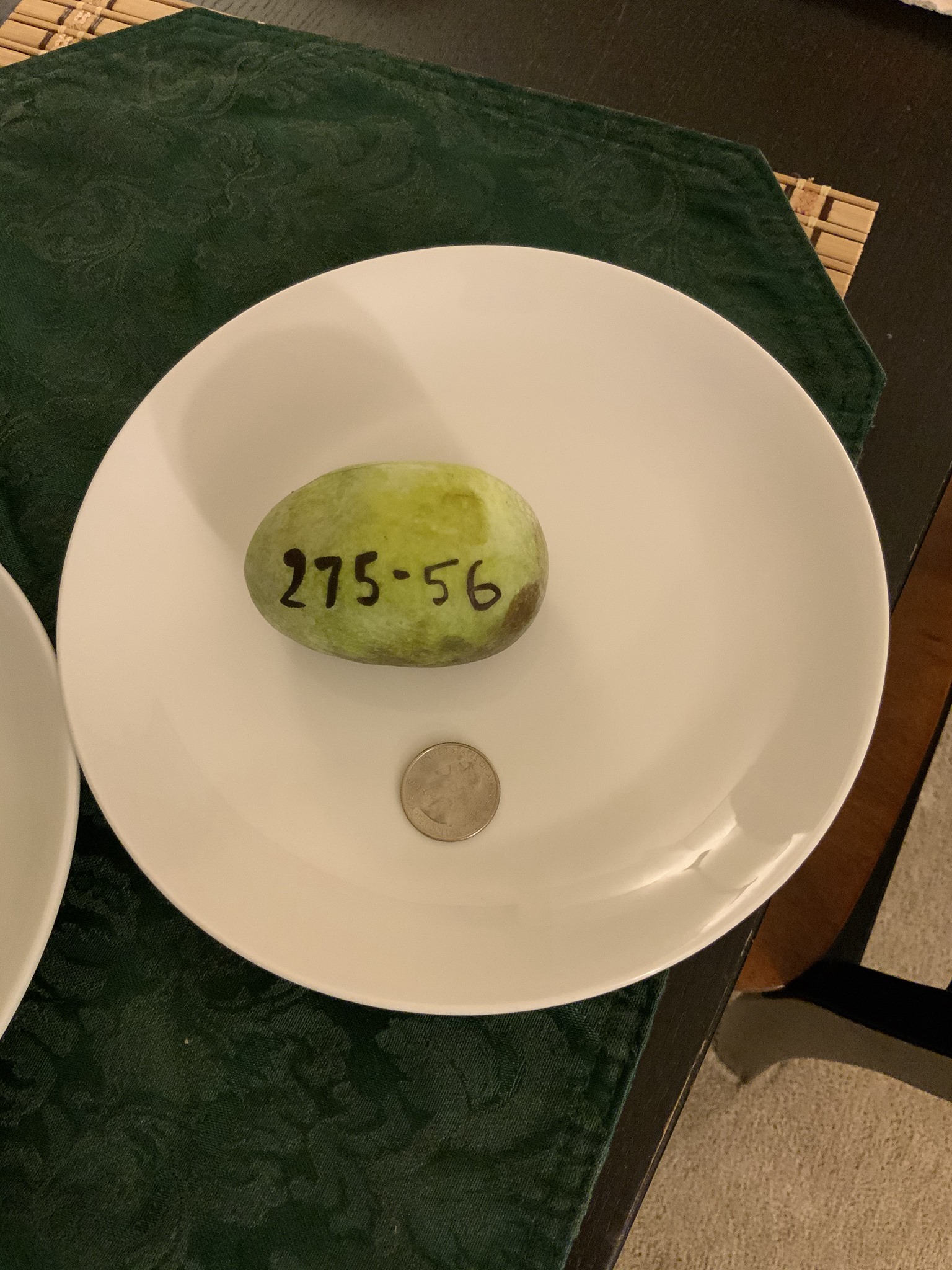
Breeder: Jerry Lehman (Terre Haute, Indiana, USA). Hybrid: Prolific×Sam Norris-15 (internal marking 275-56 — row 275, 56th tree).
Ripening Times
Most catalogs and nurseries indicate a mid to mid-late ripening period (in the Indiana/Kentucky growing zone, this is often late September; in cooler locations, it may shift to early October). Therefore, in very cold or very short seasons, there is a risk that fruits may not have time to ripen.
Fruit — Size, Shape, Skin, Pulp, Taste
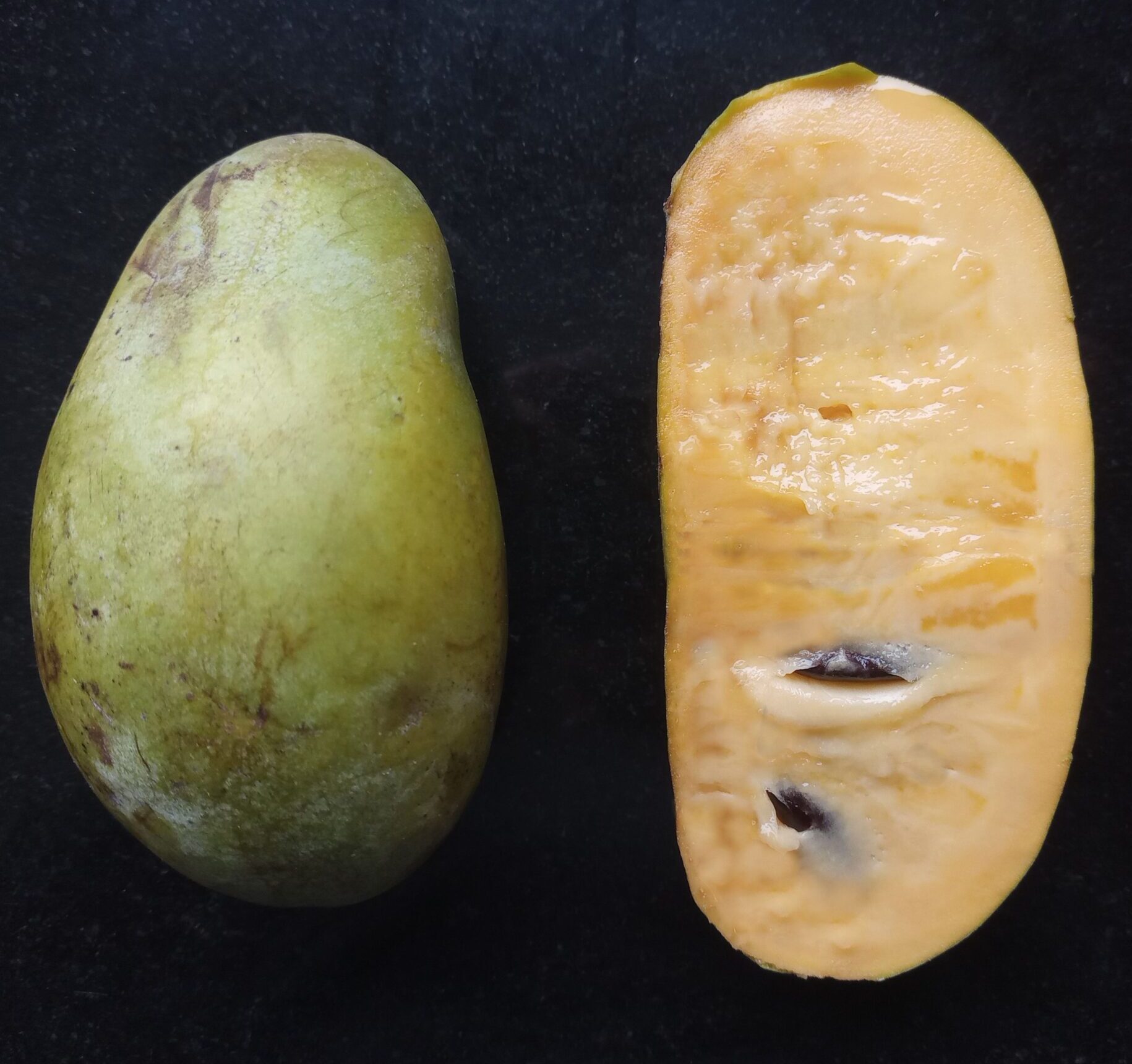
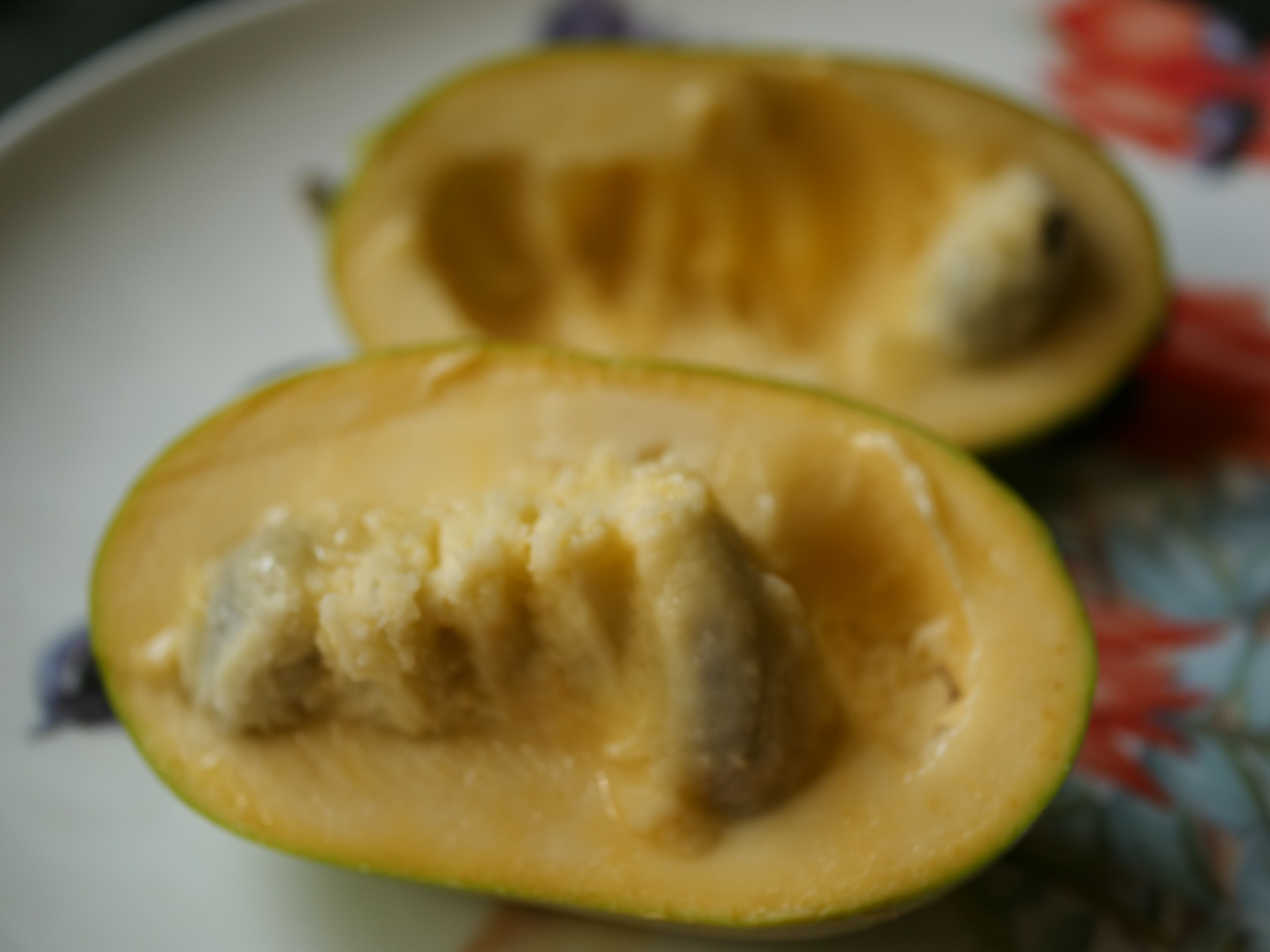
Weight: usually ≈150–397 g — some descriptive sources give a range of 180–260 g. Shape/Skin: oval/elongated, skin is thin, green-yellow at maturity. Pulp: creamy. Taste/Aroma: "classic pawpaw" — intensely fruity, tropical (notes of banana/mango/pineapple), sweet and pleasant; it has received high scores in numerous tastings (winning places in competitions).
Yield and Entry into Fruiting
Yield: described as good–high with proper pollination; exact average kg/tree in scientific publications are absent, 13-18 kg from an adult tree (data from nursery descriptions and gardener reviews). Entry into fruiting: typically 3–4 years after grafting/planting in improved saplings.
Tree, Growth Vigor, Dimensions
Growth Vigor: medium — typical rate for cultivated pawpaw varieties; can grow actively at a young age. Adult Tree Height: ≈3.5–5.0 m. Resistance to acidic soils: good. resistance to alkaline soils: moderate. Resistance to drought: moderate. Resistance to poor drainage: low. Tree shape: upright, rounded crown.
Cold Hardiness and Climatic Suitability
USDA zones: usually 5–9 (meaning it withstands approximately down to −25...−28 °C in adult state). Benny’s Favorite is not highlighted as more or less hardy, so it matches the general endurance of pawpaws. For cooler climates, the variety may be suitable, but due to the mid-late ripening period, it should be planted in the warmest spots of the site (southern slope, wind protection) in cool years.
Pollination
Benny’s Favorite, like other pawpaw cultivars, is not reliably self-pollinating – for good fruit formation, another genetically distinct variety is needed nearby (cross-pollination). It is recommended to plant at least 2–3 varieties with overlapping bloom. Manual pollination (transferring pollen with a brush) significantly increases the percentage of fruit set.
Disease and Pest Resistance
General species risks (leaf spot in wet years, local pests: moths, leafrollers), but there is no evidence in open sources of specific increased vulnerability for Benny’s Favorite. Thus, standard preventive measures (spacing, ventilation, mulching) are adequate.
Availability
Benny’s Favorite is often present in the catalog of specialized American/European nurseries supplying niche saplings.
Gardener Reviews and Practical Experience
Communities mention Benny’s Favorite as "one of the best-tasting Lehman selections", with consistent reviews of a pleasant classic taste and acceptable fruit size. Gardeners note that the variety has taken prizes in taste competitions (Ohio Pawpaw Festival).